Dentists have always been on the lookout for ways to enhance the patient experience and ensure optimal oral health. In fact, pain-dulling practices go back at least to 2250 BC, when a Babylonian clay tablet and a cement made from henbane seed and gum mastic revealed the remedy for dental cavity pain. In 1000 BC, wine was used to produce insensibility in India., ,While those and other early means of sedation may have fallen short of today’s standards for numbing pain, over time, the development of sedation dentistry would transform dental care, alleviating anxiety and fear for countless patients. The greatest strides have come during the past two centuries., ,The 19th century saw significant advancements, with ether and chloroform emerging as the pioneers of anesthesia, revolutionizing surgery and dentistry alike. In the early 20th century, nitrous oxide, commonly known as laughing gas, gained popularity as a safer and more controllable sedative. The ability to administer varying levels of sedation opened new possibilities for pain management in dental procedures.,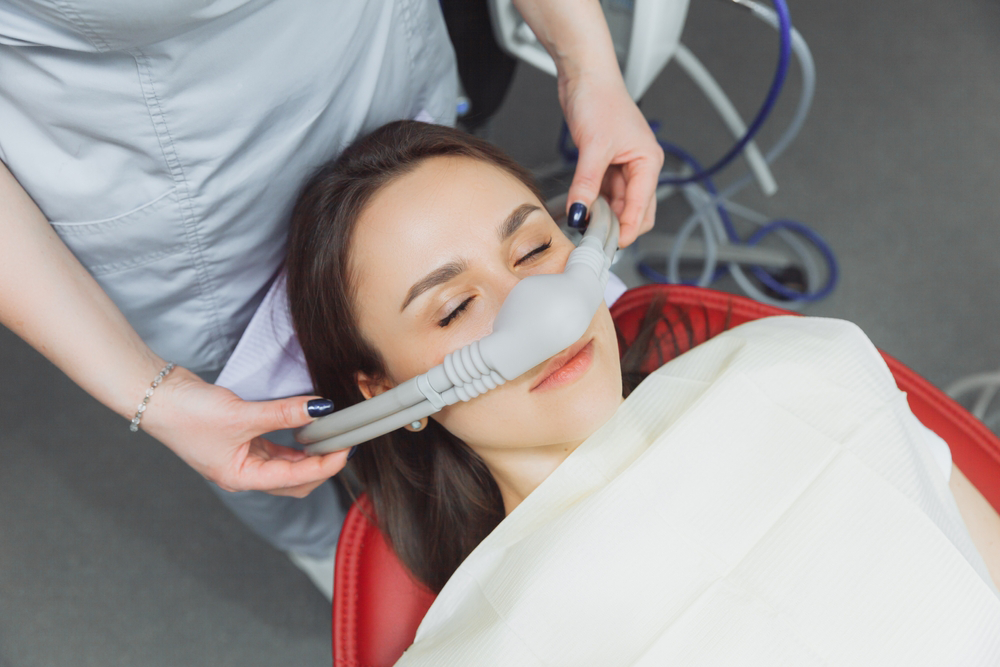 , ,Fast forward to the latter half of the 20th century, and the concept of sedation dentistry continued to evolve with the introduction of intravenous (IV) sedation. Innovations in the 1900s included the development of barbiturates for anesthetic practice and the introduction of Novocain as a local anesthetic. More advanced intravenous anesthetics, such as propofol, followed, improving the safety and efficacy of sedation., ,Today, thanks to advances in pharmacology, sedation can be targeted to individual patient needs with shorter half-lives, allowing for quicker patient recovery. Modern monitoring technology has also greatly enhanced patient safety during sedation., ,After centuries of trial and error, we stand at the forefront of sedation dentistry, equipped with an array of options catering to patients’ unique needs. From mild sedation to deep sedation, dentists can tailor their approach to ensure a relaxed and stress-free experience for even the most anxious patients.


