

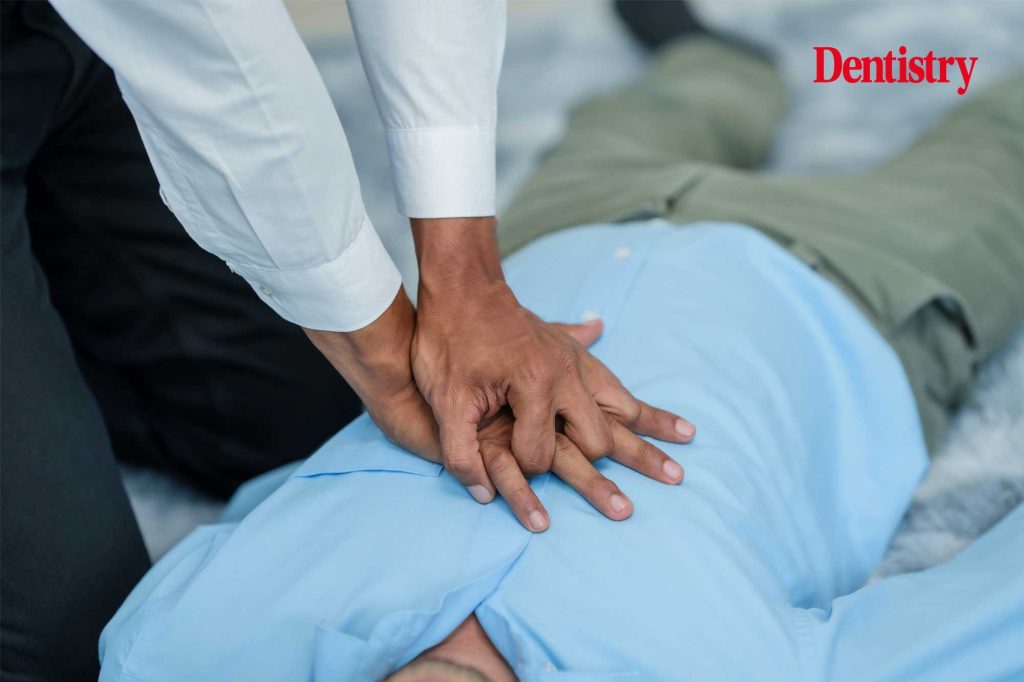
Lydia Austin explains how she managed a patient’s cardiac arrest in her practice and shares her advice for navigating severe medical emergencies.
Earlier this year our practice experienced a severe medical emergency. A patient had a cardiac arrest, and despite our CPR efforts, along with the care delivered by the paramedics, they sadly passed away on our waiting room floor.
Every year I do my medical emergency training for our CPD requirements, talking about emergency drugs, reviewing the emergency drugs kit, practising using the oxygen cylinder and simulating medical emergency scenarios, but deep down hoping that I never really need to use it.
What happened?
It was a normal, routine day – nothing out of the ordinary. My nurse and I had gotten through a busy and stressful morning in NHS general practice and were on our last patient before lunch. With a rumbling tummy, and a thought in my head of what tasty food I had brought in for my lunch, I asked my lovely apprentice dental nurse to call in the patient from the waiting room. My nurse came rushing back into our room saying our patient had told her she thought someone had collapsed in the patient toilet.
What happened after that is slightly hazy in my memory. I remember my nurse and I opening the door to the patient toilet, which is in the corridor to the waiting room, and a patient fell out onto the floor. The colour of their face instantly registered in me that this was a serious emergency. I burst into my principal dentist’s room, which is next door to mine on the ground floor, and called for urgent help.
The steps that we trained for kicked in, and whilst I felt shaky and surreal, I got the emergency drugs kit and defibrillator. CPR was undertaken until the emergency ambulance arrived, and then a series of paramedics arrived with different bits of kit and took over the treatment.
How is cardiac arrest navigated in dental practice?
Most of our staff had a role to play in the next few hours: clearing the waiting room, telephone management of patients with imminent appointments, dealing with patients who were still being treated in the three surgeries upstairs and unaware of the medical emergency unfolding downstairs, making sure they all exited from the rear of the building, giving appropriate advice to the patients who were mid appointment when we had to urgently down tools, or had been sitting in the waiting room in pain waiting for their emergency appointment.
The time spent debriefing with the paramedics and police took most of the afternoon, and I remember feeling so overwhelmingly tired
and emotional.
After 13 years in dentistry, I can say that deep down, I thought I might sail through my career unscathed by medical emergencies, and with some luck only having to deal with faints or vomiting.
In my opinion, the ripple effect this situation had on the practice staff was quite profound. I can’t speak for others, only for myself, but it took me a good few days to be able to process what had happened, and that my face might have been one of the last that patient saw. I felt numb and grieved for this patient who I didn’t know but felt connected to by the events of that day. Using the patient toilet is still difficult as it resurfaces memories of the day.
Support for managing medical emergencies
I have been present in death before, and am a very reflective person, so that evening after some deep conversation with my colleague who is a mentor to me, I could start to process the event in my own way and prepare myself to move on.
This experience has made me consider the resources available for dental professionals to help them cope with events that cause mental trauma. Without the guidance of my colleagues, I wouldn’t have known where to start looking for help.
In a study by Muller et al, 2008, it was found that around 60% of dental professionals will face one medical emergency a year. It made me wonder about how many other dental professionals had been through something they considered very traumatic and shocking at work, and what help was available.
I came across a useful document for dental professionals called www.supportfordentalteams.org, which can be downloaded and shared amongst your team. It had some valuable ideas in there for dealing with tricky situations and ways of getting support.
I found that talking about my experience with some close people, who are not associated with work, helped me. I could offload my feelings and allow myself time to grieve and move on.
All GDC recommended topics, including medical emergencies, are covered at Dentistry CPD.
Utilising articles, videos and courses, Dentistry CPD membership allows instant access to more than 700 hours of CPD content, delivering a variety of courses to ensure all members of the dental team stay compliant.
To sign up, visit cpd.dentistry.co.uk.
Moving on
My first day back at work (which was in a different practice to where the medical emergency happened) was very nerve-wracking. I felt a bit shaky as I picked up my scaler, and kept thinking: ‘If this happens again, who is in the building who can help me? What if I’m working with an apprentice and I have to lead the medical emergency response?’
The morning went by without issue, and I allowed myself to relax. I knew I couldn’t live in fear of this happening again. I’m always very diligent at checking medical histories, and I signed myself up for some local refreshers in pharmacology update and sim man training at my local deanery. While I could prepare myself and keep up to date as best I was able, if this does happen again in my career, I know I will do my best to respond to the situation, and ultimately that is all I can ask of myself.
Once I allowed my fear to go, I could move on. Now I can reflect on the situation without feeling a gut-wrenching sense of dread. It happened, I did my best on the day, and I am continuing with my job. I have a new sense of appreciation for the annual medical emergency training, as well and the hard situations that paramedics must deal with every day in their jobs.
The next medical emergency training we did was a bit harder, but I found it useful to practise the defibrillator simulation, and the experience of the doing it in real life helped me relate the steps more vividly. I am a partial kinetic learner, so being hands on with the equipment is a fundamental way for me to remember details.
It’s good to talk
I would say if you should find yourself in a similar situation, do seek the support if you feel you need it, and I encourage you not to bottle up your feelings. Going by the statistics in the research, there is a lot of us out there who have undergone similar events as we go about our day-to-day jobs, but it’s not talked about much.
It is possible that if we did talk more about it, we could all reflect on our individual places of work and staffing, and perhaps predict or figure out some hurdles we may have to overcome in the face of a medical emergency before it happens for real.
Fortunately, we need to do medical emergency training yearly, so the chances are if this does happen to you, you’re probably more mentally equipped and able to cope with it than you may think. And remember, there is support out there if you need it. The BADT or your indemnity are good places to start for finding out about wellbeing and counselling services, as well as your GP.
