

Stress is normal part of life now days. At some point everyone experiences some degree of stress. Many events that happen to you and around you and many things that you do yourself- put stress on your body. You experience good or bad form of stress from your environment, from your body and from your thoughts.
Stress is any change in the environment that requires your body to react and adjust in response. The body reacts to these changes with physical, mental and emotional response. Whenever we feel stressed, our bodies release adrenaline and stress hormone (like cortisol) to prepare the body for fight or flight response. Excess stress can lead to health complications and lifestyle behavioral changes such as becoming physically active, changing dietary habits and increasing alcohol intake.
Although not all types of stress are negative, the truth is that states of nervous agitation or emotional tension are quite common in today’s society, and in some cases they become stress chronic. Situation such as overwork or loss of work, financial problems or illness or a person faces continuous challenges without relief or relaxation. When this happens, we aware of how it affects our emotional state or the ability to rest and get enough sleep at night. But we don’t always pay enough attention to how stress affect our oral health.
While we may all react to stress differently when our immune system is weakened, it triggers our brain to seek comfort foods or from unhealthy habits like drinking alcohol and smoking. These damaging habits can place your oral health at risk.
How Stress affect your oral health?
The effect of stress on your oral health starts unconsciously. Not until you feel pain or see damages in your teeth that you will realize the negative implications of stress in your oral health. Early detection of your body responses during distress can still save your teeth, gums and jaws. Check if you’re having signs of the following oral health conditions:-
- UNHEALTHY LIFESTYLE AND EATING HABITS
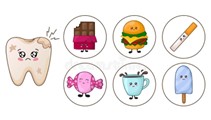
The food that you eat and your lifestyle habits can affect your oral health in many different ways. When you are stressed, self-care becomes less important and indulging in mind boosting foods high in carbs, sugar and caffeine brings comfort. An imbalanced diet and inattention to an oral hygiene routine can cause plaque buildup, caries and even tooth loss.
- POOR ORAL HYGIENE
If you’re stressed out it’s likely that practicing a good daily oral care routine probably isn’t high on your agenda. By neglecting brushing and flossing you may become more prone to tooth decay and gum disease.
- BITING YOUR NAILS

- This is one of the classic signs that you are going through a stressful period in your life and many of us bite our nails as a result. Apart from having short nails, this might not seem too bad, but over a long period of time, this can start to have an adverse affect.
- So many bacteria’s are found around our nails and hands and biting your nails means this make its way to our mouth and gums. This can increase the likelihood of getting a mouth or gum infection, which can be painful process to deal with. This can also unnecessary wear down your teeth over time, as well.
- HORMONES

Hormones are natural chemicals that regulate bodily functions. Releases hormones that tell your body how fast to grow. The hormone levels in your body are directly related to your body’s inflammatory response to disease and infection. Inflammation is the root of all dental health problems.
CAUSES
- Stress negatively affects the hormones in your body. One way it does this is by reducing the production of saliva.
- A frequently dry mouth can harm your teeth as it allows plaque to build up on teeth faster, leading a higher risk of cavities.
- A lack of moisture can also lead to your tongue become very sensitive.
- DRY MOUTH
Dry mouth is also known as “Xerostomia”. It occurs when the salivary glands in your mouth don’t produce enough saliva to keep your mouth wet. It can be caused by a condition that directly affects the salivary glands.
CAUSES
- Stress is one of the main reasons you could experience dry mouth causing saliva flow to decrease. Saliva plays a vital role in keep our mouth healthy and happy. But when anxious or stressed, our mouth tends to dry out. This could be due to breathing more through our mouths, especially when hyperventilating. When stressed, our bodies also enter fight-or-flight mode, affecting saliva flow.
- If you are experiencing dry mouth, this often means that bad bacteria in the mouth isn’t washed away. These harmful bacteria will cling to your teeth and cause enamel erosion.
- “Saliva is our mouth’s best friend”– it provides many health benefits for the oral cavity like washing away food particles, keeps the teeth moist and has the components that fight harmful bacteria. However, stress affects your oral health by its adverse effect on nervous system that causes salivary glands to stop producing enough saliva for your mouth.
- It can also exacerbate if you are taking medication to help with stress or anxiety. Some of the medications that can decrease the flow of saliva in the mouth include- Anti-depressant, Anti-psychotics, muscle relaxants, Anti-histamines and many others.
- Too much caffeine, overuse of alcohol and tobacco can also cause dry mouth leading to tooth decay and gum disease.
Sign & Symptoms:-
If you are not producing enough saliva, you may notice these signs and symptoms all or most of the time;
- Dryness or a feeling of stickiness in your mouth
- Saliva that seeks thick and stingy.
- Bad breath
- Difficulty in chewing, speaking and swallowing
- Dry or sore throat and hoarseness
- Dry or grooved tongue
- A change sense of taste
- Cracked lips
- Problems wearing dentures
- TOOTH FRACTURE
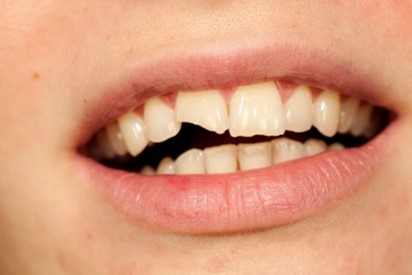
Virtually all teeth have tiny fissures and cracks due to everyday wear and tear. By themselves, these small cracks are no problem. But when we are stressed, we tend to clench our jaws and unconsciously grind our teeth, often in our sleep. That excess pressure on those tiny fissures can cause teeth to break and fracture.
- TONGUE THRUST
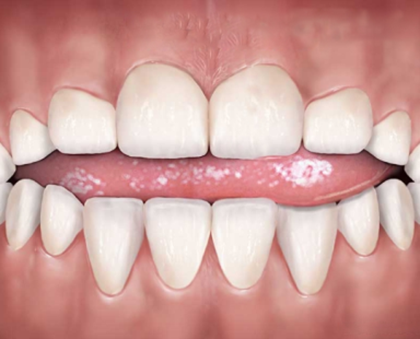
Tongue thrust is a condition when the tongue pushes forward too much when swallowing or even resting. Normally, when swallow your tongue should go up on the roof of the mouth. While tongue thrusting makes it end up between the front teeth or pressed against them. Such tongue position leads to teeth malocclusion in most cases. Tongue thrust most often manifest in children, if not treated earlier, it can be issue in adults.
Although some of us don’t even notice we’re tongue thrusting, it leads to serious disorders requiring treatment. Tongue thrust often results in bite and teeth issues and facial structure changes.
While tongue thrusting is common in infants, it can adversely affect the teeth and mouth in children and adults. Having continuous pressure on your tongue against your teeth can force your teeth out of normal alignment, cause speech issues or reverse previous orthodontic work.
When talking about tongue thrust in adults, it may happen during sleeping, when the mouth is open and the tongue is uncontrolled. Such sleeping behavior is often a result of stress and anxiety.
Causes
- Enlarged tongue
- Gaps in dental arch
- Protusion of the front teeth
- Bite issues- overbite, underbite & open bite
- Gap between lower & upper arch
- Genetics (genetically larger tongue than normal)
- Allergies- associated with large adenoids & swollen tonsils
- Tongue tie (ankyloglossia)
- Stress
Sign & Symptoms-
Tongue thrusting can result in several problems that interfere with oral appearance and functions. These signs of tongue thrusting include-
- Open bite
- Inability to completely close the lips
- Visible tongue between the front teeth during speaking, eating and resting.
- Speech impediments- most common is lisping the letters S, Z
- Sleep apnea
- Mouth breathing ( it can also be one of one of the symptoms)
- TEETH GRINDING AND CLENCHING (BRUXISM)
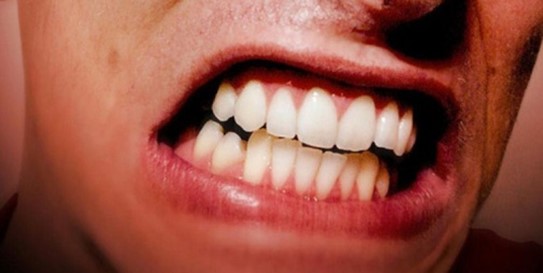
Most people probably grind and clench their teeth from time to time. Occasional teeth grinding medically called as Bruxism, does not usually cause harm, but when teeth grinding occurs on a regular basis the teeth can be damaged and other health complication may arise.
Bruxism is the dental term for grinding and clenching your teeth. This can happen at any time of the day, but more commonly it occurs at night when you’re asleep and often without realizing it as a result of stress and anxiety. Constant worrying and thinking, nervous tension, anger and frustration can cause people to start grinding.
Sign & Symptoms:-
Because people are often not aware that they grind their teeth, it’s important to know the symptoms of bruxism and have it evaluated. The following symptoms you may notice:-
- Chipped teeth or loose teeth
- Tight jaws
- Headaches by your temples
- Increase tooth sensitivity
- Small fractures in your tooth structures.
- Teeth-grinding noises while sleeping
- Earache
- Disrupted sleep
- Tips of your teeth appear flat
- Tongue indentations on the side borders
- JAW ACHES AND PAINS
-
(TEMPOROMANDIBULAR JOINT DISORDER (TMJD))
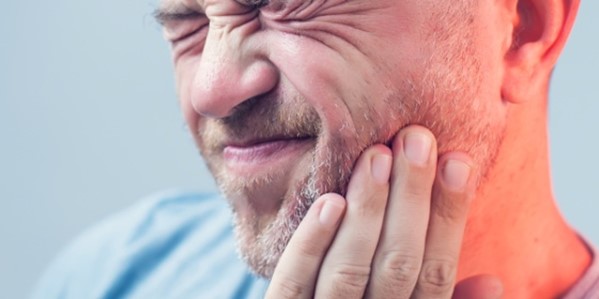
Many of us don’t associate our jaws with our dental health, but aches and pains in the part of our bodies can indicate that problems may arise, or already have done in relation to our teeth. These aches and pains can be result of Temporomandibular joint disorder (TMJD)
Temporomandibular Joint (TMJ) is a joint that connects your lower jaw to the skull. It’s therefore essential for chewing, talking and yawning.
Temporomandibular Joint Dysfunction (TMD) is a group of conditions affecting the TMJ and surrounding muscles or it is a condition that involves pain or difficulty in moving your jaws.
Stress can affect your Temporomandibular joint especially if the symptoms of bruxisms persist and are left untreated. TMJ connects your jaw to the bones of your skull at the temple in front of each ear. This joint is responsible for moving your jaw up and down and side to side while you speak, eat and yawn. TMJ disorder is due to overuse of the muscles in the jaw when stress takes over.
Sign & Symptoms:-
The following symptoms you may notice:-
- Pain in your jaws
- Locked jaws
- Difficulty in opening your mouth
- Popping or clicking noises from the jaw
- Difficulty in chewing
- Pain around the ears
- GUM DISEASE AND DECREASED IMMUNE RESPONSE
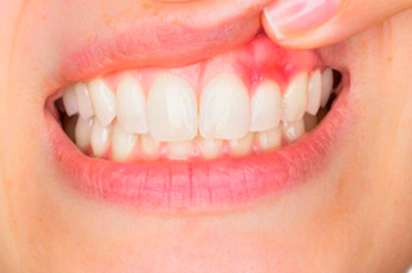
Gum disease is described as swelling, soreness or infection of the tissues supporting teeth. There are two main form of gum disease- Gingivitis and Periodontitis.
Gingivitis: – It is the earliest stage of gum disease. It happens when plaque and bacteria build up on your teeth and cause infection. Common symptoms include red, swollen bleeding gums.
Periodontitis: – It is a serious form of gum disease. It’s a bacterial infection that starts by inflaming the soft tissues around your teeth. If left untreated, it erodes the bone that supports your teeth, leading to mobility and tooth loss.
CAUSES
- Gum disease can lead to teeth becoming loose, potential tooth loss and also a farther risk of diabetes, heart problems and many more problems.
- The most important cause of gum disease -Accumulation of bacterial plaque between and around the teeth.
- Bleeding gums, bad breath, jaw pain and other associated problems remain in the forefront of a person’s mind and so lead to further stress which in turn exacerbates other problems.
- Soft tissues in the mouth tend to be an indicator of general health. The presence and recurrence of ulcers can be a sign of stress impacting upon your oral health problem.
- When you are stressed, your immune system is compromised, making it harder for your body to fight infections. High levels of stress hormone cortisol trigger protein production in the gums that causes inflammation increasing your chances of developing gum diseases like gingivitis and periodontitis.
- Stress is powerful. So powerful that it even has the strength to deplete your immune system. A depletion in your immune system can leave you vulnerable to sickness. It can also cause chronically inflamed gums.
- If your gums are inflamed due to harmful bacteria, a low immune system can make it more difficult for your body to fight off infection. This can also cause gum disease.
- When stressed we also tend to neglect our bodies. You may start smoking, drinking or adopting a poor diet. This can increase your chances of tooth decay. At times, you may also stop brushing your teeth. All these factors combined can increase your chances of gum disease.
Sign and symptoms;-
- Swollen gums
- Soft puffy gums
- Occasionally tender gums
- Receding gums
- A change in gum colour from pink to red
- A gum that bleed easily
- Gums that have pulled away from the teeth
- Any changes in the way your teeth fit together when you bite
- A persistent bad breath
- Persistent bad taste in your mouth.
- MOUTH SORES
Mouth sores are common ailments that affect many people at some point in their lives. One of the main causes of mouth sore is emotional stress. If you stressed, anxious or upset this can trigger an outbreak. The two kinds of sores that can be manifest are-
-
- CANKER SORES
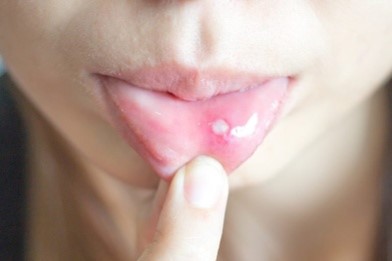
Canker sores are the mouth ulcers that occur inside the mouth. These canker sores are also known as “Apthous Ulcers”. They can usually appear on your cheek, inside of your lip or tongue. They can appear in cluster or just a single small to larger lesions which can be very painful, especially when you talk or eat. These typically disappear in 7-10 days.
Causes
- Emotional stress
- Vitamin B deficiency
- Trauma
- Certain acidic or spicy foods
- Hormones
