LONDON, England: The SureSmile 2025 Global Orthodontics Symposium, which took place on 13 and 14 September in London, brought together orthodontic professionals from across the world for two days of lectures, workshops and hands-on sessions. The programme highlighted how digital innovations and clinical strategies are reshaping orthodontic practice.
From the outset, robotically bent wires and their role in digital workflows formed a central theme. Australian orthodontist Dr Alex Yusupov outlined how customised fixed appliance systems can integrate diagnostics, treatment planning and biomechanical control to support simple to complex cases. In a second session, he showed how digital planning and robotically bent wires enhance interdisciplinary treatment involving orthognathic surgery, including multi-segment maxillary procedures and surgery-first protocols.
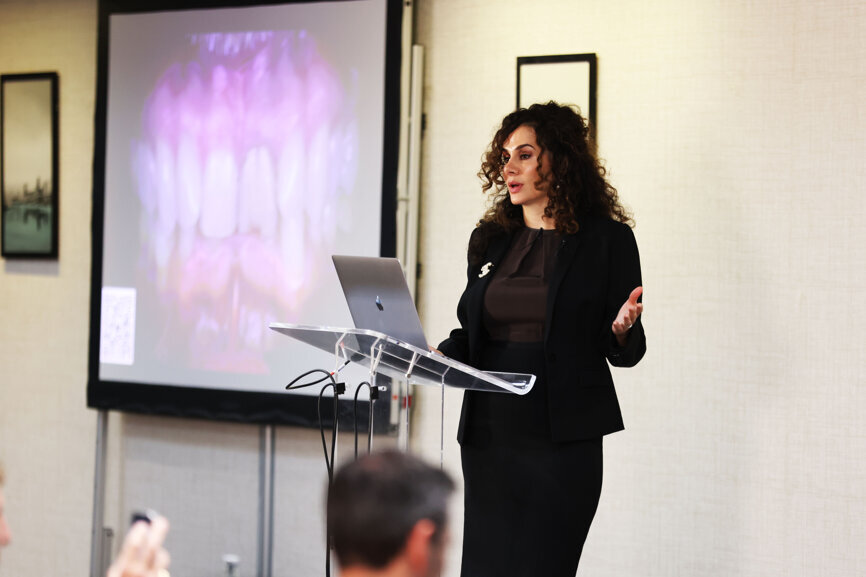
Evidence-based aligner therapy was a strong focus in the presentation by London orthodontist Dr Nina Shaffie, who examined the latest research on deep overbite correction. She noted that treatment with aligners can currently achieve only about half of what is possible with fixed appliances, making overcorrection and refinements necessary. For this reason, she cautioned that aligners cannot yet be recommended over fixed appliances for reliable deep overbite correction, though careful treatment planning and case selection can still deliver success.
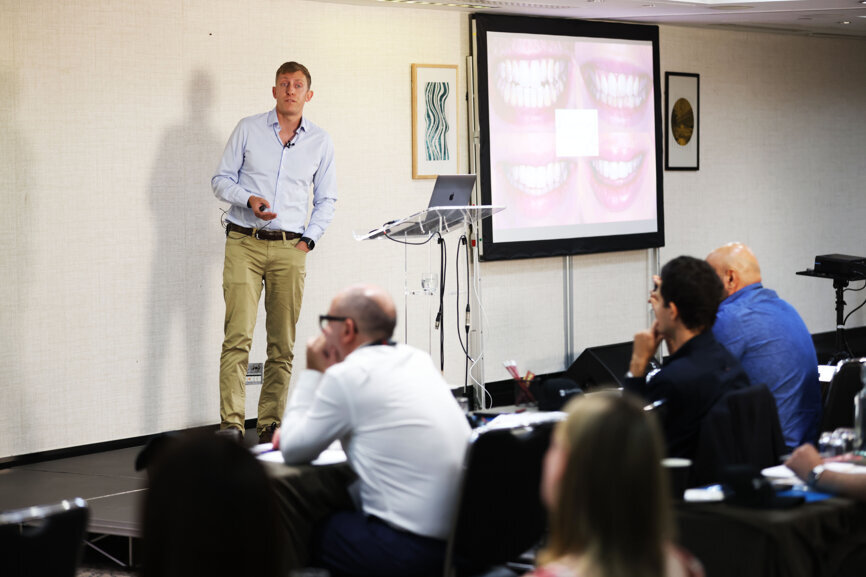
Scottish orthodontist Dr Josh Rowley explored the role of hybrid treatment with aligners and fixed appliances to manage complex tooth movements while maintaining aesthetics and efficiency. He stressed that appliance choice must be guided by clinical judgement but also by patient preference. What drew him to SureSmile for hybrid aligner treatment, he explained, was not only the aligners themselves but the strength of the associated software, which enables versatile treatment planning and execution.
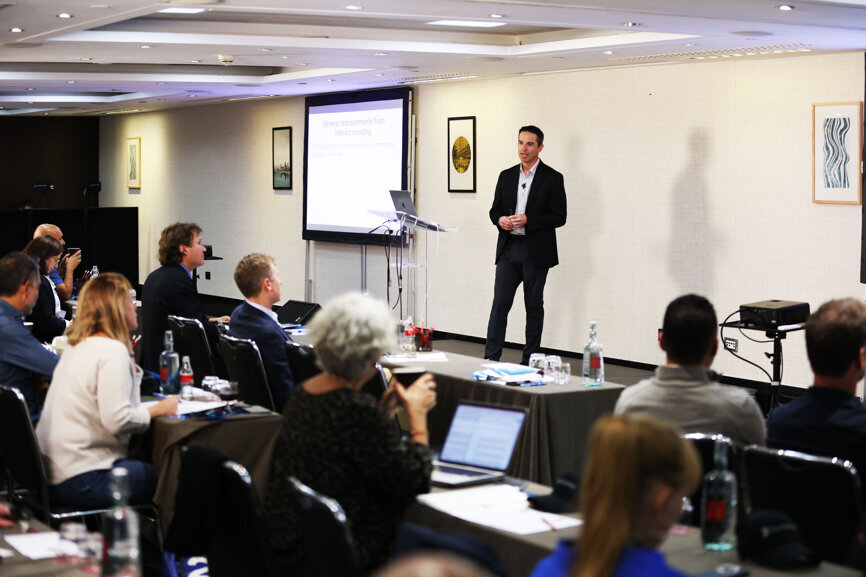
Dr Cory Costanzo, an orthodontist from California in the US, reviewed the evolution of indirect bonding, contrasting accuracy—how close bracket placement in a given case comes to the intended plan—with precision—the consistency with which that result is reproduced across many cases. He highlighted how today’s digital workflows and 3D-printed trays support both and offered practical guidance on case set-up and tray design. Using clinical examples, he illustrated how applying these principles improves efficiency and reliability in daily practice.
Lingual orthodontics was addressed by London orthodontist Dr Asif Chatoo, who emphasised careful planning as the corner-stone of successful outcomes. Drawing on clinical cases, he discussed the challenges posed by complex movements such as those entailed in treating ectopic canines. Dr Chatoo underlined that customised wires designed according to the planned end position, rather than the starting point, offer a significant advantage in managing such cases.