New Implant Coating Will Prevent Inflammation
Main Content Bone diseases are becoming more common in modern society, which increases the use of dental and orthopaedic implants. The oldest implant made from


Main Content Bone diseases are becoming more common in modern society, which increases the use of dental and orthopaedic implants. The oldest implant made from

In-house 3-D printing allows patients with malignant disease to more quickly receive immediate tooth restoration—treatment that had been regarded as of low importance for these

A $31.4 million federal grant will allow a regenerative medicine resource center led by the University of Michigan School of Dentistry to continue its research
An international team of researchers has discovered a population of stem cells that can generate new bone. These cells reside along the vascular channels that
Main Content Readily available and reliable bone grafts are required for craniofacial surgeries as bone regeneration is an important clinical issue accompanying aging population. Bone
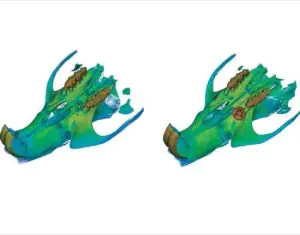
Researchers at the University of California Los Angeles School of Dentistry say they have developed the first adhesive hydrogel designed specifically to regenerate bone and tissue
Researchers at the University of Connecticut School of Dental Medicine are developing treatments for osteogenesis imperfecta (OI), a group of genetic disorders that mainly affect bone.

Main Content Residual ridge is a portion of residual alveolar bone and its soft tissue covering that remains after the removal of teeth. In the
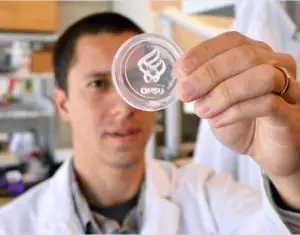
Researchers at Oregon Health and Science University (OHSU) have engineered a material that replicates human bone tissue with an unprecedented level of precision, they report,

The American Society for Bone and Mineral Research (ASBMR) will honor Marc McKee, PhD, with its 2019 Adele L. Boskey Award at its 2019 Annual
Main Content Once tooth gets extracted, bone remodelling starts and the residual ridge gets resorbed. Due to insufficient bone width and height caused due to
Survival rates decline every year for patients with undiagnosed gum cancer known as primary gingival squamous cell carcinoma, report researchers at the New York Presbyterian/Columbia
