

Victoria Sampson explores diagnostic testing and how it can improve the patient journey.
For nearly a century, our medical colleagues have been using diagnostic testing – such as blood chemistry and bacteriology – to improve diagnostics and enhance the patient journey. In the early 1950s, scientists started to realise the need for evidence-based medicine. They found that although individuals are 99.1% identical, the remaining 0.9% of interindividual genetic variability is responsible for varying responses to treatments and medications.
With the completion of the human genome project in 2003, it catalysed the use in genetic information for tailored healthcare (National Institutes of Health, 2007).
In the last two decades, the shift has gone from evidence-based medicine to personalised medicine, whereby combining the human genome, environmental factors, disease assessments and medication, doctors can achieve a better therapeutic outcome (National Institutes of Health, 2007).
Fast-forward to the last decade, the shift has now gone from personalised medicine in the hands of clinicians to direct-to-consumer testing, thus allowing patients to feel empowered by their own health.
By the start of 2019, more than 26 million consumers had taken an at-home DNA ancestry test, with 10 new genetic tests entering the market every day (Regalado, 2019).
In 2022, Zion Market Research predicted that direct-to-consumer blood testing market will rise by 60% from 2021 to 2028, further illustrating the huge interest in this area.
The saliva sector of this market has been predicted to be the fastest growing sector of direct-to-consumer and chairside tests due to its ease.
Empowerment and autonomy
The direct-to-consumer testing industry may be disruptive to the classic model of healthcare, but it also shows a huge change in the attitude patients have towards their health and healthcare.
It highlights that patients want to feel empowered, and they want to understand their health better. It illustrates that patients fear they may not be receiving the standard of care that they feel they deserve – or worry that they are unable to access the care that they need through their healthcare practitioners.
When utilised correctly, self-testing provides empowerment and autonomy. While there is clearly a huge interest in diagnostic testing both from clinicians and consumers, numerous concerns have been raised about the use of at-home medical tests due to their questionable validity, reliability and utility.
Due to the lack of regulatory red tape on many private direct-to-consumer tests, there is concern that many tests may not provide valuable insights to patients or may over-promise and under-deliver.
Unfortunately, many tests are not often processed in a UKAS-accredited lab and often do not disclose their threshold values for how they diagnose a patient. This means that you could potentially do multiple tests from different companies and get different outcomes as there is no cross centre validity or internationally agreed on thresholds for certain biomarkers. Furthermore, patients may have difficulty understanding implications of results and how to act on them if they do not have a supervising clinician.
However, there could be a middle ground where patients still feel empowered and understand their health but under the care of their clinician.
Embracing testing
More clinicians are now understanding that instead of rejecting this new trend in direct-to-consumer tests, they need to embrace it and understand it.
If clinicians can empower patients and help them understand their health better, patients may feel less inclined to buy their next Instagram targeted advert.
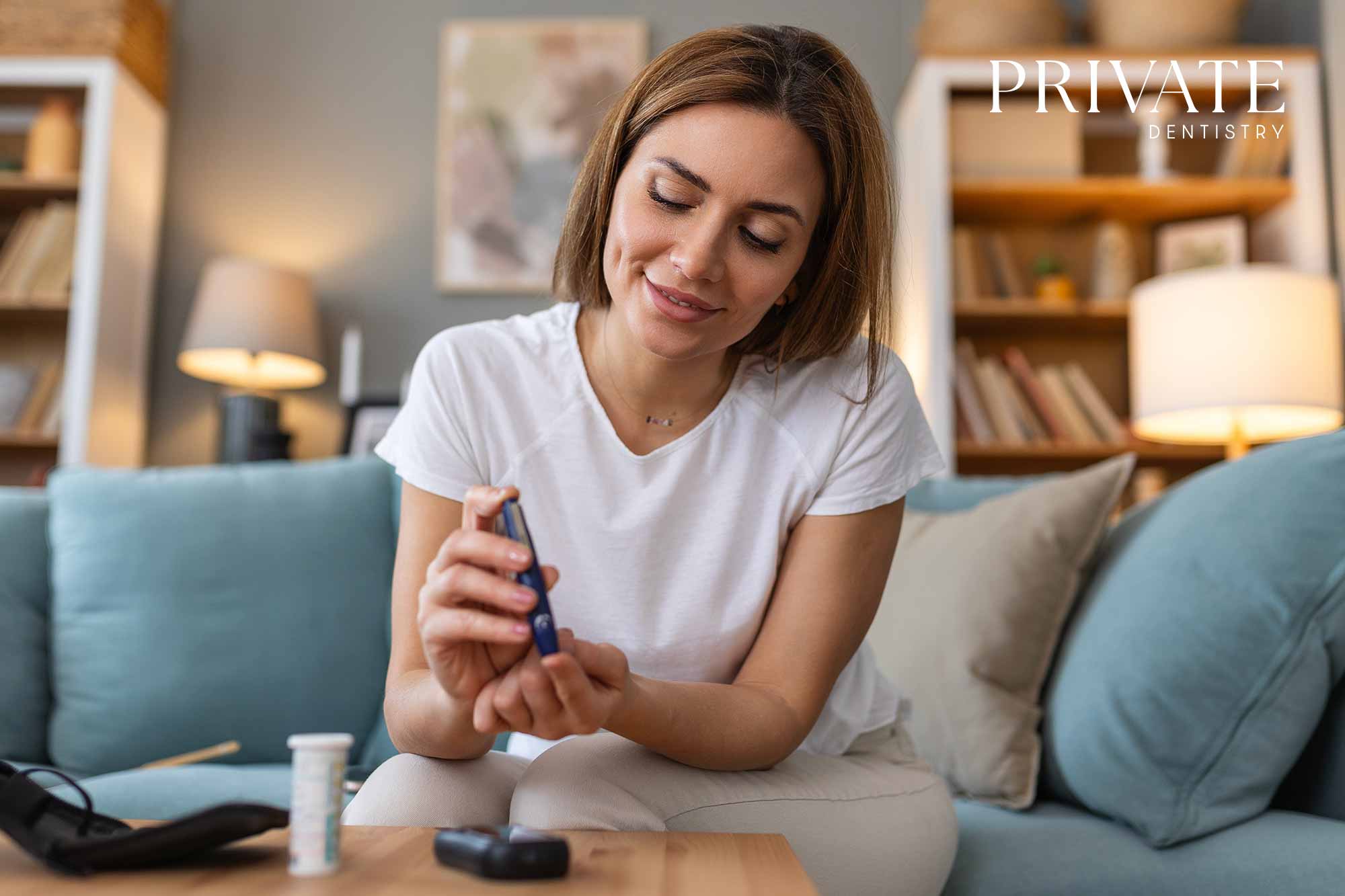
The idea of ‘doctor knows best’ needs to be changed to a ‘patient-centred approach’ – in which patients can understand their health and perhaps track it at home too. For example, the use of continuous blood glucose monitoring (CGM). While realistically a blood test with a doctor is enough to diagnose and manage blood sugar levels, more clinicians are now providing CGM’s to their patients to help them understand the impact food has on their blood glucose levels at home.
While the use of a CGM will not change the diagnosis or treatment plan offered to the patient, it educates them and therefore motivates them to control their blood glucose levels better (Lind et al, 2017).
In dentistry, the use of diagnostic testing and tracking is in its infancy. Understandably, there is apprehension surrounding the worth of these tests to patients if they are unable to change a patient’s diagnosis or treatment plan. However, the worth of these types of tests is in their ability to empower patients and help them understand what common diseases – such as periodontal disease or decay – actually are, and how important at-home care and nutrition is.
Often, the language we use to explain dental terms is very different to the terms patients may understand. Many patients want to understand why they have gum disease, and once they understand that they are much more likely to be motivated to change it.
There has also been a lot of interest in the use of saliva tests to look at general diseases such as Alzheimer’s, heart disease and hormone levels. Saliva testing has already been utilised by our medical colleagues, with easily available tests such as hormone tests and prostate cancer tests being available on the NHS.
The promise of great potential
Dentistry is always seen to follow the trends of medicine – be it through the use of artificial intelligence or diagnostic imaging, or diagnostic testing and looking beyond the teeth and gums at the microbiology and genetic composition of patients. There is no doubt that consumers are driving the demand in testing as they start questioning why they have diseases, what is their risk of diseases, and search for a more personalised approach for themselves.
While dentistry is not yet at a place where we can diagnose diseases such as periodontal disease or decay through direct-to-consumer tests, we can illustrate risk of disease and activity of disease effectively through tests such as saliva tests, microbiology slides and even blood tests.
Although this may not change our treatment plans or diagnoses, it significantly improves our patients’ journeys and helps them feel more empowered as we try to adopt a more patient-centred approach.
As the 20th European Workshop on Periodontology outlined, there is great potential in the use of salivary diagnostics, particularly by using artificial intelligence to look at a combination of factors such as microbiology, genetics, medical history and age to predict a patient’s disease remotely.
With a rise in direct-to-consumer tests for dentistry, it’s important that they are validated, reliable and useful, and private companies work in close proximity to academic institutions to ensure both dental professionals and patients benefit the most from the extremely promising world of diagnostic testing.

Interested in finding out more about integrative dentistry and holistic care? Dive in to a different way of thinking with our essential guide to holistic dentistry, curated by Dr James Goolnik.
Holistic care
For the references for this article, email [email protected].
