

Main Content
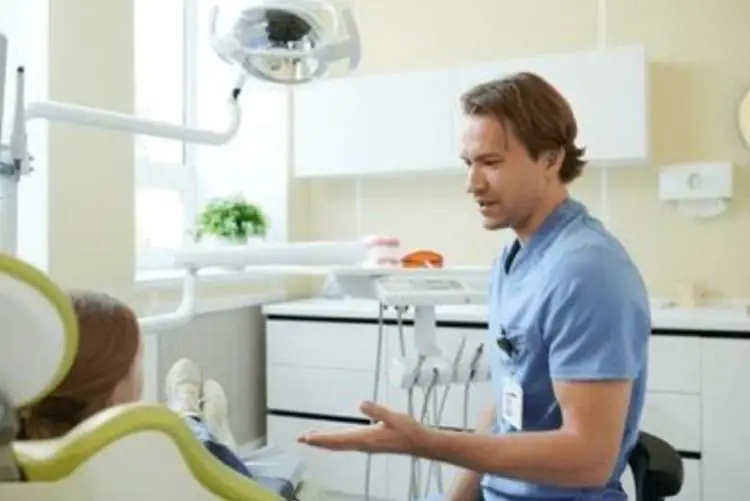
The first time I sat across from a patient, I was more nervous than they were. My instruments were sterilised, my tray was perfectly arranged, and I had mentally rehearsed the entire procedure like a script. But the moment the patient looked straight at me and softly asked, “Will it hurt?” something shifted. That simple question made me realize that while I had prepared for the treatment, I wasn’t fully prepared for the conversation.
As dental students, we spend years drilling cavity preparations, memorising material properties, and revising diagrams until they blur together. But communication — the skill that binds our technical expertise to the person in the chair — is often something we learn only through experience, mistakes, and moments that force us to pause and reassess how we connect with people.
Over time, I’ve learned that dentistry is not just about how precisely we use our instruments; it’s about how gently we use our words. It’s an art shaped by empathy, emotional intelligence, and the quiet confidence that comes from genuinely caring.
When Words Matter More Than Scalers
My most humbling lesson came during a scaling appointment. I had explained the procedure in what I thought was clear and competent language. Halfway through, the patient winced suddenly and asked, anxious and confused, “Is this normal?” That moment felt like a spotlight on my communication shortcomings.
I realized that while I had explained what I was doing, I had failed to explain what they would feel.
A simple sentence — “You’ll feel some vibrations and mild sensitivity, but it’s completely normal.” — could have changed their entire perception of the experience.
Patients don’t remember phrasing or technicalities. They remember how we made them feel. They remember reassurance, safety, and kindness.
Learning From the Quiet Masters: Our Professors
One of my favourite things about clinical life is observing my professors. Some of them barely speak in elaborate sentences, yet their patients visibly relax the moment they enter the room. Is it magic? No — it’s warmth.
Tiny gestures:
•maintaining eye contact
•smiling genuinely
•placing a hand gently on the armrest before beginning
•listening without interrupting These small cues communicate something powerful: “I’m here with you, not just treating you.” Slowly, I started practising these cues myself. A slightly softer tone. A nod that says “I’m listening.” A moment’s pause before a nervous patient opens their mouth.
The transformation, in patients and in myself, was remarkable. I could feel a shift — from being a student who was merely clinical, to someone who was becoming truly clinician-like.
Listening: The Skill We Think We Have, But Rarely Use
Communication is not just about speaking. Sometimes, the most diagnostic tool we have is silence.
I once had a patient who said, “Every tooth is hurting.” My instinctive reaction was disbelief. But instead of interrupting, I listened. And listened. And listened a little more.
By the end, I discovered something bigger: they were under heavy emotional stress and grinding their teeth every night. The pain was real — just not dental in origin.
That day taught me a lesson no textbook ever did: Sometimes, the real problem is not in the tooth, but in the story behind it.
Listening not only builds trust, but gives patients the confidence that they’re being treated as people, not cases.
Simplifying the Complex — Because Patients Don’t Speak “Dental”
Communication also involves translating our clinical knowledge into patient-friendly conversations. The way we speak shapes their experience.
Instead of: “We’re doing a Class I restoration.” I now say: “We’ll clean out the decay and place a filling to protect your tooth.” Same treatment, two different emotional journeys. Patients don’t need jargon; they need clarity. They don’t need scientific accuracy every second; they need understanding.
Nonverbal Communication: The Language of Presence
We underestimate the power of posture, tone, and pace. But they’re often louder than our words:
•How we position our bodies
•How we place the mirror
•How we respond when patients hesitate
•How patient we remain when they need time Every gesture, every pause, communicates assurance.
One of the most powerful nonverbal tools? Slowing down, speaking slowly, working gently, explaining patiently.
Our calmness becomes their calmness.
Communication in the Dental Team: Where Chaos Turns Into Control
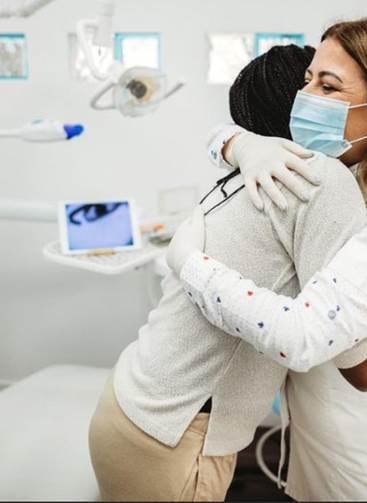
Another undervalued arena of communication lies within the dental team itself. Working with assistants, teachers, technicians, juniors, and peers often feels like navigating a busy airport. One miscommunication and everything collapses.
I learned early that a clear, calm instruction during a stressful clinical moment can completely transform the energy around the chair.
“Mirror.” “Light down a little.” “One moment, please.” “Let’s re-evaluate together.” These simple statements can turn tension into teamwork.
Good communication doesn’t just help patients.
It keeps the entire clinical environment functioning smoothly, safely, and confidently.
When Empathy Becomes the Strongest Clinical Skill
Some days, patients come in with fear. Some with anger. Some with frustration. Some with questions disguised as complaints. And some with silence. But all of them, without exception, want one thing: To feel safe.
Empathy creates that safety. It’s not dramatic. It’s not loud.
It’s not always verbal.
It’s in the tone we use when we say “It’s okay.” It’s in the reassurance behind “Take your time.” It’s in the smile that says “You can trust me.” These are healing moments, even before treatment begins.
The Psychology Behind the Chair: Communication Shapes Trust
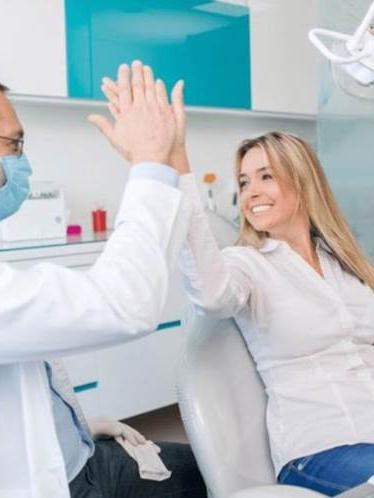
Every patient brings their subconscious fears, childhood dental memories, expectations, and worries with them. Our communication determines whether those fears grow or dissolve.
Research in dental psychology shows that:
•A patient’s trust in the clinician reduces perceived pain.
•Positive communication reduces dental anxiety significantly.
•Clear explanations improve compliance and long-term follow-up.
Communication literally changes clinical outcomes. Dentistry is a science — but chairside communication is the psychology that helps the science work.
Growing Into the Clinician I Want To Become
Every day teaches me something new about people, patience, and presence. I don’t think I will ever stop being a student — not in dentistry, not in communication, not in life. But there’s something beautiful in that humility.
Being a lifelong learner isn’t a weakness — it’s a strength.
It keeps us evolving. It keeps us empathetic. So now, I choose to be a student with confidence.
Because communication, I’ve realized, is not a skill we master once. It’s something we refine with every smile, every conversation, every difficult moment.
In the End: Dentistry Is a Dialogue Dentistry is a dance between science and compassion.
It’s where precision meets presence and where skill meets empathy.
