


In recent years, manufacturers have developed increasingly advanced composite materials, offering improvements in aesthetics, handling and mechanical properties. However, none of these innovations have truly eliminated the challenge of polymerisation shrinkage. This stress, caused by volumetric shrinkage during polymerisation, generates internal stress within the restoration, which can weaken adhesive bond strength, cause marginal gaps and result in postoperative sensitivity or secondary caries.
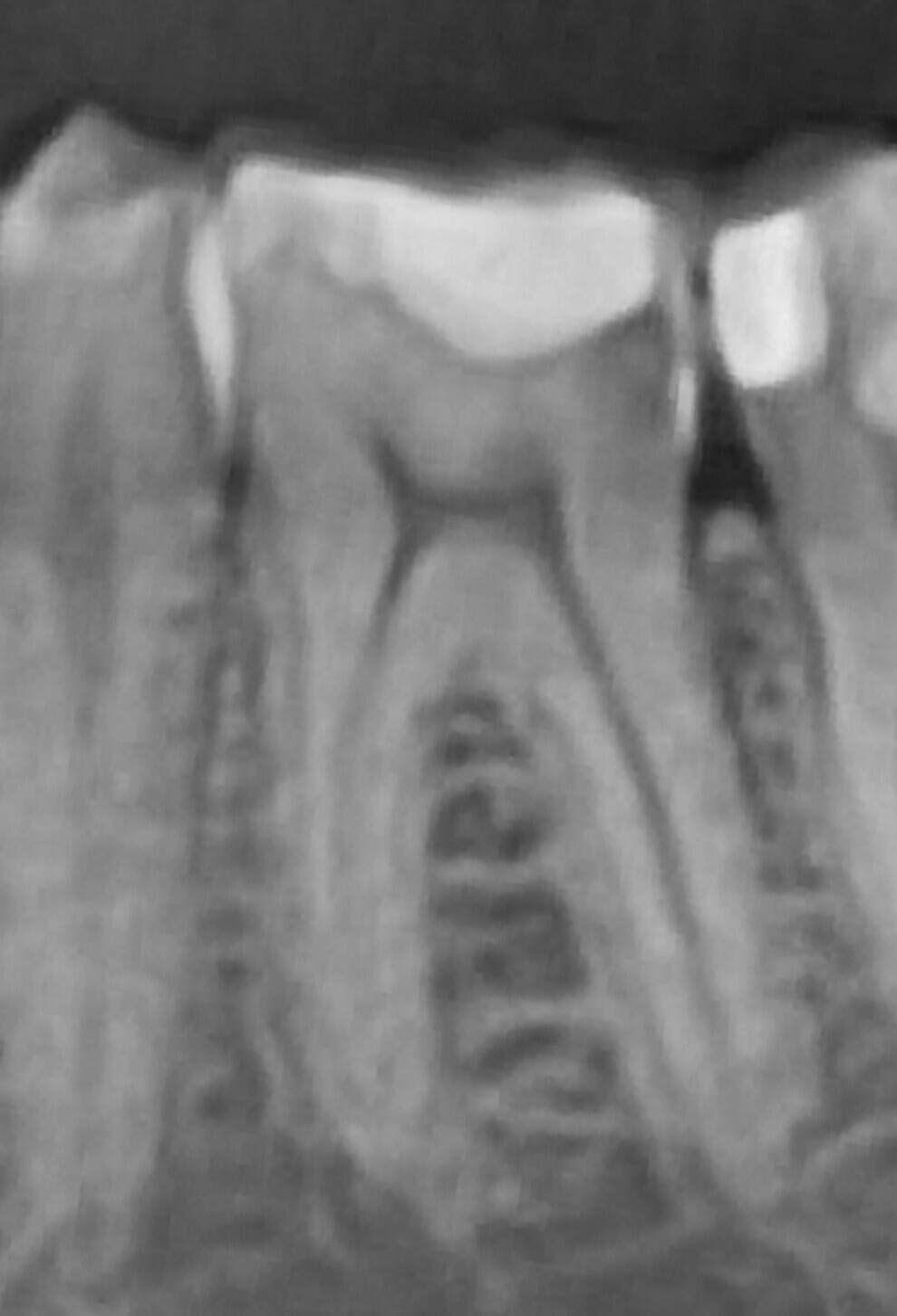
Fig. 2: Panoramic radiograph showing a distal carious lesion.
The more clinicians have learned about adhesion and composite behaviour, the more cautious they have become with layering techniques to ensure long-term success. Unfortunately, these cautious techniques—especially when aiming to reduce stress—often require significantly more chairside time. There is a growing need for a method that simplifies layering while preserving adhesive integrity and aesthetic outcomes.
Indirect restorations have proved to be highly effective in terms of adhesion, particularly because they allow the adhesive interface to mature fully before the restoration is bonded under minimal stress. This is especially true when the preparation is immediately followed by adhesive treatment—known as immediate dentine sealing. In this approach, freshly cut dentine is sealed right after tooth preparation, allowing the resin-infiltrated dentine layer, or hybrid layer, to mature in a stress-free environment during the laboratory phase of restoration fabrication. Since no shrinkage-inducing composite is placed at this stage, the adhesive layer remains undisturbed and can fully develop its mechanical properties before final bonding.
However, these indirect approaches are not always feasible in everyday clinical settings owing to time, cost or patient preference. This has led to increased interest in so-called semi-direct techniques, an approach that blends aspects of both direct and indirect workflows. The term “semi-direct” refers to restorations that are either fabricated outside the mouth on a model created from a quick impression or built directly on the tooth using a separating material such as PTFE tape. In both scenarios, the restoration undergoes extra-oral polymerisation before being returned and bonded to the tooth. This approach allows for improved control over polymerisation stress while preserving the efficiency and practicality of a chairside procedure. Although semi-direct methods offer great potential, many existing techniques are complex and demand artistic skills for free-hand anatomical shaping, limiting their accessibility in daily practice.
The SEAL (Stress-reduced, Esthetic, Anatomically guided, Layer-less) concept is a simplified semi-direct approach that eliminates the need for artistic modelling. Instead, it uses a preformed anatomical model, allowing clinicians to transfer morphology in a copy–paste fashion. The following case illustrates the application of the SEAL concept.
Technique description
Treatment focused on a mandibular first molar with existing Class I and V composite restorations (Fig. 1). The tooth was asymptomatic, and cold testing revealed a normal response. A distal carious lesion, which was not clinically visible, was first suspected during routine screening and its extent clearly identified on the panoramic radiograph (Fig. 2).
After isolation using a dental dam (Isodam, 4D Rubber; Fig. 3), the old restorations were removed, revealing the distal carious lesion (Fig. 4). Caries detection dye (CARIES DETECTOR, Kuraray Noritake Dental) was applied for visual confirmation (Fig. 5).
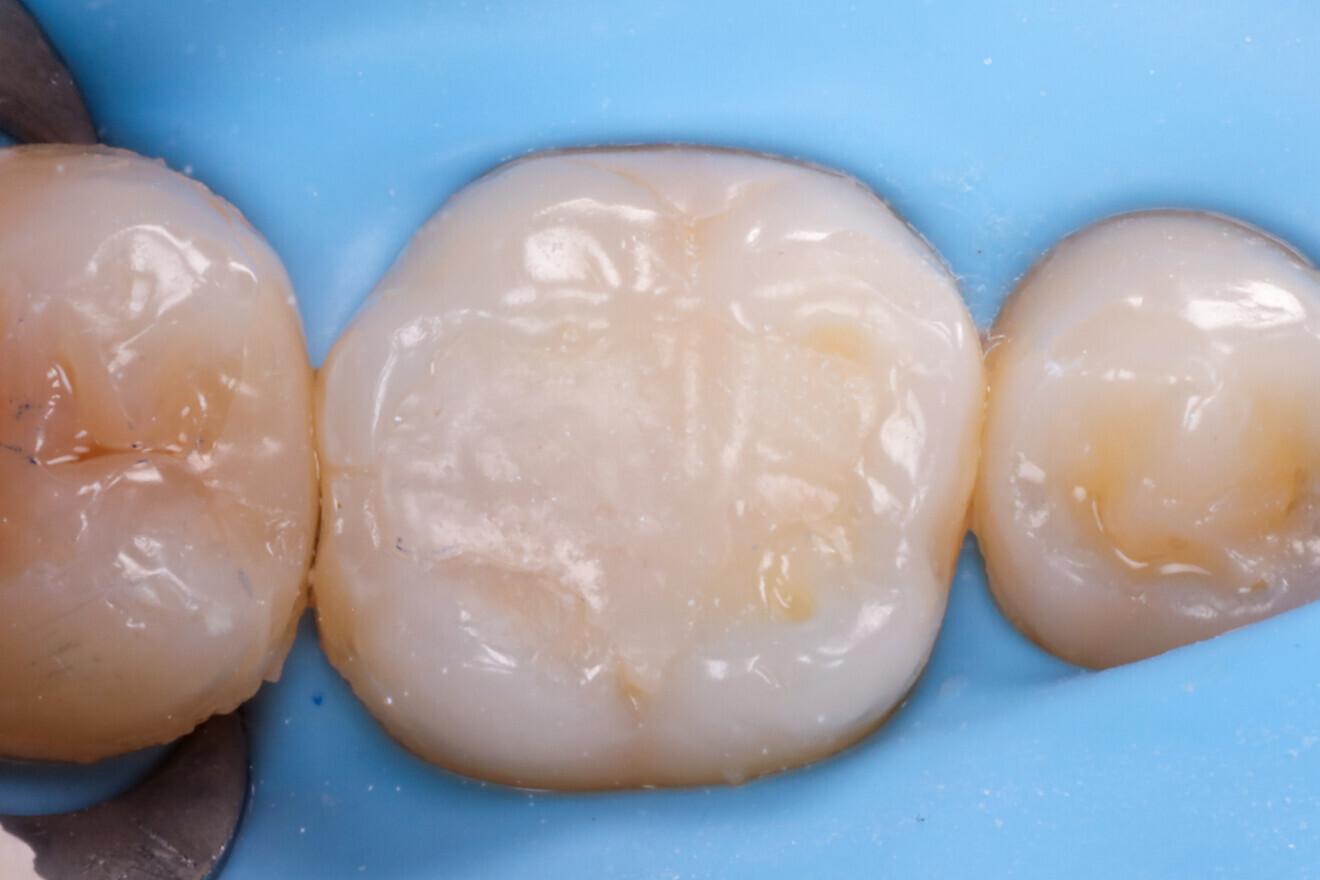
Fig. 3: Dental dam isolation.
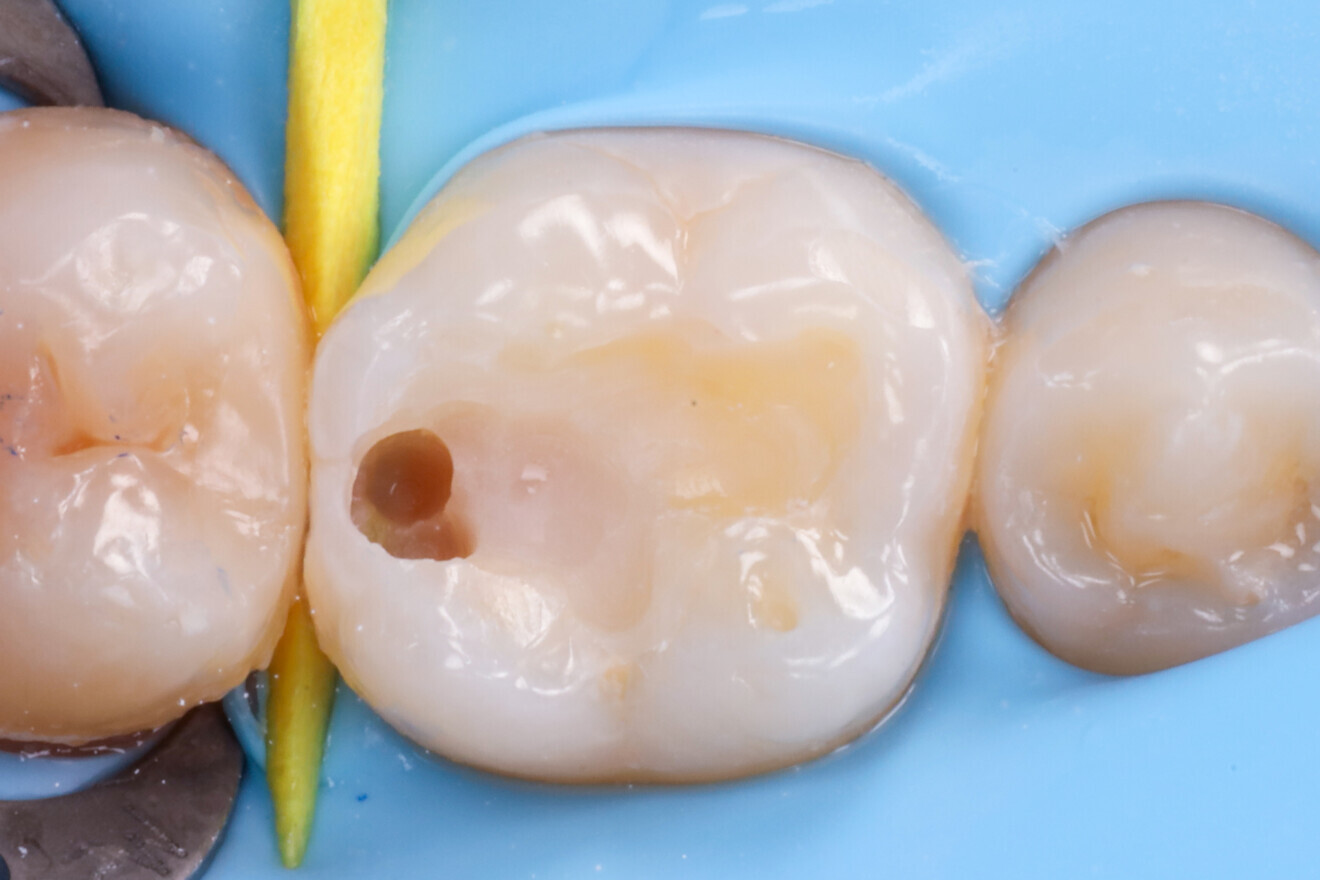
Fig. 4: Distal lesion becoming visible during composite removal.
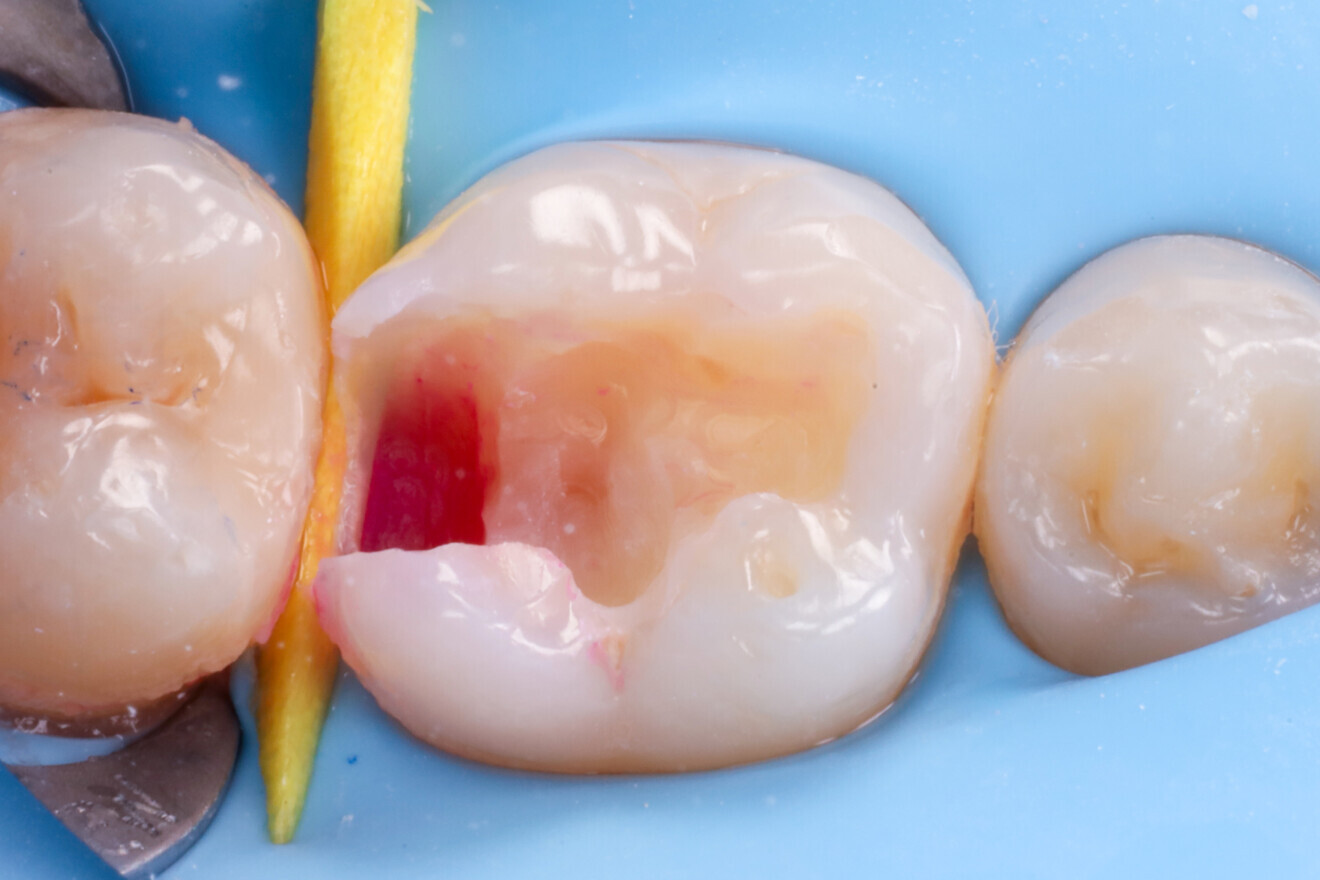
Fig. 5: Caries detection dye applied to visualise the extent of the carious lesion.
After removal of the decayed tissue, the cavity was air-abraded with 29 µm aluminium oxide at 200 kPa pressure using an air abrasion system (AquaCare, Velopex International; Fig. 6).
A double-curved sectional matrix (TOR) was placed with a universal ring (Palodent V3, Dentsply Sirona; Fig. 7). The enamel was etched for 20 seconds with a 36% phosphoric acid (BLUE ETCH, Cerkamed), rinsed and dried completely. The whole cavity was treated using a gold standard two-step self-etch adhesive system (CLEARFIL SE Protect, Kuraray Noritake Dental), followed by light polymerisation for 20 seconds. A thin layer (~0.5 mm) of a flowable composite (Estelite Universal Flow, High; Tokuyama Dental) was applied and polymerised for another 20 seconds using a 1,500 mW/cm² curing light (Curing Pen, Eighteeth).
The proximal wall was rebuilt incrementally with a paste composite (Estelite Asteria, Shade NE), each layer polymerised for 10 seconds (Fig. 8). Undercuts were filled with a short-fibre-reinforced flowable composite (everX Flow, GC) in increments polymerised for 20 seconds (Fig. 9).
