

TheraCal LC
/
/
TheraCal LC

TheraCal LC

Close to the pulp? One clinician shares which product routinely comes to the rescue in cases of deep decay.
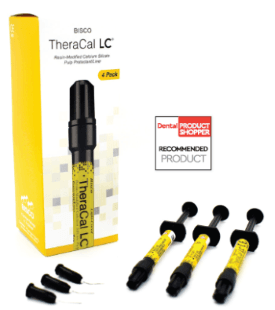

 

theracallcart00.png

On the cusp of his 40th year in practice, Dr. Scott Coleman has come to enjoy the diversity that general dentistry brings to his workdays—scheduling his days with everything from basic fillings and single crowns to multiunit veneers, implant placements, and full-mouth restorations. That said, he’s encountered untold cases of deep decay.


“When there’s a break in the enamel but I’m not sure how deep it goes, I typically do some transillumination to get a better idea of where the decay area is, especially from a buccal lingual standpoint,” Dr. Coleman shared. “Once we go in there and clean it out, that’s where the rubber meets the road—am I going to be close to the pulp, or right on top of the pulp chamber? Did the decay go further than what the radiograph showed? You need to be prepared for those scenarios.”


Over the years, he has imparted a key piece of wisdom to other dentists staring down an uncertain pulp chamber: Don’t sweat it.


“I routinely use TheraCal LC in these cases,” said Dr. Coleman. “I’ve been using it for years, and it works great. It’s light-cured, which is a huge efficiency booster. I don’t have to sit around and wait 3 minutes for it to set. I can place it, cure it, and move on. Every patient sitting in the dental chair does not want to be there 1 second longer than they need to be, so I’m very conscious of their time.”

theracallcart01.png


Natural Insulation


TheraCal LC’s significant calcium release stimu-lates1* hydroxyapatite and secondary bridge forma-tion,2,3 while its alkaline pH promotes healing and apatite formation.2,4


“Exposed dentin is not something that anyone is happy about, so when we’re close to the pulp, we want the body to build some more dentin to try and help insulate it,” Dr. Coleman said. “I really don’t see any postoperative pain when I use it with my patients unless it’s an irreversible pulpitis situation. I’m a big believer in TheraCal LC, and it’s my go-to liner for all deep cavity preps.”


References:

*BISCO has, on file, the calcium release data for TheraCal LC.

1. Gandolfi MG, Siboni F, Prati C. Chemical-physical properties of TheraCal, a novel light-curable MTA-like material for pulp capping. Int Endod J. 2012 Jun;45(6):571–9.

2. ADA definitions for direct and indirect pulp capping. [Internet]. American Dental Association. Available from: www.ada.org/en/publications/cdt/glossary-of-dental-clinical-and-administrative-terms

3. Gandolfi MG, Siboni F, Taddei P, Modena E, Prati C. Apatite-forming ability of TheraCal pulp-capping material. J Dent Res. 2011;90(Spec Iss A):abstract number 2520.

4. Okabe T, Sakamoto M, Takeuchi H, Matsushima K. Effects of pH on mineralization ability of human dental pulp cells. J Endod. 2006;32:198–201.

WhatsApp