

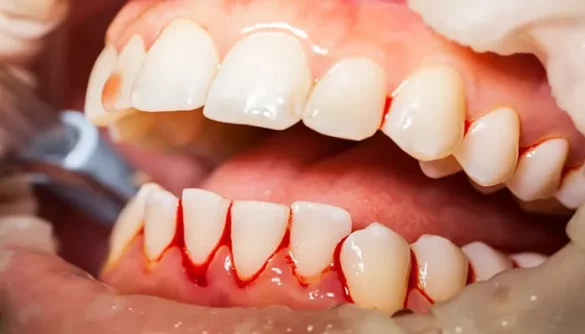
Young adults under 36 with severe gum disease, limited education, and a history of smoking may face a higher risk of losing teeth, a new study in the Journal of Periodontology suggests.
The research also found that a patient’s education and income can influence whether they continue active periodontal treatment (APT), the authors reported.
“Generalized periodontitis (GP), periodontitis stages III–IV, low education, smoking, and discontinuing APT significantly increased the risk of tooth loss,” the team, led by Carolina Modin of the Eastman Institute Department of Periodontology in Sweden, wrote (J Periodontol, August 2, 2025).
The study aimed to identify factors contributing to tooth loss over a 10-year period in young people with periodontitis. The researchers also examined why some patients stopped APT.
The retrospective study analyzed dental records of 446 patients under 36 who were diagnosed with aggressive or chronic periodontitis between 2003 and 2009. The main outcome measured was the number of teeth lost due to periodontitis from 2009 to 2019. The study also collected data on treatment interruptions.
Over the follow-up period, patients lost an average of 1.3 teeth to periodontitis, with a range from 0 to 26. Most patients (89%) lost three or fewer teeth. Only 3.6% lost 10 or more teeth. All patients in this high-loss group had GP and were classified as stage III or IV at the start of the study.
Among these high-loss patients, 81.2% had discontinued APT. Those with postsecondary education (three or more years) lost significantly fewer teeth than patients with lower education levels (p < 0.05). Other factors linked to higher tooth loss included GP (p = 0.002), stage IV periodontitis (p = 0.01), smoking (p < 0.001), and interrupted APT (p = 0.001).
The study had some limitations. Researchers used a complete case analysis to avoid distortion from missing data, which reduced the statistical power.
“Our findings underscore the importance of identifying young individuals with periodontitis early and providing adequate treatment to prevent disease progression,” Modin and colleagues concluded.
