

Jawad Abbas explains why taking a ‘short diagnostic pause’ has transformed the outcomes of TMJ patients.
I’ll hold my hands up first – because I’ve done it too.
A patient walks in with heavy wear facets, masseter tenderness and that tell-tale ‘click’ on opening. The quick mental equation goes something like this: wear + TMJ pain = make a nightguard.
It feels sensible, protective, efficient… and, let’s be honest, most patients expect it.
But the deeper I’ve gone into my restorative diploma – especially through the occlusion and TMD modules – the more I’ve realised how often we reach for the nightguard as a reflex rather than a reasoned intervention.
Let’s face it: our patients have hectic, stressful lives, and so do we. Everyone’s grinding through something these days, some of us literally.
The nightguard reflex
For years throughout my dental school years and even FD, I believed the nightguard was a near universal solution. Bruxism? Nightguard. Jaw pain? Nightguard.
And while that’s not wrong, it’s also not complete.
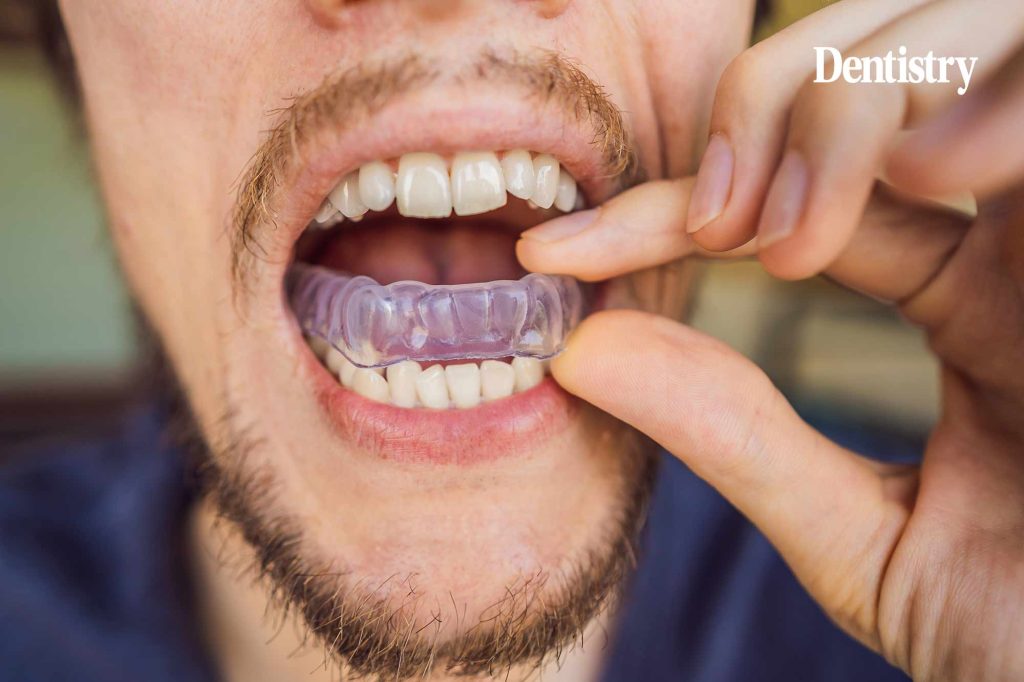
Nightguards certainly have value: they protect teeth from further wear and sometimes provide short-term muscle relief. But they don’t fix the underlying issue – they often just muffle the symptom.
Some studies even show a soft guard can even increase clenching intensity, giving the patient something to ‘chew into’ and giving those masseters a weight workout. They showed that while splints can help in some cases, the effect is inconsistent and rarely long-term.
It’s not just the teeth
As Dr Riaz Yar and other restorative clinicians often stress, occlusion is a system – teeth, joints, muscles, airway, and the mind all working in (or out of) harmony. If one part misfires, the others compensate.
When we provide a generic nightguard without proper diagnosis, we’re protecting enamel, yes, but we might be ignoring the muscular imbalance, airway restriction, or stress-driven parafunction behind it.
It’s like giving paracetamol for a broken leg: it eases the pain, but the problem remains.
What the evidence (and experience) says
- Bruxism is largely central nervous system driven – not really caused by a ‘high spot’
- Myofascial TMD is muscular hyperactivity – often linked to posture, airway, or psychological stress
- A soft or vacuum-formed nightguard does little to influence these pathways.
That’s why recent occlusion ideas focuses less on ‘blocking’ forces and more onreporgramming them for a harmonious result.
The lightbulb moment
During my diploma, I saw cases managed by Dr Riaz Yar where the first step wasn’t ‘make a splint’, but ‘find the reason’.
Sometimes it was airway-related. Sometimes muscle overuse. Sometimes emotional stress. The splint, if used, was chosen and adjusted deliberately with regular reviews – not simply prescribed.
It made me rethink my own habits. Now, when I see a patient with wear or TMJ pain, I pause and ask:
- Is the pain muscular, joint, or both?
- Is this sleep bruxism, awake bruxism, or stress clenching?
- Do I need to deprogram first, or stabilise?
That short diagnostic pause has completely changed the outcomes I see.
A more balanced approach
This isn’t about criticising anyone – we’ve all reached for the nightguard as a quick, protective fix. It’s about refining our approach.
Nightguards protect, but they rarely retrain the muscles. Splints used purposefully – in centric relation, with even bilateral contacts and smooth excursions – can actually calm muscle hyperactivity and restore joint comfort.
And sometimes, the best treatment isn’t acrylic at all; it’s physiotherapy, stress management, or airway assessment.
We don’t need to abandon nightguards altogether – we just need to use them consciously. Before handing one out, we can reflect – are we treating the system, or just shielding it?
