


Ectopic canines are a complex condition to treat with aligners only, since it is not easy to create a reliable and stable anchorage unit for forced eruption.1 Some authors suggest the use of elastics from the impacted canine to the maxillary aligner, but this increases the level of compliance required of the patient for a difficult movement and lengthens the overall treatment time.2 For this reason, the use of temporary anchorage devices (TADs) during forced eruption is a reliable treatment option recommended by several authors in order to completely avoid patient compliance.3 Both direct and indirect TADs can be used according to personal preference to manage forced eruption.
An alternative to TADs when impaction of the canines is less severe is the combination of aligners with an auxiliary called the Mini-Tube Appliance (MTA; Osstem Orthodontics). This useful auxiliary works like a conventional tube, but is covered with white resin to improve the aesthetics and has a silver-covered metallic slot (0.018 in. in diameter; Figs. 1 & 2). The advantage of these auxiliaries over a conventional sectional bracket system are their greater aesthetics, small size, ease of cleaning and, in particular, reduced friction thanks to the silver coating.
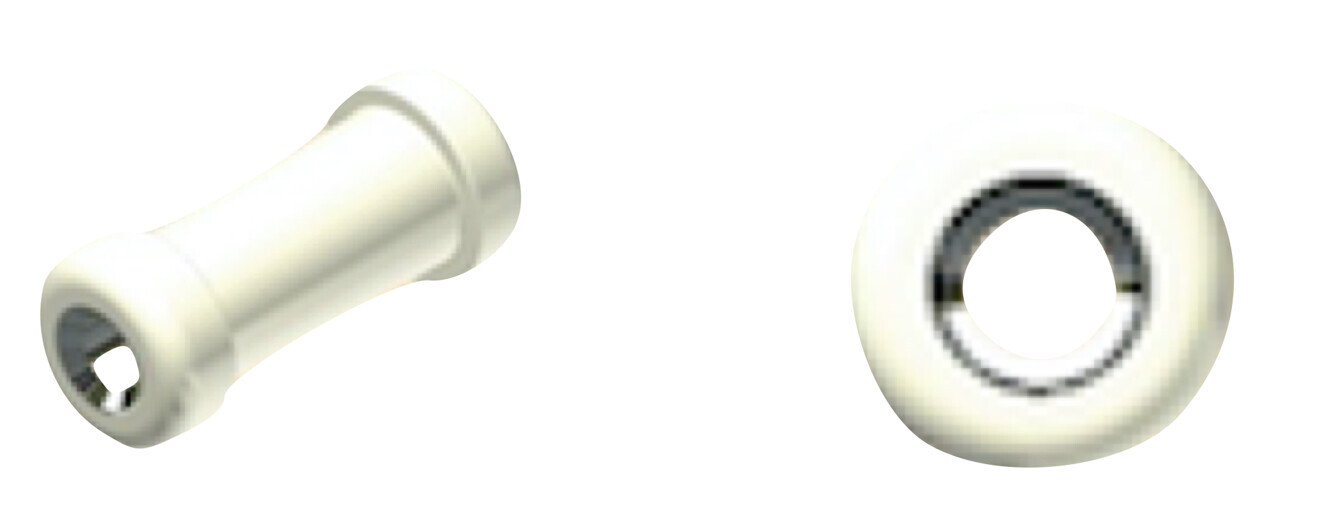
Fig. 1
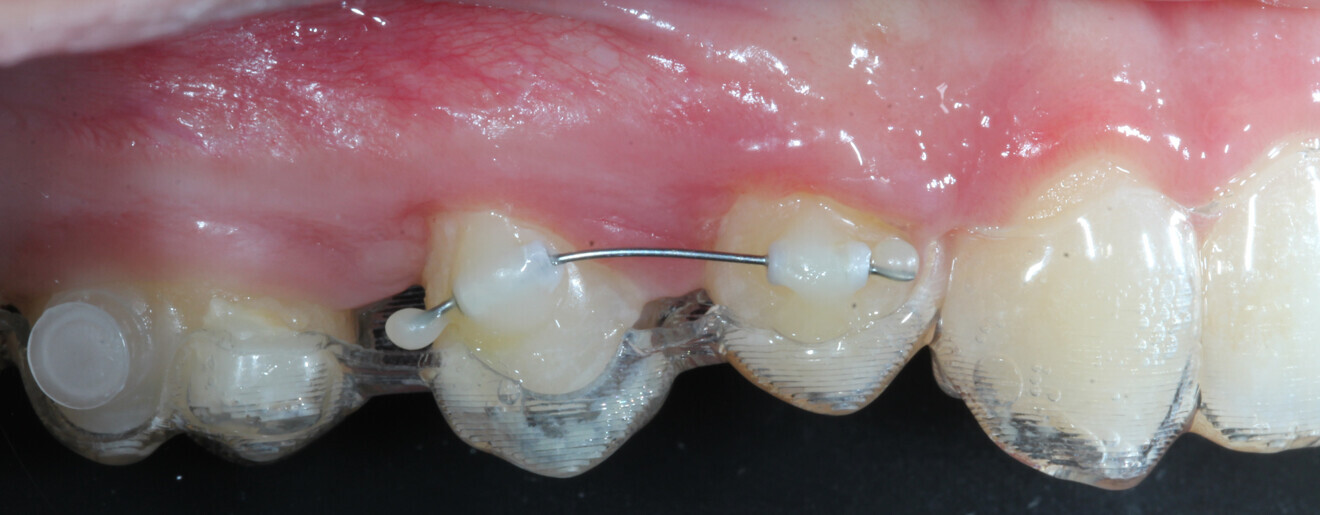
Fig. 2
Because MTA has no bondable surface, the bonding procedure after enamel preparation begins with applying a thin composite layer. The tube is then submerged in the composite while carefully preventing resin from entering the slot, polymerised, and finally covered with a second composite layer. This approach makes it possible to debond this auxiliary by breaking the composite and re-bonding the same tube in a different position.
By using this auxiliary in combination with aligners, forced eruption can be managed completely without requiring further patient compliance. For this, rounded sectional archwire is inserted through the MTA. The wire can be nickel–titanium (NiTi) or stainless steel depending on the stage of treatment.
The ideal sequence of treatment is as follows: (1) space creation for canines by means of aligners; (2) forced eruption with MTAs by means of sectional archwire; (3) space maintenance with passive aligners; and (4) torque correction and finishing with additional active aligners. This approach can be considered efficient, since the number of aligners and the treatment plan will be limited to predictable movements, avoiding reliance on aligners to perform difficult extrusive movement.
Case report
History and assessment
A 14-year-old female patient presented with the chief complaint of midline deviation and dental crowding in both arches. Facial analysis showed a hypodivergent growth pattern, a normal nasolabial angle, a harmonious profile and proper chin projection. Clinical examination revealed a Class III skeletal relationship (ANB = 0°) and Class I molar relationship. The maxillary right canine was absent, and this had led to space loss and mesial drift of posterior teeth on the right side, resulting in a slight Class II molar relationship. The maxillary left canine had erupted in a high position. The mandibular arch displayed crowding despite the agenesis of the right second premolar and the persistence of the primary molar (Figs. 3–11). The radiograph showed the probably premature loss of the maxillary right primary canine and consequently impacted maxillary right permanent canine, and the agenesis of the mandibular right second premolar and the mandibular right third molar (Fig. 12).
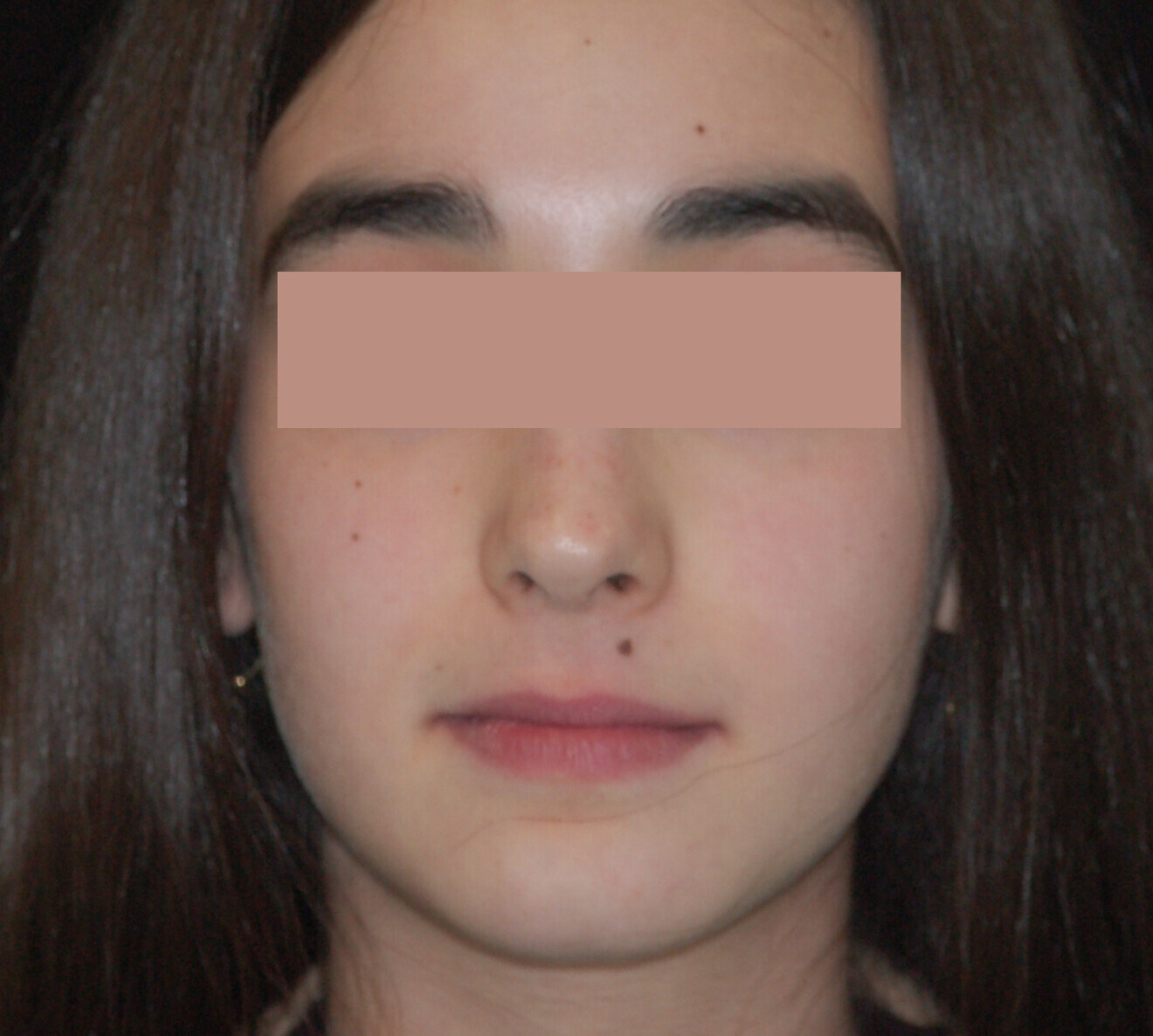
Fig. 3
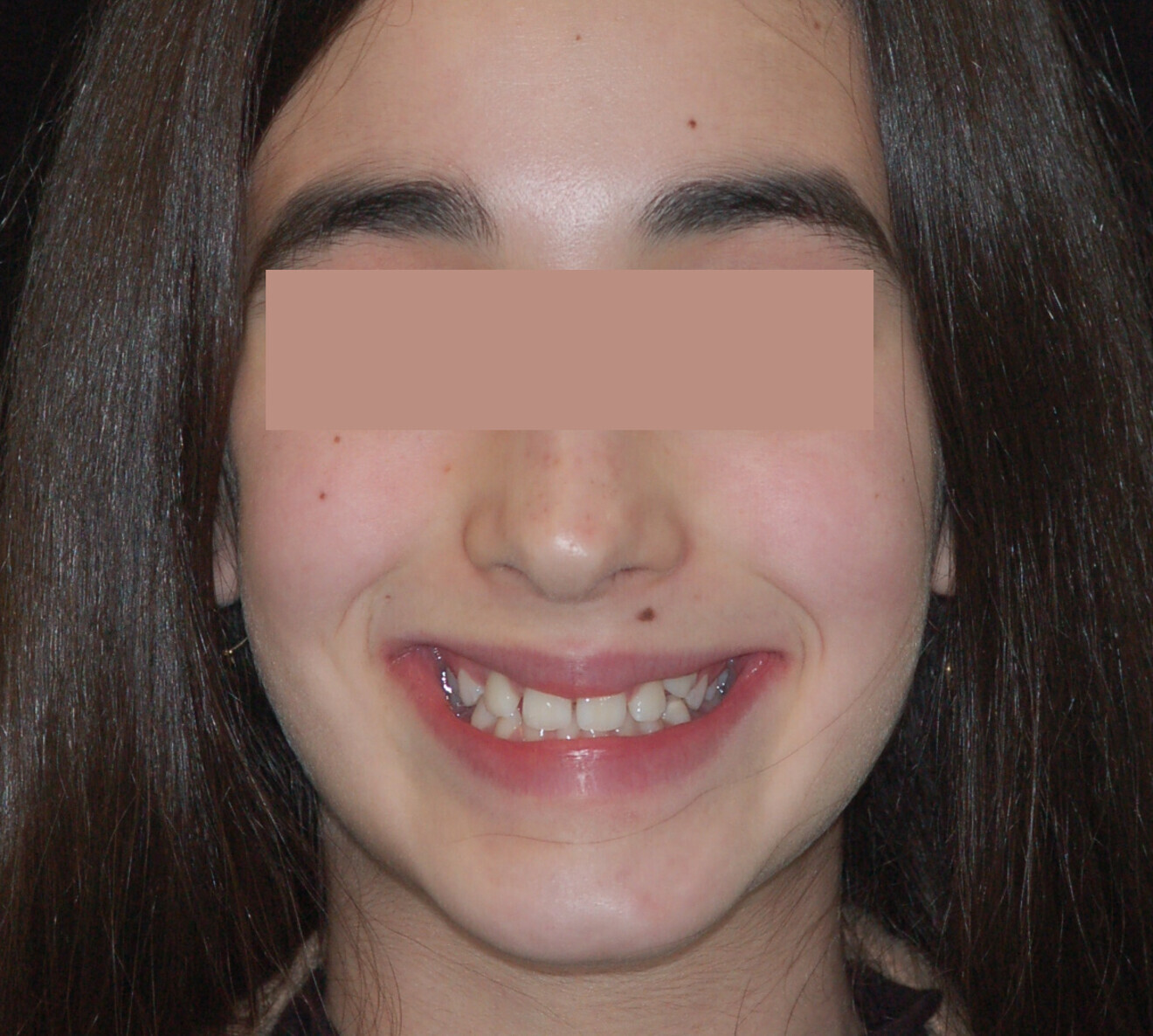
Fig. 4
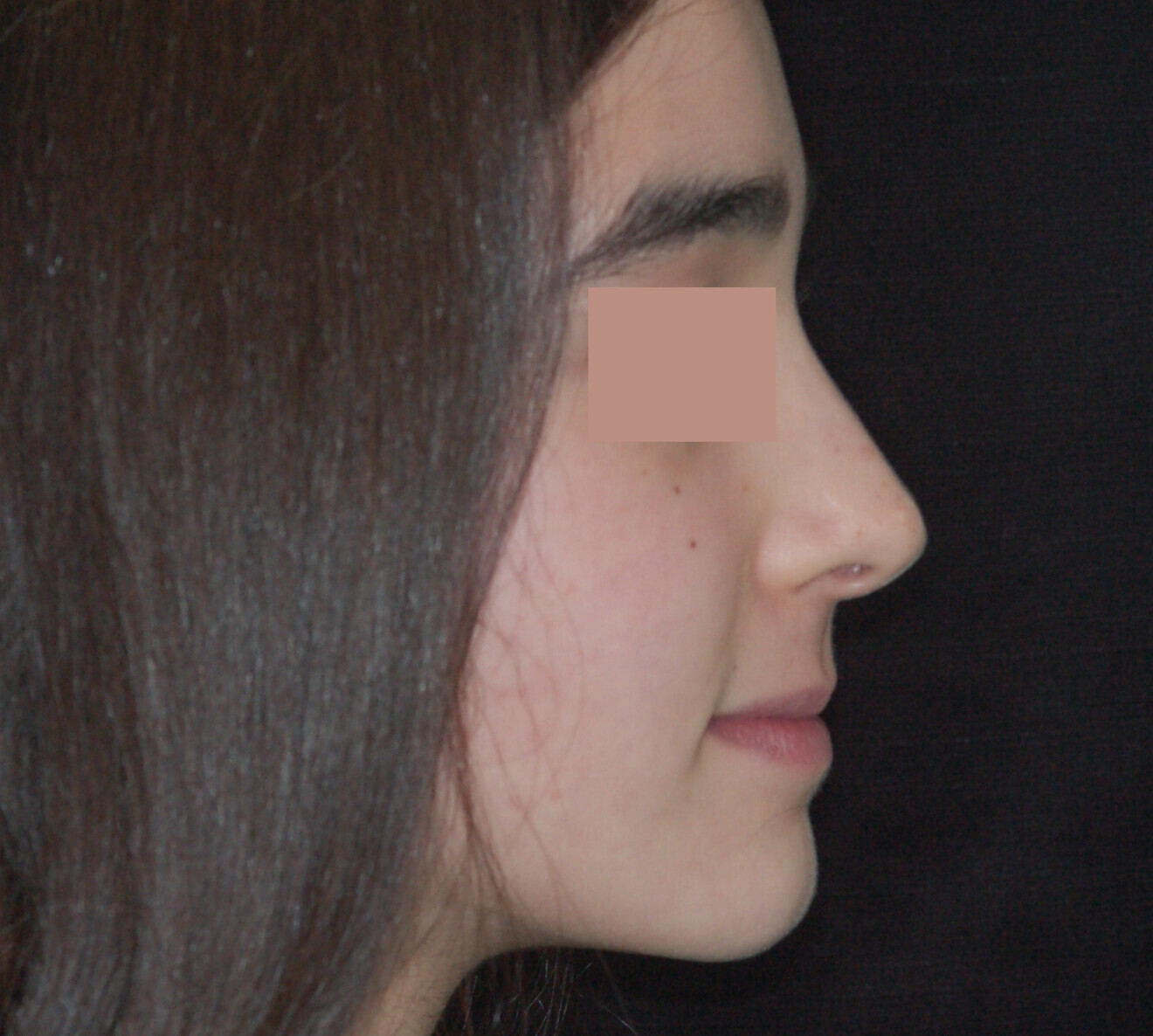
Fig. 5
