


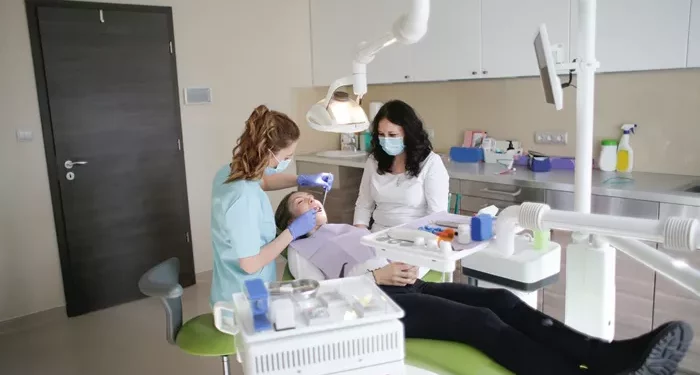
The British government recently announced a reform proposal aimed at repairing the “collapsed” National Health Service (NHS) dental service. The plan proposes a number of measures to increase the number of appointments, improve service quality and improve the overall patient experience.
The core content of the reform includes requiring newly qualified dentists to serve in the NHS system for at least three years to alleviate the current difficulty in making appointments. At the same time, dentists will also be required to provide a specified number of emergency and unplanned dental care services each year.
The plan also sets up a special treatment path for high-demand patients, such as patients with severe gum disease or at least five teeth with caries. In addition, more funds will be invested in modifications and support for denture-related treatments.
The Department of Health and Social Security said that the goal of this reform is to encourage dentists to take over more complex cases, which are often ignored in the current system or cannot be properly treated due to cost issues.
At the same time, the government will also strengthen children’s oral health prevention measures, such as more effective use of resin sealants for children with a history of caries, and basic care with fluoride varnish without a comprehensive examination.
The reform plan is currently in the consultation stage. If it goes smoothly, it can be officially implemented as early as April next year.
In response, the British Dental Association called on the government to implement the relevant plan as soon as possible, but also pointed out that the system still has structural defects. At present, public satisfaction with NHS dental services has dropped to a record low, and more than a quarter of British adults report that it is difficult to obtain dental care provided by the NHS.
Health Secretary Stephen Kinnock admitted in a statement that the current dental system is “fragmented and in crisis.”
He said that the government has taken action, including adding 700,000 emergency and emergency dental appointments and launching a children’s toothbrushing supervision project in poor areas. But he stressed that these measures alone are far from enough and need comprehensive and systematic reforms.
“We are restoring public confidence in NHS dental services. This reform will attract more dentists to join the NHS, ensure that seriously ill patients are given priority treatment, and push the entire system back to normal operation.”
Shiv Pabari, chairman of the General Dental Practice Committee of the British Dental Association, also pointed out that although these reforms are positive steps, these improvements are only “temporary stop bleeding” in the context of fundamental problems in the entire NHS dental service system.
Benedict Knox, a spokesman for the Health Watch organization, said that the public’s complaints about the difficulty of accessing NHS dental services and the high cost have continued to emerge.
This reform is expected to encourage dentists to take on more complex cases, so that those who need help most can get treatment. However, he also stressed that further understanding of the details of the reform is needed to judge the government’s overall vision.
The six-week public consultation will end on August 19 this year, when the government will further adjust the plan based on feedback.