

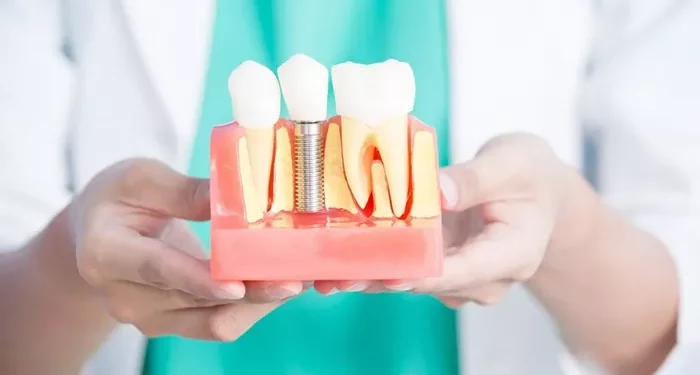
Ancient Romans once rinsed their mouths with urine to whiten their teeth, and now scientists are planning to bring urine back to the mouth in a more advanced way—this time, it could power dental implants and bone repair.
A team of researchers at the University of California, Irvine, has discovered that human urine can be converted into hydroxyapatite, a mineral used to strengthen tooth enamel and bone. This material, widely used in dental and orthopedic implants, has a market value expected to exceed $3.5 billion by 2030.
A team of 11 scientists from California, Illinois, and Japan has used innovative methods to enable yeast to absorb elements from urine and produce hydroxyapatite. This “bone yeast” technology not only reduces production costs but also makes the material more accessible.
Compared to traditional processes, this method is quicker, uses lower temperatures, and does not require extensive infrastructure, making it easily adaptable even to developing economies.
This urine recycling method not only provides a low-cost, sustainable material for dental implants, but also has potential applications in archaeological artifact restoration, biodegradable plastic replacement, and construction materials, creating new opportunities for resource recycling and environmental protection.
David Kisailus, professor of materials science at the University of California, Irvine, noted, “This yeast-based method for producing hydroxyapatite is highly efficient, can be completed in less than a day, and is cost-effective. This suggests its potential as a sustainable solution in dentistry and other fields.”
In the coming years, as this innovative material becomes increasingly practical, we may begin to view urine in a whole new light—not just as excrement, but as a valuable biological resource.
