

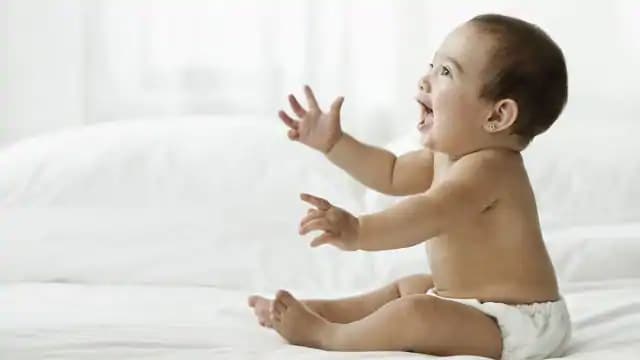
When Will I Hear My Baby’s First Laugh?
After your baby begins to interact with you and your loved ones regularly, their smile will eventually erupt into the joyous sounds of laughter. This is likely to happen at around four months old, although all babies develop at their own unique pace. If they’ve already started to smile and their cooing and vocalizing, giggles shouldn’t be far behind!
How to Make Your Baby Laugh
Can’t wait to hear that first laugh? Try these tips to get your baby chuckling:
- Be responsive and show excitement when they smile or vocalize.
- Make silly sounds, like blowing raspberries, making popping noises, or squeaking. You’ll be surprised what random noises can be hilarious to your baby!
- Give them age-appropriate toys, especially those that make the aforementioned funny noises.
- Play peek-a-boo and other surprise games.
- Use light touch, like gentle tickling or blowing.
- Play anticipation games, like walking your fingers along your baby’s arm and then tickling them.
- Bounce them up and down on your lap while you sing fun songs.
Why Do Babies Laugh in Their Sleep?
You’re watching your little angel sleep and suddenly they let out a little giggle. Some researchers think this is just a natural reflex, like your baby’s startle reflex, for example. However, many experts actually believe that this adorable behavior is part of your baby’s social and emotional development. While they sleep, they’re processing all of the new things they’ve learned throughout the day, and even practicing their emotional expressions, which include laughter.
Other theories as to why babies laugh in their sleep include:
- They’re dreaming, just like adults do!
- They’re responding to something in their environment, like the sound of your voice.
- They’re releasing tension.
Baby Not Laughing? What’s Normal and When to Worry
Every baby develops at a slightly different pace, and some babies are simply more expressive and prone to laughter than others. If your baby smiles, vocalizes, makes eye contact, and interacts with you in other ways, or they laugh but not as often as you’d hope, it’s probably not a cause for concern.
However, if your baby isn’t laughing by around six months old, the Centers for Disease Control and Prevention (CDC) recommend making an appointment with your nurse or pediatrician. Failure to laugh can sometimes be a sign of a hearing problem or developmental delay, so your baby may need a little extra support to hit this particular milestone.
Before long, your child’s laugh will be replaced with the sound of their car pulling out of the driveway. Time flies when you’re a parent, so enjoy these early milestones and magical moments while you can.
Learn more about caring for your baby’s teeth with Colgate’s Oral Care resources.
