Integrated dental imaging system combines 3D, intraoral color, and near-infrared images into one device for enhanced diagnostics and treatment,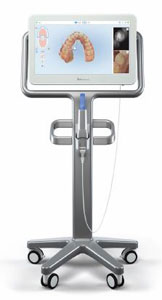 Ever felt like you didn’t know what you were missing until it arrived? Dr. Bobbi Stanley certainly has. Even though she knew her caries detection device and intraoral camera spent more time in drawers than in patients’ mouths, she still struggled to see the value of merging them into one device. Now, with the iTero Element 5D imaging system, one scan captures the key information she needs to educate her patients in a way that makes it a no-brainer to move forward with treatment.,I always tell my patients, “The most important thing to me is not to keep your teeth, but to keep you alive. And now that you’re alive, we’re going to keep your teeth.” As doctors, our job is to educate patients, because if we educate them properly, they will move forward with taking care of themselves. But in our quest to do this, we often talk over a patient’s head without realizing it. Luckily, the iTero Element 5D system has changed that.,Taking an iTero digital scan as part of our new patient exam has made an incredible difference in my treatment approach. Now, when I walk into the room, I don’t need to stick my hands in the patient’s mouth right away and tower over their personal space. I can introduce myself, talk to them about who they are and what they’re looking for, and then turn to the computer screen so we can look at the scan together.,I pull the magnifying glass over so we can walk through the 3 images up on the screen—a 3D scan, intraoral photo, and near-infrared (NIRI) image—and all joking aside, I almost don’t even need to say, “You may have an issue here.” Before I can even get there, the patient is asking me, “What’s that?” They literally see it before I do with the iTero Element 5D.,I recently saw a patient with acid erosion on the biting surface of his teeth that a dentist in the past had told him was caused by grinding. I pulled up an iTero Occlusogram image that showed the bite and told him that wherever we saw red spots would be where he was biting the hardest. Sure enough, the cratered area was not even red. Our conversation ended up revealing that the patient had acid reflux and difficulty sleeping, which are signs of sleep apnea.,In another case, a patient presented with a dark central incisor that was lingually inclined. I told her we had 2 options: restore it with a veneer or do whitening and use Invisalign treatment to pull it back into position. Because we took an iTero scan, I told her I would take some time to think about the case and decide what was best for her. If I decided to do a veneer, I’d just send the scan to the lab; and if Invisalign treatment was the better option, I’d just send the scan to Align. She didn’t need to come back to the office, take a day off from work, and risk her health during the ongoing COVID-19 crisis.,Having one scan that captures all of this information simply allows me to diagnose better. And if I can diagnose better, I can treat better. And when you treat better, you feel better as a dentist and you’re going to be profitable. So, it’s just a win-win all the way around.,Dr. Stanley graduated from the University of North Carolina School of Dentistry and continues to be an avid learner, attending countless hours of continuing education and adopting the latest dental materials and technology to provide her patients with superior dental services. Her professional affiliations include a Master in the Academy of General Dentistry, a Diplomate in the International Congress of Oral Implantologists, and a Fellow at the prestigious Las Vegas Institute for Advanced Dental Studies. Dr. Stanley maintains a private practice in Cary, NC, and is cofounder and senior instructor at the Stanley Institute for Comprehensive Dentistry.


