|
JON JULIAN, DDS Dr. Julian received his Doctor of Dental Science degree from the University of Missouri at Kansas City Dental School in 1978 after completing undergraduate work at the University of Kansas. He maintains an active membership in the American Dental Association, Academy of General Dentists, South Carolina Dental Association, Academy of Laser Dentistry, International College of Oral lmplantologists, Doctors for Oral Conscious Sedation and Catapult Education. Dr. Julian was the original implant instructor and charter member of the Dr. Dick Barnes Group. He is licensed in South Carolina and Pennsylvania. He lectures extensively throughout the United States, Europe, and Asia on dental implants and the use of technology in dentistry. |
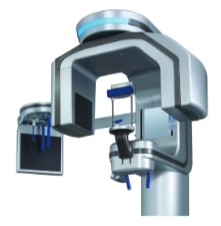
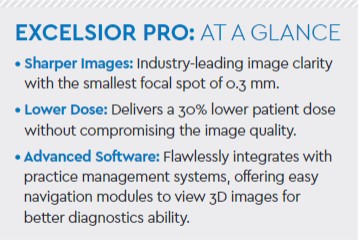
PreXion3D Excelsior Pro
With superior image quality and easy-to-use software, this CBCT system provides the diagnostic clarity and detail for practicing better dentistry
|
|
The PreXion3D Excelsior Pro CBCT scanner represents the evolution of PreXion’s imaging technology for dentists who seek the most precise 3D imaging, fast image reproduction, lowest radiation exposure, consistent and reliable diagnostics, and easy-to-use software for optimized treatment planning. Here, Dr. Jon Julian describes his CBCT journey—from his initial doubts to his ability to provide more comprehensive dentistry.
I once had the mindset that many doctors still have: “I can’t justify the cost of a cone beam system.” It was expensive, and I didn’t see the advantages because I didn’t use it. However, as a practicing dentist and an educator, I needed to better understand it. So, when I started looking at cone beam systems, I found myself gravitating toward the ones with the sharpest, clearest images. Ultimately, that led me to PreXion—whose diagnostic clarity and ease of use would set me on a journey that transformed both my patient care and my practice.
When I first started using cone beam in my practice, I would only take scans for my implant cases. But I kept discovering things I wouldn’t see previously—things that neither I nor the patient knew they had. It didn’t take long for me to figure out that I better take a cone beam scan on every patient—not just those who needed an implant. By doing so, I have an opportunity to diagnose anything going on in the entire mouth.
Education = More Dentistry
|