


With Schick 33, the presets allow us to use default settings for general dentistry, endodontics, and other specialties. And the software allows me to enhance the images as needed. I can zoom in and adjust the sharpness, and optimize the brightness and contrast as needed.
As far as diagnostics, Schick 33 has been very helpful. Yesterday, I had a patient walk in with a full mouth series on film, and to be honest with you, I had a hard time reading those things. They were just so little. Here, I can blow up an image to full screen, if need be, and use the enhancement tools. These functions are particularly valuable when educating patients because I can provide a clear visual for them.
If I’m doing a root canal, the inversion function is especially helpful (see pictures, at right). Sometimes, the apex of the tooth is not easy to define on a multirooted tooth, so in those cases I use the “invert” tool with a trial gutta-percha, which makes it easier to see.

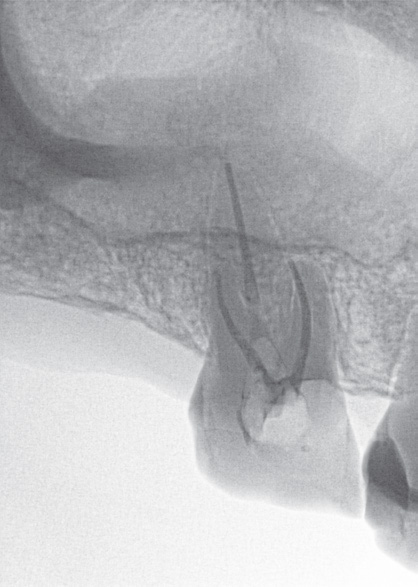

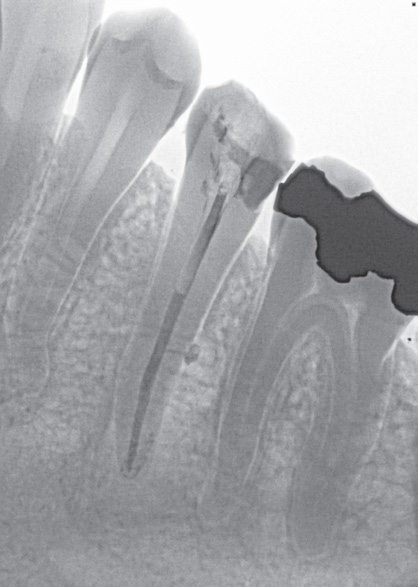
With 3 sensor sizes and multiple cable lengths, Schick 33 is also beneficial from a physical standpoint. And considering my prior problems with other sensors, the replaceable cable—should I ever need one—is one of my favorite features.
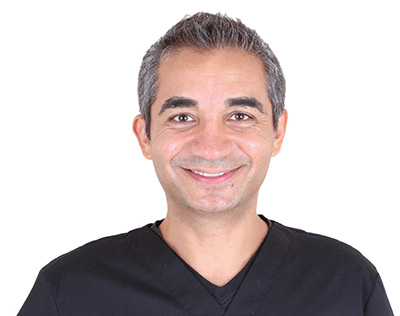
Dr. Mahallati, who practices at Bay Dental in Santa Ana, CA, graduated from the University of Southern California in 1995 and moved to Orange County in 1997. With an extensive continuing education background in
orthodontics and implant dentistry, he strives to help
patients achieve and maintain the smile they want.
