


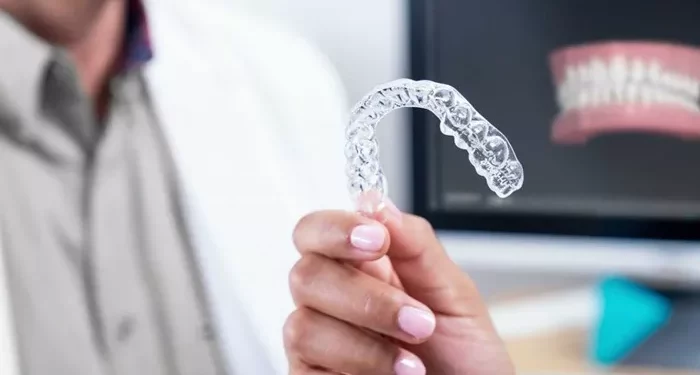
Clear aligners have become a mainstream orthodontic option, but a leading UK dentist warns that commercial pressures are undermining treatment outcomes and clinical principles.
Chris McConnell, a general dental practitioner (GDP) with 22 years of experience providing clear aligner therapy (CAT), says many common problems seen in practice today stem from a growing gap between marketing narratives and biological reality.
Tracking issues, particularly with upper lateral incisors, premolars and canines, remain widespread. Deep bite correction, repeated revision sets and prolonged treatment times are also frequent challenges.
According to McConnell, these problems are often linked to factors such as poorly positioned attachments, unrealistic wear times, inappropriate aligner materials, excessive torque, insufficient interproximal reduction (IPR), or poor patient compliance.
Over the past two decades, McConnell has witnessed explosive growth in CAT, alongside a surge in aligner companies and technological advances in design and materials. While many developments have improved treatment potential, he says the commercial messaging has increasingly focused on speed, low cost and minimal numbers of aligners.
The stakes are high. The UK clear aligner market is now valued at more than £230 million annually, with projections exceeding £1 billion by 2030 as public demand continues to rise. Increased competition, driven by both clinicians and companies, has intensified marketing claims—often amplified through social media.
McConnell argues that this environment has distracted clinicians from the core principles of aligner therapy. “If we misunderstand the fundamentals of CAT, it directly affects outcomes, compliance and the need for revisions,” he says.
Concerned by recurring clinical issues, McConnell undertook an in-depth review of aligner therapy research in 2020. His focus included the biology of tooth movement, orthodontic osteogenesis and angiogenesis, torque mechanics, aligner materials, wear protocols and patient compliance.
What he found, he says, challenged many prevailing assumptions. Research evidence often contradicts commercial claims, particularly around accelerated treatment schedules and reduced wear times.
Among the key findings: aligners should typically be worn closer to two weeks per stage to align with biological processes. Attachment position is more important than attachment quantity. A clear understanding of orthodontic mechanics is essential for predictable movement. Aligner design and material selection can significantly influence success or failure.
Patient behaviour also remains a critical issue. Studies indicate that around 70% of patients do not fully comply with prescribed wear times, with nearly one in five wearing aligners for fewer than six hours a day.
To share these insights, McConnell has released a free educational video outlining what he calls the “hidden truths” of clear aligner therapy. He hopes it will encourage clinicians to question prevailing narratives and adopt more evidence-based protocols.
His message to the profession is clear: slow down, think critically, and prioritise biology and biomechanics over marketing promises when delivering clear aligner treatment.