


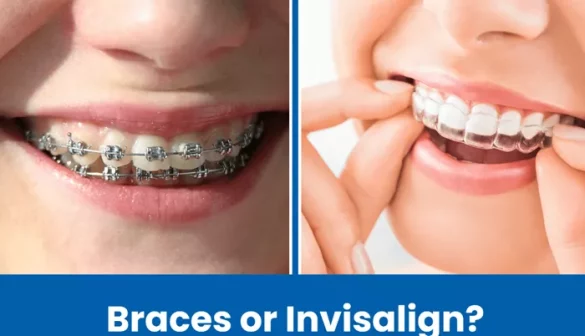
When it comes to straightening teeth, both Invisalign and traditional braces are widely used. Each treatment has its benefits and drawbacks. Patients often ask, “Is Invisalign faster than traditional braces?” The answer depends on various factors including the complexity of the dental problem, patient compliance, and oral health conditions such as sensitive teeth or gum disease.
How Invisalign Works
Invisalign uses a series of custom-made, clear plastic aligners to move teeth into their correct positions. These aligners are replaced approximately every 1-2 weeks. The system is designed for comfort and is nearly invisible, making it appealing to adults and teens alike. Invisalign is generally recommended for mild to moderate alignment issues.
Key Benefits of Invisalign
- Nearly invisible aligners
- Removable for eating and brushing
- No metal wires or brackets
- Fewer in-office visits
- Often more comfortable for sensitive teeth
How Traditional Braces Work
Traditional braces involve the use of metal brackets and wires that are fixed to the teeth. The wires are periodically tightened to shift the teeth into place. Braces can treat a wider range of orthodontic issues, including severe misalignments and bite problems.
Advantages of Traditional Braces
- Effective for complex dental issues
- Constant pressure on teeth provides predictable results
- Not removable, ensuring consistent wear
- Can be used at any age
Speed of Treatment: Invisalign vs. Braces
In general, Invisalign tends to work faster than traditional braces for mild to moderate dental issues. The average treatment time with Invisalign ranges from 12 to 18 months. On the other hand, traditional braces may take 18 to 36 months depending on the severity of the case.
Factors Influencing Speed
- Complexity of the dental problem
- Patient compliance with wearing Invisalign trays (20-22 hours a day)
- Age of the patient (younger patients may respond faster)
- Underlying oral health conditions like gum disease
Patients with sensitive teeth may also find Invisalign preferable, as the smooth aligners exert gentler pressure compared to metal braces, which can cause discomfort during adjustments.
Effectiveness Compared to Speed
While Invisalign might be faster for certain patients, traditional braces are often more effective for complex orthodontic problems. These include severe crowding, large gaps, and significant bite misalignments. Dentists may recommend braces for cases where Invisalign is not sufficient.
When Braces Might Be Necessary
- Rotated or severely tipped teeth
- Complex bite issues (underbite, overbite, crossbite)
- Jaw alignment problems
Impact on Oral Health
Both treatment options require diligent oral hygiene. However, Invisalign allows patients to brush and floss normally since the aligners are removable. This can reduce the risk of gum disease, plaque buildup, and cavities. Traditional braces, on the other hand, make brushing and flossing more difficult, which could increase the risk of dental issues if not managed properly.
Tips for Maintaining Oral Health
- Brush after every meal
- Use a floss threader or water flosser with braces
- Clean Invisalign trays daily
- Visit the dentist regularly for cleanings
Comfort and Aesthetics
Many patients with sensitive teeth prefer Invisalign because it is less abrasive on the teeth and gums. Traditional braces may cause irritation due to brackets and wires. Invisalign aligners are smooth and custom-fitted, which minimizes discomfort.
From an aesthetic standpoint, Invisalign is the clear winner. The transparent aligners are nearly invisible, which appeals to image-conscious patients. Braces, while available in ceramic or tooth-colored options, are still more noticeable.
Cost Comparison
The cost of Invisalign and traditional braces can be similar, depending on the length and complexity of treatment. On average, Invisalign costs between $3,000 and $7,000, while traditional braces typically range from $2,500 to $6,500. Insurance may cover part of the cost for both treatments.
Patient Compliance Matters
Invisalign only works efficiently if patients wear their aligners for the recommended 20–22 hours per day. Failure to do so can delay results. Braces, by contrast, are fixed in place and do not rely on patient compliance for wear time, which can be an advantage for some individuals, especially children and teenagers.
Suitability for Different Age Groups
Invisalign is ideal for adults and responsible teens who can manage the aligner schedule. Braces are suitable for children, teens, and adults, particularly in cases where a more aggressive approach is needed. Children with developing jaws often benefit more from traditional orthodontic methods that guide jaw growth and tooth eruption.
Combining Treatment Options
Some orthodontic treatments use a hybrid approach. For example, a patient may start with braces to correct major issues, then switch to Invisalign for the finishing stages. This combination can offer both speed and precision.
Dealing with Dental Conditions During Treatment
If you have gum disease, it must be treated before beginning orthodontic work. Active gum infection can interfere with the success of both Invisalign and braces. Patients with sensitive teeth should also inform their dentist so that adjustments to the treatment plan can be made for comfort and safety.
Long-Term Maintenance and Retainers
After treatment, both Invisalign and braces require the use of retainers to maintain the new tooth positions. Invisalign offers clear retainers that resemble aligners, while traditional braces often use wire retainers. Wearing retainers as prescribed is essential for preventing relapse.
Professional Recommendations
Each patient is different, so it is essential to consult a qualified dental professional to evaluate your condition. They will assess your teeth alignment, bite, and oral health, including any signs of sensitive teeth or gum disease, to recommend the best treatment.
Conclusion
In summary, Invisalign is generally faster for patients with mild to moderate orthodontic needs. It is discreet, comfortable, and more convenient for many adults and teens. However, traditional braces are still the most effective option for complex cases and young children. Your dentist or orthodontist can help you decide which method will deliver the best and fastest results based on your unique dental situation.
Whether you’re dealing with sensitive teeth, concerned about gum disease, or simply looking for a faster route to a beautiful smile, both Invisalign and braces offer effective solutions. The key is personalized care and professional guidance.