


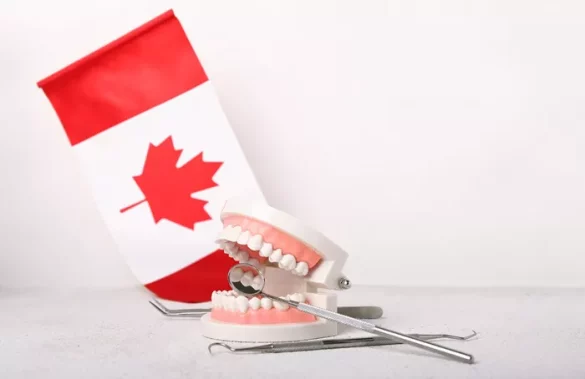
The federal government has significantly expanded the Canadian Dental Care Plan (CDCP), aiming to improve access to essential oral health services for millions of Canadians—including many living in rural Ontario.
Anna Rusak, a health promoter with the Haliburton, Kawartha, Pine Ridge District Health Unit (HKPR), said the changes, announced in early June, mark a major step toward equitable dental care. Under the revised plan, all adults aged 18 to 64 without private dental insurance are now eligible for public dental coverage—provided their family income is $90,000 or less.
“This will open the door to dental care for thousands more people, especially those living in areas like the Highlands,” Rusak said.
The CDCP was initially available only to seniors aged 65 and older, children under 18, and adults who qualified for the Disability Tax Credit. With the expansion, the program now offers broader support for those who previously fell through the cracks of coverage.
Eligible individuals can receive assistance for basic dental services such as check-ups, cleanings, x-rays, and other preventive treatments designed to maintain healthy teeth and gums.
For younger Ontarians, the Healthy Smiles Ontario (HSO) program continues to offer additional support. It covers children and youth aged 17 and under from low-income families. Services include exams, cleanings, fillings, extractions, scaling, and emergency dental care.
To qualify for HSO, a family with one child must have a net income of $28,523 or less. This threshold increases by $2,159 for each additional dependent.
“Good oral health is essential to overall health,” Rusak said. “Programs like CDCP and HSO make it possible for families who might otherwise go without care to see a dentist regularly. With more providers now requiring CDCP enrollment, it’s important that people understand how to apply and what to expect. We’re here to help guide them.”
Applications for CDCP can be submitted online. Approved applicants will receive a welcome package from Sun Life Canada, the insurer administering the program. It will include a member card, detailed information, and the date coverage begins.
Rusak cautioned that families should wait until their official start date before scheduling dental appointments to avoid unexpected out-of-pocket costs.
Not all dentists participate in the CDCP. In Haliburton County, two clinics—Smolen Dentistry and Dr. David Butera Family and Cosmetic Dentistry, both located in Haliburton village—are currently enrolled. Additional options exist in nearby communities like Bracebridge and Bobcaygeon.
Patients should confirm ahead of time whether their provider charges fees beyond what CDCP covers. Rusak emphasized that families should never pay the full cost upfront, as Sun Life does not offer reimbursement to patients.
Eligibility for CDCP must be renewed annually. Approval one year does not guarantee future coverage.
According to the federal government, the expanded CDCP is expected to provide access to dental care for up to five million Canadians. As of May 2025, over four million people had already been approved under the previous criteria.
A national survey by the Angus Reid Institute, conducted in May, highlighted the growing need for public dental programs. Among 1,500 respondents, 56 per cent reported delaying health care appointments due to cost. Young adults aged 18 to 34 were the most affected, with 66 per cent delaying care. The rate was 58 per cent for those aged 35 to 54, and 47 per cent among those 55 and older.
“The expansion of dental coverage is timely and necessary,” Rusak said. “It gives hope to families who have had to choose between their oral health and paying bills.”