


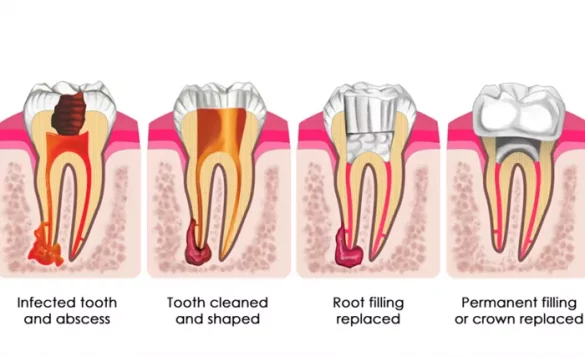
A root canal treatment is a vital procedure in dentistry designed to save a tooth that is badly decayed or infected. When bacteria reach the pulp of a tooth, severe pain, swelling, and infection can occur. Without treatment, this damage may spread and lead to gum disease, abscesses, and tooth loss. Dentists perform root canals to remove the infected pulp, clean the root canal system, and then fill the space with a suitable dental material. The type of filling used in root canals is critical for sealing the tooth and preventing reinfection.
This article explains in detail what fillings are used in root canals, why they are necessary, and the role they play in maintaining oral health. We will also discuss the connection between root canal fillings, sensitive teeth, and gum disease prevention.
Why Fillings Are Needed in Root Canals
When the pulp inside a tooth is damaged by decay or trauma, it cannot heal itself. The pulp contains nerves and blood vessels that keep the tooth alive. Once bacteria invade this tissue, the infection spreads quickly. To save the tooth, the pulp must be removed. After cleaning and shaping the canal, the dentist must fill the space to prevent bacteria from entering again.
The root canal filling replaces the missing pulp and provides strength to the tooth. Without filling, the canal would remain empty, making the tooth brittle and more likely to fracture. In addition, open canals can invite bacterial growth, leading to reinfection and gum disease.
Types of Fillings Used in Root Canals
Several materials are used in root canal treatments, each with advantages and disadvantages. Dentists choose based on the location of the tooth, the patient’s needs, and the specific clinical situation.
Gutta-Percha
The most common root canal filling material is gutta-percha. It is a rubber-like substance derived from the latex of the Palaquium gutta tree. Dentists have used gutta-percha for over a century because of its safety, biocompatibility, and effectiveness.
Gutta-percha is inserted into the cleaned canal in the form of thin cones or points. It is combined with a sealer to completely fill the space and create a tight seal against bacteria. The material is inert, meaning it does not irritate surrounding tissues. It also adapts well to different filling techniques such as lateral condensation and warm vertical compaction.
Root Canal Sealers
While gutta-percha is the main filling material, it cannot completely seal the canal on its own. Dentists use a sealer along with gutta-percha to fill microscopic spaces and irregularities. Sealers come in different types:
Epoxy resin-based sealers: Strong adhesion and excellent sealing properties.
Calcium hydroxide sealers: Antibacterial activity, but may dissolve over time.
Glass ionomer sealers: Bond to dentin and release fluoride for added protection.
Bioceramic sealers: Modern option with high biocompatibility and strong sealing ability.
Sealants help prevent sensitive teeth by protecting nerves from irritation and blocking bacterial invasion. They also reduce the risk of gum disease by eliminating pathways for infection.
Silver Points
In the past, dentists sometimes used silver points as root canal fillings. These were small, metallic cones placed into the canals. While they provided strength, they often corroded, leading to leakage, irritation, and failure. Today, silver points are no longer recommended, and gutta-percha has become the preferred choice.
Thermoplasticized Materials
Modern techniques allow gutta-percha to be heated and softened before placement. This thermoplasticized method enables better adaptation to the canal’s shape. It ensures fewer voids, reducing the risk of reinfection. Dentists may use systems that deliver warm gutta-percha directly into the canal, offering a more thorough seal.
Alternative Materials
Other materials, such as resin-based fillings and experimental biomaterials, are sometimes used in specific cases. For example, mineral trioxide aggregate (MTA) is used for root repairs and sealing perforations. MTA promotes healing and forms a strong seal. However, it is not a common choice for complete canal filling due to handling difficulties.
How Dentists Place Root Canal Fillings
The process of placing root canal fillings involves careful steps to ensure long-term success:
Cleaning the canal using files and irrigation solutions.
Drying the canal completely to prevent bacterial growth.
Selecting gutta-percha cones that fit the canal precisely.
Applying sealer inside the canal.
Placing gutta-percha points with condensation techniques.
Sealing the top of the canal with a permanent restoration.
These steps are vital in preventing infection, minimizing sensitivity, and reducing the chance of gum disease associated with poorly sealed root canals.
Benefits of Using Gutta-Percha and Sealers
The choice of gutta-percha and sealers has many advantages:
- Safe and biocompatible with tissues.
- Effective seal against bacteria and reinfection.
- Durable and stable over time.
- Flexible in application methods.
- Helps reduce tooth sensitivity after treatment.
When properly placed, these materials support long-term dental health and help preserve natural teeth.
Complications from Improper Root Canal Fillings
If a root canal filling is not placed correctly, problems can occur. These include:
- Persistent infection due to incomplete sealing.
- Tooth fracture from lack of internal support.
- Chronic inflammation leading to gum disease.
- Sensitive teeth caused by leakage and nerve irritation.
- Need for retreatment or even extraction of the tooth.
For these reasons, dentists emphasize precision and thoroughness in root canal therapy.
The Connection Between Root Canal Fillings and Gum Disease
Gum disease, or periodontal disease, is caused by bacteria affecting the gums and supporting structures of teeth. Poorly done root canals can contribute to gum problems if bacteria re-enter the tooth and spread. However, when fillings are properly sealed, they help prevent bacteria from escaping into surrounding tissues. This protects against inflammation, bone loss, and gum recession.
Regular dental checkups and good oral hygiene are essential to maintaining root canal-treated teeth and preventing gum disease.
Sensitive Teeth After Root Canal Fillings
It is common to experience sensitive teeth for a short time after a root canal. This usually results from tissue inflammation during the procedure. However, if sensitivity lasts for weeks or worsens, it may indicate problems with the filling or infection. Using proper materials like gutta-percha and high-quality sealers reduces this risk by creating a strong barrier.
Patients with sensitive teeth should follow their dentist’s advice, avoid biting hard foods immediately after treatment, and maintain good oral hygiene.
Advances in Root Canal Filling Materials
Research continues to improve root canal filling materials. Bioceramic sealers and bioactive materials are showing promise in creating stronger seals and promoting natural healing. These materials may provide antibacterial properties and bond directly with dentin, enhancing long-term outcomes. Such advances will further reduce sensitivity, protect against gum disease, and improve success rates.
Post-Treatment Care After Root Canal Fillings
After receiving a root canal filling, patients must take steps to protect the tooth:
- Attend follow-up appointments for evaluation.
- Avoid chewing hard foods until the permanent crown is placed.
- Brush and floss daily to prevent gum disease.
- Report any persistent pain or sensitivity to the dentist.
With proper care, a tooth treated with a root canal filling can last many years, often for a lifetime.
Conclusion
Root canal fillings play a critical role in modern dentistry. The most common material used is gutta-percha, supported by sealers to ensure a complete seal. Alternative materials exist, but gutta-percha remains the gold standard because of its safety, adaptability, and durability. Proper filling prevents reinfection, reduces sensitive teeth, and protects against gum disease. With advances in dental materials, root canal therapy continues to improve, offering patients reliable and long-lasting treatment for infected teeth.