


Acrylic partial dentures are a common solution for people missing some teeth. They restore function, improve appearance, and support speech. However, maintaining these dentures requires proper care. Without correct cleaning, bacteria can build up, leading to gum disease, bad breath, and irritation of sensitive teeth. This guide will provide a step-by-step process to clean acrylic partial dentures safely and effectively.
Understanding Acrylic Partial Dentures
Acrylic partial dentures are made of a pink acrylic base that blends with your gums and artificial teeth attached to it. They differ from full dentures as they replace only some missing teeth. Proper cleaning is essential because food particles and plaque can accumulate on the acrylic surface. Neglecting this can cause gum inflammation, cavities on remaining teeth, and discomfort for sensitive teeth.
Components of Acrylic Partial Dentures
Understanding the components helps in cleaning:
- Acrylic Base: The pink part that rests on your gums.
- Artificial Teeth: Made of acrylic or composite materials, these replace missing teeth.
- Clasp or Framework: Metal or acrylic parts that hold the denture in place.
Why Cleaning Is Important
Regular cleaning of acrylic partial dentures is crucial for oral health. Food and plaque can cause stains and odors. Poor hygiene can lead to gum disease, cavities on remaining teeth, and infections. Cleaning also prolongs the life of your dentures and helps keep sensitive teeth comfortable.
Risks of Poor Denture Hygiene
Failing to clean dentures properly can result in:
- Gum disease, including gingivitis and periodontitis.
- Oral infections like thrush.
- Bad breath caused by bacteria buildup.
- Discoloration and wear of dentures.
- Increased sensitivity in remaining teeth.
Step-by-Step Guide to Cleaning Acrylic Partial Dentures
Step 1: Prepare Your Cleaning Area
Start by preparing a safe area to clean your dentures. Fill a sink with lukewarm water or place a towel at the bottom. This prevents breakage if dentures slip. Ensure the area is well-lit and you have all necessary supplies ready.
Step 2: Rinse Dentures Thoroughly
Remove the dentures from your mouth and rinse them under lukewarm running water. This removes loose food particles and saliva. Avoid using hot water, as it can warp the acrylic material. Rinsing first makes brushing more effective.
Step 3: Brush Dentures Gently
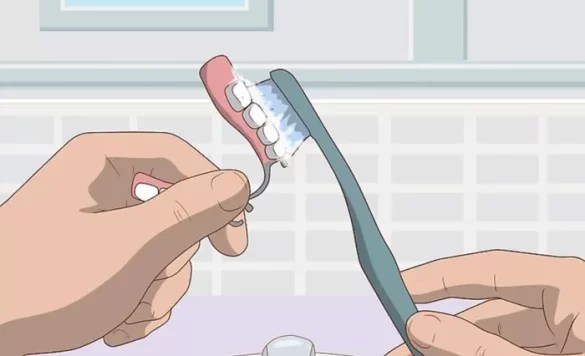
Use a soft-bristled denture brush or a soft toothbrush. Apply a non-abrasive denture cleaner or mild liquid soap. Avoid regular toothpaste as it can be too abrasive for acrylic surfaces. Brush all areas gently, including the artificial teeth, the acrylic base, and clasps. Focus on areas that contact gums and natural teeth, as these can trap plaque.
Step 4: Soak Dentures in Cleaning Solution
Soaking dentures in a commercial denture cleaner or a solution recommended by your dentist helps remove stains and bacteria. Follow the manufacturer’s instructions for soaking time. Common solutions include effervescent tablets that dissolve in water. Never use bleach or harsh chemicals, as they can damage the denture material and irritate sensitive gums.
Step 5: Rinse After Soaking
After soaking, rinse dentures thoroughly under lukewarm water. This ensures all cleaning solution is removed, preventing irritation of gums or sensitive teeth. Ensure no residue remains, especially if you are using a tablet-based cleaner.
Step 6: Inspect Dentures for Damage
Regularly inspect your acrylic partial dentures for cracks, chips, or loose teeth. Damaged dentures can cause irritation and increase the risk of gum disease. If you notice damage, visit your dentist immediately for repair.
Step 7: Clean Your Mouth
Before reinserting dentures, clean your mouth thoroughly. Brush your natural teeth, gums, tongue, and roof of your mouth using a soft toothbrush. Use fluoride toothpaste to protect against cavities. Cleaning your mouth reduces bacteria transfer to dentures and helps prevent gum disease and irritation to sensitive teeth.
Step 8: Reinsert Dentures Carefully
After cleaning your mouth and dentures, insert your partial dentures carefully. Avoid forcing them into place. Ensure they fit comfortably and do not press on sensitive areas of your gums. Proper fit reduces the risk of sores and irritation.
Daily Cleaning Tips
Maintaining a daily cleaning routine keeps your dentures and mouth healthy. Some helpful tips include:
- Rinse dentures after every meal to remove food particles.
- Brush dentures at least twice a day.
- Soak dentures nightly in a safe cleaning solution.
- Brush your natural teeth and gums daily to prevent gum disease.
- Handle dentures carefully to avoid dropping or damaging them.
Additional Care Tips for Acrylic Partial Dentures
Handle Dentures with Care
Acrylic dentures are durable but can crack or chip if dropped. Always handle them over a soft surface or a sink filled with water. Avoid bending clasps, which can change the fit.
Store Dentures Properly
When not in use, keep dentures moist by soaking them in water or a denture-cleaning solution. Dry dentures can warp and lose their shape. Proper storage also prevents bacterial growth.
Avoid Harmful Substances
Never use bleach, hot water, or abrasive cleaners. These can damage acrylic material and metal clasps, causing discomfort and reducing denture lifespan. Stick to mild soap, non-abrasive denture cleaners, and lukewarm water.
Visit Your Dentist Regularly
Regular dental check-ups are important for maintaining dentures and oral health. Your dentist can adjust dentures, clean them professionally, and check for signs of gum disease or damage to remaining teeth. This is especially important for people with sensitive teeth or a history of gum problems.
Managing Common Issues
Dealing with Stains
Over time, acrylic dentures can become stained from food, drinks, or tobacco. Regular brushing and soaking can reduce stains. Avoid coffee, tea, or tobacco if possible. Special denture cleaning tablets can also help maintain whiteness.
Preventing Bad Odor
Bad odor occurs when food particles and bacteria accumulate. Clean dentures daily, rinse after meals, and soak overnight. Clean your mouth thoroughly to reduce odor. This also protects sensitive teeth from irritation.
Handling Loose Dentures
If dentures feel loose, they can irritate gums and damage remaining teeth. Visit your dentist for adjustment. Avoid using adhesives excessively, as improper fit can lead to gum disease.
Special Considerations for Sensitive Teeth
People with sensitive teeth must pay extra attention when cleaning dentures. Avoid harsh brushing or abrasive cleaners. Use gentle strokes and soft brushes. Ensure dentures fit well to prevent pressure on sensitive teeth. Proper oral hygiene can reduce sensitivity and prevent gum disease.
Preventing Gum Disease with Dentures
Gum disease can develop even when you wear partial dentures. Bacteria can accumulate under the acrylic base or around clasps. To prevent gum disease:
- Clean dentures daily and soak them overnight.
- Brush your gums, tongue, and remaining teeth twice a day.
- Visit your dentist for regular check-ups and professional cleaning.
- Report any soreness, redness, or bleeding gums immediately.
When to Seek Professional Help
Seek your dentist’s help if you notice:
- Persistent pain or sores in your mouth.
- Loose or broken dentures.
- Excessive staining or odor that regular cleaning does not remove.
- Signs of gum disease, such as redness, swelling, or bleeding.
Prompt attention prevents further damage and protects sensitive teeth and gums.
Conclusion
Cleaning acrylic partial dentures is essential for maintaining oral health. A simple daily routine can prevent gum disease, discomfort in sensitive teeth, and extend the lifespan of your dentures. By following this step-by-step guide—rinsing, brushing gently, soaking, inspecting, and maintaining oral hygiene—you can ensure your dentures remain clean, comfortable, and functional for years. Regular dental visits complement this care and keep your mouth healthy.