


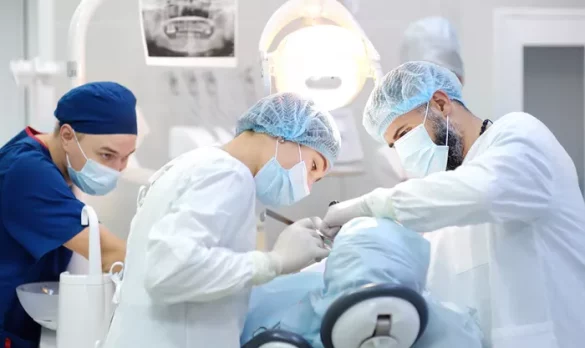
The University of Pittsburgh is rolling out a new initiative to train dental professionals in rural Pennsylvania, addressing long-standing gaps in care caused by a shrinking and aging workforce.
Through a network of regional training centers, Pitt’s School of Dental Medicine will offer degree and certificate programs in general practice residency, dental assisting, and dental hygiene. The programs combine online coursework with in-person clinical training at local clinics, allowing students to gain hands-on experience close to home.
The model, supported by regional partners and grant funding, aims to expand care in communities that have historically lacked dental providers. Initial centers are planned for Cambria, Crawford, and McKean Counties, with the Crawford and McKean locations scheduled to open this summer.
“These areas are facing a real oral health crisis,” said Kelly Wagner, Pitt’s assistant dean for clinical administration and quality care. “The people with the greatest oral health needs are also the ones with the least access to care.”
A 2023 workforce survey from the Pennsylvania Department of Health shows that just 17.9% of dentists provide care in rural communities, despite these areas being home to roughly 26% of the state’s population—over three million residents.
Additionally, a 2023 legislative study found that 55% of rural dentists are nearing retirement age, while only 6% of 2019 dental school graduates planned to work in these communities.
Pitt officials say the program is designed to encourage students to stay in the region after graduation. Success will be measured by patient numbers, local staff retention, and return visits for preventive care.
“This is a homegrown strategy,” said Rick Esch, president of Pitt’s Bradford and Titusville campuses. “We’re giving local residents the opportunity to gain education and experience nearby, and hopefully they’ll stay to serve their communities.”
By training dental professionals in rural settings, Pitt hopes to address a twofold challenge: meeting high oral health needs while improving access in underserved areas.