


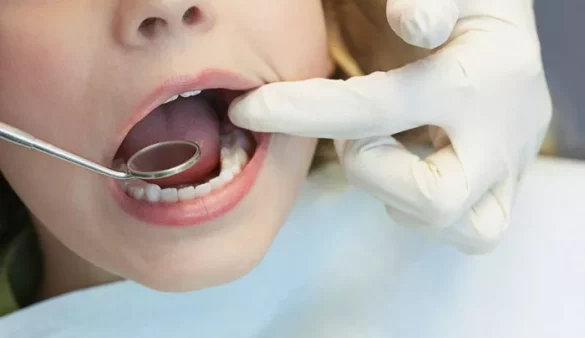
ENGLAND — Patients across England are receiving significantly more NHS dental appointments, with 1.8 million additional treatments delivered in the first seven months of 2025–26 compared with the same period before the general election, according to newly released figures.
The surge follows the government’s pledge to expand urgent dental access under the Get Britain Working initiative. Integrated Care Boards (ICBs) were originally tasked with providing 700,000 extra urgent appointments and have already commissioned nearly one million.
However, Jason Wong, Chief Dental Officer for England, noted that the current definition of “urgent” care is too narrow.
Conditions such as advanced tooth decay, rotting teeth, and escalating dental pain do not automatically qualify for urgent appointments under existing rules.
In response, the government is broadening the target to encompass all dental appointments, allowing ICBs to increase overall capacity. This change is expected to benefit children, patients with complex needs, and individuals who have previously struggled to access NHS treatment.
Since April, all ICBs have been required to provide accessible urgent dental services and have been commissioning additional capacity. Under the revised approach, local systems now have more flexibility to determine which appointments best serve community needs, repurpose services where necessary, and expand access for new patients.
From April 2026, NHS high street dentists will also be required to provide a minimum number of urgent or unscheduled appointments, including for new patients. Officials expect these reforms, along with forthcoming contract changes, to generate millions more appointments nationwide.
The expansion comes in response to reports of patients attempting DIY dentistry, including extracting painful or loose teeth at home due to limited access. Ministers say the reforms aim to ensure timely care for patients with serious oral health problems.
The changes are part of a wider prevention strategy, including a national supervised toothbrushing programme for three- to five-year-olds, which will support up to 600,000 children this year. The government also plans to distribute more than four million toothbrushes and toothpastes and expand community water fluoridation schemes proven to reduce decay.
“Widening access beyond urgent care means more patients will be seen quickly and treated before problems escalate,” Wong said. “By working with government and the dental sector, we are delivering on our commitment to prioritise prevention and improve oral health.”
These initiatives are part of the government’s 10-Year Health Plan, aimed at shifting NHS dentistry away from crisis response toward prevention and early intervention.