


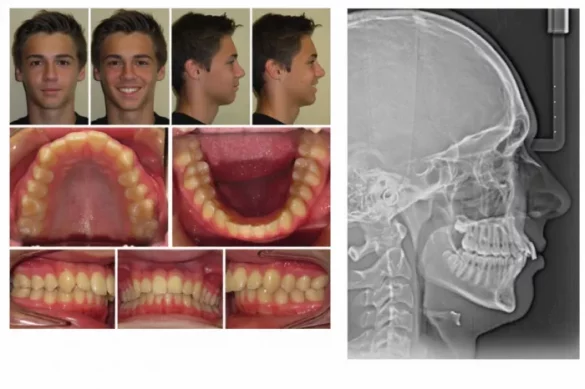
Skeletal Class III malocclusion sticks out in dentistry and orthodontics as one of the maximum complicated and difficult situations to treat. This sort of malocclusion now no longer most effective influences the alignment of the enamel however additionally the connection among the higher and decrease jaw, main to a number practical and aesthetic worries for sufferers. The intricacies of Skeletal Class III, specially in adults, make it a focus of superior orthodontic studies and scientific debate.
What Is Skeletal Class III Malocclusion?
Skeletal Class III malocclusion refers to a situation in which the decrease jaw (mandible) is placed extra ahead than the higher jaw (maxilla). This disparity can end result from a distinguished or overgrown decrease jaw, an underdeveloped higher jaw, or a aggregate of each. Patients commonly showcase a poor overjet, in which the decrease the front enamel increase in the front of the higher enamel. This situation can purpose chunk problems, speech difficulties, and facial asymmetries.
Why Is Class III Malocclusion So Difficult to Treat?
Class III malocclusion offers each skeletal and dental challenges. Unlike different sorts of malocclusion, correcting Class III frequently calls for addressing discrepancies withinside the jawbone length and position, now no longer simply the alignment of enamel. This skeletal imbalance is specifically tough to control in adults, whose jawbones have completed growing, restricting the effectiveness of many orthodontic techniques.
Traditional orthodontic methods, which includes braces or aligners, can alter the location of enamel however have restrained impact at the bones themselves. In many instances, specially while the affected person is now no longer growing, the alternatives emerge as extra restrained, and the remedy turns into extra complicated.
Treatment Approaches: Orthodontics, Surgery, and Alternatives
The popular technique for treating skeletal Class III malocclusion frequently includes a aggregate of orthodontic and surgical methods. Orthognathic surgical operation is the gold popular for excessive instances, aiming to reposition the jaws to accurate the skeletal discrepancy. Surgery might also additionally contain advancing the higher jaw, placing returned the decrease jaw, or each, to obtain a balanced facial profile and right jaw function.
However, now no longer all sufferers are applicants for surgical operation. Some might also additionally have clinical contraindications, even as others might also additionally refuse surgical operation because of non-public preferences, risks, costs, or healing time.
Camouflage Orthodontic Treatment
For slight to mild instances or in sufferers who can’t go through surgical operation, orthodontists might also additionally choose camouflage techniques. Camouflage orthodontic remedy makes use of braces and elastics to transport enamel in a manner that mask the underlying jaw discrepancy. Dental reimbursement is frequently accomplished through retracting the decrease the front enamel and protracting the higher the front enamel. While this approach can enhance chunk and aesthetics, it can’t clear up skeletal issues. Sometimes, the dental reimbursement might also additionally have limitations, specially in excessive instances.
Innovative Alternatives: SARPE and TADs
In current years, strategies consisting of surgically assisted speedy palatal expansion (SARPE) in aggregate with brief anchorage devices (TADs) were proposed for sure sufferers. This method is mainly beneficial for sufferers with moderate to mild Class III malocclusion blended with a constricted higher jaw. SARPE enables to widen the higher jaw, and TADs offer extra anchorage for enamel movement. For cautiously decided on sufferers, this approach might also additionally provide an opportunity to complete orthognathic surgery, attaining each practical and aesthetic improvements.
Challenges Unique to Adult Patients
Treating Class III malocclusion in adults poses extra demanding situations. Growth modification, a key device in dealing with skeletal troubles in children, is now no longer possible. This restricts alternatives to orthodontic camouflage and surgery. Adult bone is much less conscious of orthodontic forces, and there’s a better danger of dental recession and root resorption. Moreover, adults are much more likely to have dental restorations, lacking teeth, or periodontal problems, including to the complexity of making plans and executing remedy.
Patients in maturity may additionally have better expectancies concerning facial aesthetics. Achieving a wonderful facial extrade commonly calls for complete making plans, regularly concerning multidisciplinary enter from orthodontists, maxillofacial surgeons, and occasionally restorative dentists.
Decision-Making in Treating Class III Malocclusion
Each case of Class III malocclusion have to be evaluated on its very own merits. The severity of the skeletal discrepancy, the age and ordinary fitness of the affected person, and the affected person’s desires and expectancies all play roles in choosing a remedy plan. Diagnostic equipment consisting of cephalometric analysis, 3-D imaging, and thorough medical exam are crucial for expertise the underlying hassle and predicting remedy outcomes.
Communication among clinician and affected person is crucial, specially whilst offering the professionals and cons of numerous approaches—whether or not orthodontic camouflage, orthognathic surgery, or opportunity remedies like SARPE with TADs. Clear steerage enables sufferers make knowledgeable selections and prepares them for the demanding situations and boundaries of every option.
Prognosis and Stability of Treatment
Achieving a solid and practical bring about skeletal Class III malocclusion is challenging, specially whilst severe. Studies display that surgical correction has a tendency to supply the maximum solid and fine results, specially concerning facial concord and occlusal balance. Camouflage remedies, even as beneficial, can be greater liable to relapse if dental compensations do now no longer absolutely masks skeletal problems or if the affected person has excessive practical or aesthetic demands.
Long-time period retention and follow-up care are essential. Patients frequently require the usage of retainers and every so often extra dental care after the number one remedy to hold the results. The chance of relapse have to be communicated to the affected person as a part of knowledgeable consent.
Psychological and Social Impact
Class III malocclusion can purpose shallowness issues, social discomfort, and practical issues with consuming and speech. Effective remedy can dramatically enhance now no longer simply dental and skeletal relationships however additionally usual self assurance and great of life. Therefore, the mental thing ought to now no longer be underestimated withinside the complete care of those patients.
Conclusion
Skeletal Class III malocclusion stays the maximum hard form of malocclusion to deal with, specifically in adults. It demanding situations orthodontists with its complicated skeletal, dental, and every so often facial asymmetry components. Treatment calls for superior skills, cautious diagnosis, and thorough affected person communication. While orthognathic surgical procedure gives the excellent lengthy-time period consequences for extreme instances, options like camouflage orthodontic remedy or SARPE with TADs may be utilized in decided on scenarios. Each remedy ought to be customized, taking into consideration character affected person needs, goals, and limitations.
FAQs
What is the principle distinction among Class II and Class III malocclusion?
Class II malocclusion capabilities a retrusive decrease jaw, even as Class III entails a protrusive decrease jaw. The remedy complexity is commonly better in Class III because of skeletal discrepancies.
Can Class III malocclusion be dealt with with out surgical procedure?
Mild to mild instances can be controlled with orthodontic camouflage, however extreme instances generally require surgical procedure for excellent results.
How lengthy does it take to deal with skeletal Class III malocclusion?
Treatment time varies, generally starting from 18 months to numerous years, relying at the severity and selected approach.
Does early intervention help?
Early intervention in kids can use increase modification. In adults, alternatives are limited, so early remedy is continually leading whilst possible.
Is relapse not unusualplace after remedy?
Relapse can occur, specifically with camouflage remedy. Long-time period retention is essential to hold results.