


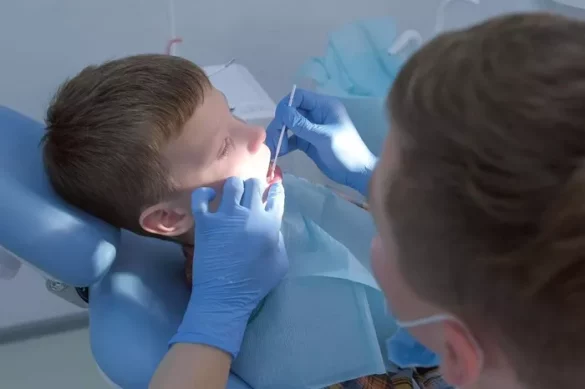
Many adults carry a lingering fear of dental visits, often rooted in childhood experiences. That anxiety can resurface when they take their own children for checkups. In Sewickley, Pennsylvania, one pediatric dental practice is changing that narrative.
Dr. Alexis Meyers founded Steel City Pediatric Dentistry with a clear mission: create a welcoming environment that encourages children to associate dental care with positive experiences. Her approach aims to set the stage for a lifetime of good oral health.
“I loved my pediatric dentist growing up,” Meyers said. “He made it feel like going to the dentist was not a scary thing.”
During dental school, Meyers observed adults avoiding care because of negative childhood experiences. She believes that positive early visits can prevent that pattern. “If we start with kids and give them a good experience, maybe they will actually go to the dentist for life,” she said.
February marks National Children’s Dental Health Month, a time Meyers uses to stress early oral care. The American Academy of Pediatric Dentistry recommends that children visit a dentist by age 1, or within six months of the first tooth appearing.
“We start taking X-rays at 3 years of age because cavities can appear that early,” Meyers said.
National statistics highlight the urgency. According to the Centers for Disease Control and Prevention, more than half of children ages 6 to 8 have experienced at least one cavity. While genetics can influence dental health, daily habits and regular visits are critical.
At Steel City Pediatric Dentistry, fear is minimized through child-focused techniques. Staff use the “Tell-Show-Do” method, explaining procedures, demonstrating them, and then performing treatment.
“We show them on their fingernail first so they can see how it will feel and know it doesn’t hurt,” said Norri Bayne, an expanded functions dental assistant. “I tell them, ‘I’m not here to hurt you. I’m going to show you everything.’”
To make tools less intimidating, equipment is given playful names: the high-speed drill is “Mr. Whistle,” the slow-speed tool is “Mr. Bumpy,” and nitrous oxide becomes “ice cream air.” Even anesthetic is called “sleepy juice.”
Nitrous oxide is available with parental consent for cleanings or minor treatments. Appointments are tailored to each child’s comfort level. “If the chair is scary, we can do the procedure standing. We have plan A, B, and C,” Bayne explained.
The child-centered approach begins in the waiting room, where kids can play and view a prize wall. During treatments, children choose toothpaste flavors, watch movies, and use fidget toys if anxious. Parents may hold younger children for comfort.
After cleanings, children receive a sticker or temporary tattoo, and fluoride varnish is applied with parental approval. The visit concludes with a prize and the scheduling of the next appointment.
Between visits, Meyers emphasizes consistent home care. She recommends early flossing, appropriate amounts of fluoride toothpaste, brushing twice daily, and limiting sticky candy. Rinsing with water after sweets can reduce cavity risk.
By combining preventive guidance with a fun, supportive environment, Meyers hopes to reshape children’s perceptions of dental care.
“We gear everything toward kids,” she said. “If we can make it a positive experience now, that can make all the difference later.”