


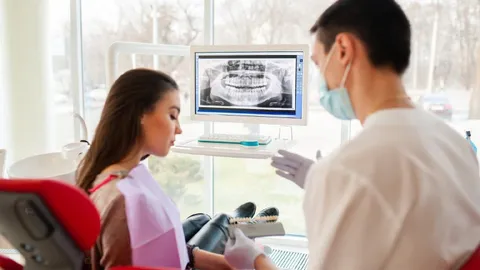
Crooked or misaligned teeth can affect your oral health and self-image. They often make teeth harder to clean and can greatly impact your appearance. In severe cases, they make day-to-day life more difficult.
Fortunately, crooked teeth can be treated. Which type of treatment works best for you will depend on the severity of the misalignment, as well as your budget and other factors.
Here are four treatment options that can fix misaligned teeth:
1. Braces
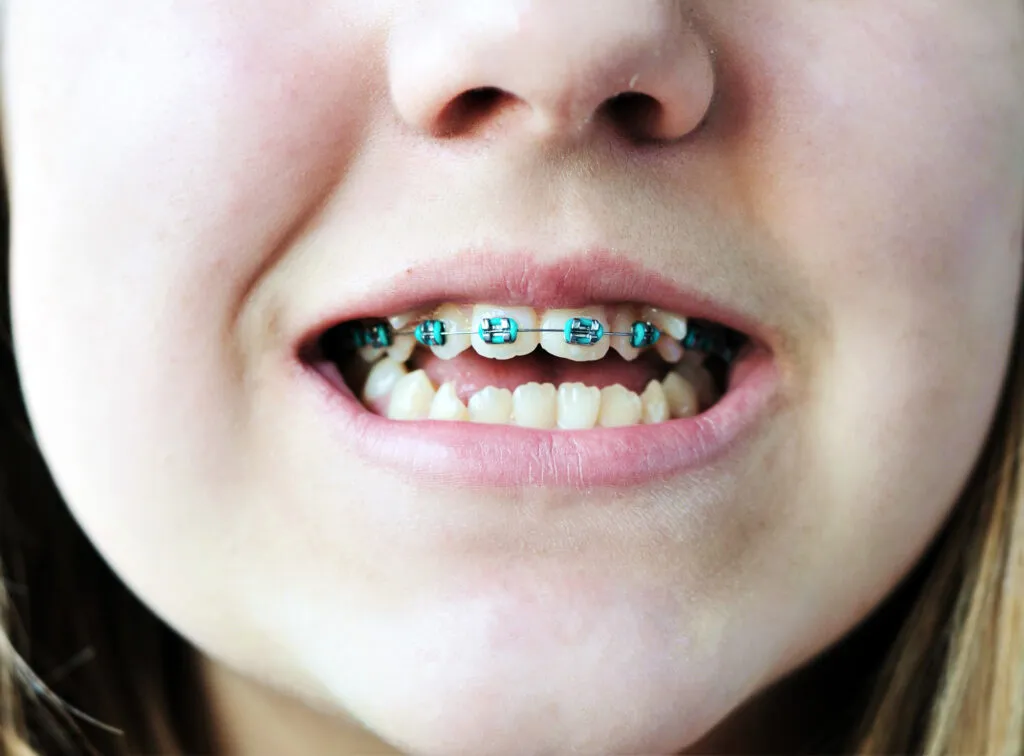
All braces consist of brackets and wires. One bracket is bonded to each tooth. A wire, called an archwire, holds the brackets together and applies pressure to shift teeth into alignment.
However, there are different options for how braces look, feel, and attach to your teeth. Here are four types of braces to choose from:
Traditional Metal Braces
Traditional metal braces are the most common. The brackets are made of high-grade stainless steel. They’re secured to the archwire with metal ties or elastic ligatures (rubber bands).
While these braces are well-established and highly effective, they are very noticeable.
Ceramic Braces
Ceramic braces, also known as clear braces, are the same shape and size as metal braces and work in the same way. The key difference is that they blend in with your natural tooth color, making them less noticeable.
These braces are a little less durable than metal ones and can take longer to work, but they’re a good option for image-conscious teens and adults.
Lingual Braces
Lingual braces are another alternative to traditional braces. They’re made of the same kind of metal, but they attach to the back of the teeth (where the tongue hits when speaking).
This makes lingual braces another option for people who want their braces to be less noticeable. However, they’re significantly more expensive than other kinds of braces.
Self-Ligating Braces
Self-ligating braces are like standard metal braces but the brackets are designed differently. This allows them to stay in place on the archwire without any ties or ligatures.
These braces can be more comfortable than traditional ones and require fewer visits to the orthodontist for adjustments. They cost about the same or slightly more than traditional braces.
Straighten your teeth at a fraction of the cost. Learn about clear aligners.
Dental Second Opinion
Worried About Your Dental Diagnosis?
Unsure about your dental diagnosis? Get a secure second opinion from experienced dentists within 48 hours.
Get a Second Opinion
2. Clear Aligners
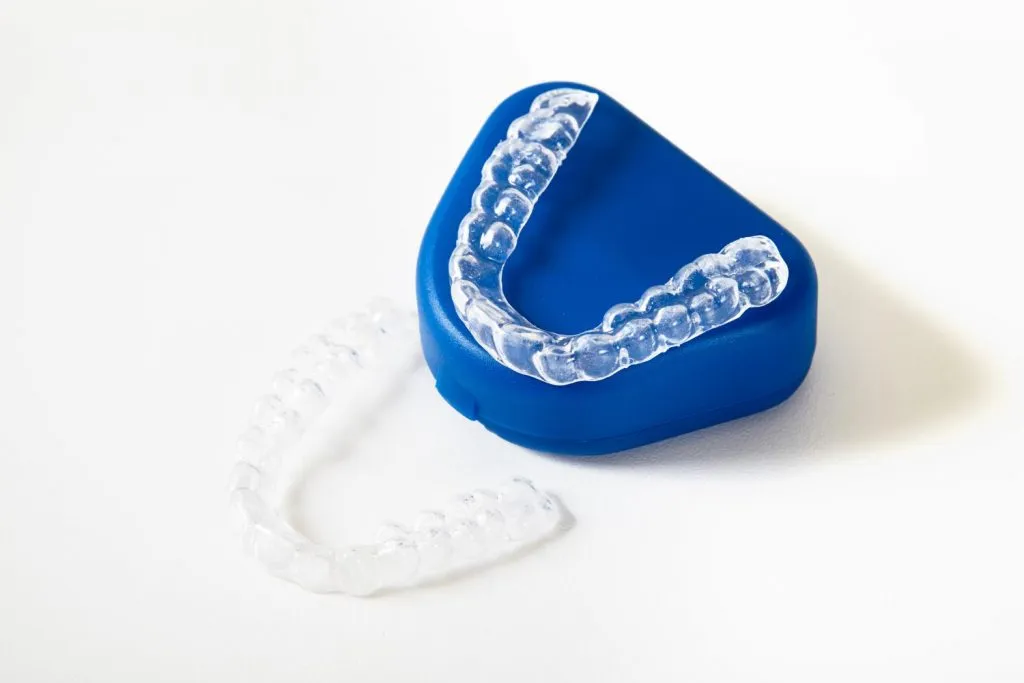
Clear aligners are custom-made to fit your teeth and move them gradually. Unlike traditional and ceramic braces that need to be tightened as your teeth move, these trays are replaced every one to two weeks.
Clear aligners are a great alternative to traditional braces for milder cases of misalignment. They can fix many of the same alignment issues that braces can. They’re also more discreet than braces.
Another advantage of clear aligners is that they’re removable and easy to clean (unlike braces). For best results, you must wear the aligners for at least 20 to 22 hours daily.
There are two main types of clear aligner options:
- In-office aligners (like Invisalign) are the oldest type of clear aligners. They require routine office visits with your orthodontist, and are recommended for people with more complex teeth alignment needs.
- At-home aligners, which are cheaper than in-office aligners. Treatment is monitored remotely and can be highly effective for milder cases.
Check Your Clear Aligner Candidacy
Clear Aligner Candidacy Assessment
Answer a few questions to evaluate if clear aligners might be suitable for your orthodontic needs.
Bite Assessment
What type of bite issue are you experiencing? i 😬Overbite 😦Underbite 😕Crossbite 😮Open Bite 😊No Bite Issues
Alignment Concerns
How would you describe your teeth alignment issues? i 🙂Mild 😐Moderate 😬Severe Do you have gaps between your teeth? i 🦷No Gaps ↔️Small Gaps ⬌Large Gaps
Oral Health
I have active gum disease I have untreated cavities Do you have any existing dental work? Crowns or veneers Bridges Dental implants
Age & Lifestyle
Your age group: 🧑🎓Teen (13-17) 🧑18-25 👨26-50 🧓51+ Could you wear aligners 20-22 hours daily? i ✅Yes, No Problem 🤔Maybe ❌Would Be Difficult
Your Clear Aligner Assessment
0 Not Yet Assessed
This assessment is a starting point — always consult your dentist for professional advice tailored to your situation.
How We Assess Clear Aligner Candidacy
Bite Assessment
- Types of malocclusion
- Severity evaluation
- Treatment complexity
Oral Health
- Current dental conditions
- Existing dental work
- Treatment prerequisites
Lifestyle Factors
- Age considerations
- Wear time commitment
- Treatment duration
💡
This assessment tool is for informational purposes only. The effectiveness of clear aligners varies based on individual cases and commitment to treatment.
* Based on general clear aligner treatment guidelines and clinical research.
3. Jaw Surgery
Severe malocclusion (“bad bite”) often involves issues with the jaw, not just the teeth. If your crooked teeth are related to jaw misalignment, you may need corrective jaw surgery to resolve the problem completely.
Also known as orthognathic surgery, this surgery is generally combined with orthodontic treatment with braces. Together, these treatments can fully correct severe bite issues.
For children with misaligned jaws, surgery isn’t always necessary. Braces can be combined with orthodontic appliances that help direct jaw growth.
However, adults’ jaws are already fully developed. Surgery is more likely to be needed to bring them into proper alignment.
Find a Dentist Near You
Need to go to the dentist but don’t know where to start? Let an expert at 1-800-DENTIST do all the work for you. They’ll even stay on the line and help you schedule an appointment.
Call (866) 387-3513
4. Cosmetic Dentistry Options
Cosmetic treatments can also “fix” misaligned teeth by covering or partially replacing them. They can make teeth look straighter or better shaped. Note that these options aren’t recommended if your teeth are severely misaligned and pose a risk to your oral health. They may improve appearance, but they won’t solve the underlying problem.
Veneers
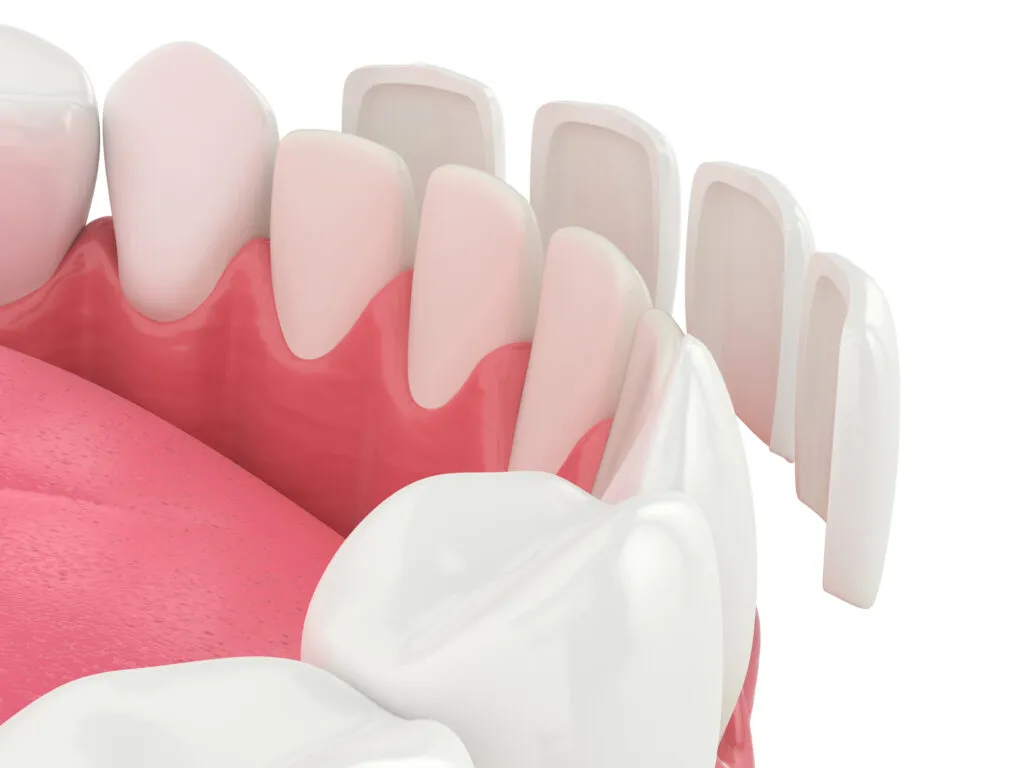
Veneers are a simple aesthetic solution for crooked teeth. These composite or porcelain shells cover the front surface of teeth to make them look straight.
Most veneers are expensive and permanent (lasting 10 years or more with proper care). However, more affordable snap-on or removable veneers are also available.
Dental Bonding
Dental bonding is another cosmetic option for crooked or misshapen teeth. Whereas a veneer covers the front of a tooth, dental bonding fills in gaps with composite resin.
This treatment generally requires one office visit, while veneers can take two or more appointments. Bonding is also reversible.
Dental Crowns
This procedure involves tooth restructuring, followed by placing a porcelain or metal crown over the tooth.
Dental crowns are typically only used for restorative reasons, such as protecting a formerly broken tooth or after a root canal. They’re not a common treatment for crooked teeth.
Expert Help
Need to See a Dentist?
1-800-Dentist’s referral experts help you find a dentist that fits your needs. It only takes 10 minutes!
Call (833) 704-2246
Should You Straighten Crooked Teeth?
In most cases, yes. Misaligned or overlapping teeth are harder to clean and can affect both your oral health and confidence. They put you at greater risk of:
- Tooth decay or damage
- Gum disease
- Speaking difficulties
- Jaw issues (such as TMJ disorders)
- Social and self-image issues
- Digestive problems
- Sleep problems (such as sleep apnea)
That said, not every crooked tooth creates the same problem. If you have just one or a few slightly misaligned teeth, they may not put you at risk for any of the above problems. They may simply be a small cosmetic concern.
Ultimately, getting treatment to align your teeth is up to you. Fortunately, there are many options available, whether your needs are mild or severe.
Straighten your teeth conveniently at home. Compare the best clear aligner brands.
How Much Does it Cost to Fix Crooked Teeth?
The cost of fixing a crooked smile varies depending on the structure of your teeth and jawline, your dental health, and the orthodontic treatment you choose. Insurance can sometimes be a factor as well.
Your orthodontist can help you decide which option is best for you:
ServicePriceBraces$2,500-$8,000Clear aligners$1,200-$8,000Dental bonding$250-$1,500 (per tooth)Veneers$470-$2,500 (per tooth)Dental crowns$300-$3,000 (per tooth)
To understand costs, make an appointment with a local orthodontist. They’ll be able to assess your needs and determine a course of treatment.
It’s also a good idea to consult your provider if you have dental insurance. While insurance won’t cover cosmetic procedures, some policies will cover a portion of orthodontic treatment or corrective surgery.
What Causes Crooked Teeth?
Crooked teeth have a variety of causes, including:
- Poor oral posture; teeth not touching when the mouth is closed
- Diets high in soft and processed foods
- Childhood habits such as thumb sucking and mouth breathing
- Genetics (especially in cases of prognathism)
- Dental or facial injury
- Early loss of baby teeth
- Little or no breastfeeding
Misaligned teeth and jaws have become more prevalent in recent generations. Changes in diet and oral posture have been major contributors to this increase. Better oral posture may improve teeth alignment in children.
However, once adult teeth (and jaws) have become crooked, simply eating better or improving oral posture will not necessarily correct them. Orthodontic treatment (and sometimes surgery) is often needed to restore proper alignment.
Summary
Crooked teeth are a relatively common concern, and there are various ways they can be treated. Most people with crooked teeth get orthodontic treatment with either braces or clear aligners.
Depending on the severity of your tooth misalignment and any other needs you may have, you may also require corrective jaw surgery. At the other end of the spectrum, a slight imperfection can be left alone or improved with a cosmetic treatment.
Find a Dentist Near You
Need to go to the dentist but don’t know where to start? Let an expert at 1-800-DENTIST do all the work for you. They’ll even stay on the line and help you schedule an appointment.
Call (866) 387-3513