


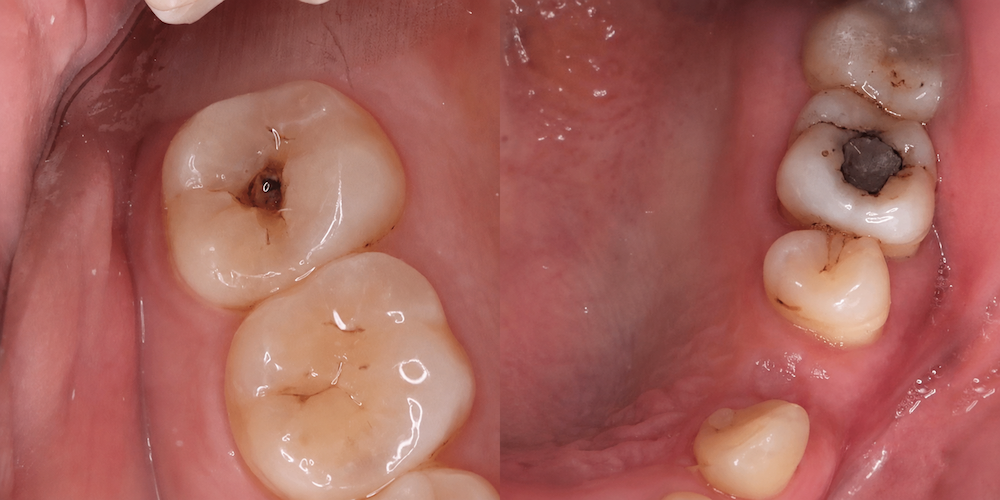
What does a cavity look like in real life? Many people imagine a large dark hole in the tooth, but cavities often start much more quietly. In the early stage, tooth decay may look like a small white chalky patch, a brown spot, a black dot, or a thin dark line in the grooves of a back tooth. Because it may not hurt at first, many patients do not realize anything is wrong.
However, a small mark on the tooth can sometimes hide deeper damage underneath. A cavity is not only a cosmetic problem. It is an area where acids from bacteria have weakened and damaged the hard structure of the tooth. Therefore, the earlier it is checked, the easier and more affordable treatment usually becomes. Waiting until the tooth hurts often means the decay has already reached a deeper layer.
Why Cavities Are Easy to Miss
Cavities often develop slowly. At first, the surface may look almost normal, especially if the decay starts inside a deep groove or between two teeth. In addition, early decay does not always cause pain because enamel, the outer layer of the tooth, has no nerves. This is why a tooth can look “mostly fine” while bacteria are already active.
Still, the lack of pain does not mean the tooth is healthy. Many patients only visit a dentist when chewing becomes painful or cold drinks cause sharp sensitivity. By that time, decay may have moved beyond enamel into dentin, the softer layer under enamel. Because dentin is closer to the nerve, symptoms become more obvious, and treatment becomes more complex.
Common early warning signs include:
- White, chalky areas on enamel
- Brown or black spots in grooves
- Dark lines on chewing surfaces
- Food getting stuck in one area
- Sensitivity to sweets, cold, or heat
How Tooth Decay Begins
Tooth decay begins when bacteria in dental plaque feed on sugars and starches from food. As a result, they produce acids that attack enamel. Saliva and fluoride can help repair early mineral loss, but this repair process has limits. If acid attacks happen too often, enamel keeps losing minerals and the surface becomes weaker.
Meanwhile, plaque can stay hidden in deep pits, between teeth, near the gumline, or around old fillings. These areas are harder to clean with a toothbrush alone. Because of this, even people who brush daily can develop cavities if they miss certain spots or snack frequently. Good brushing matters, but technique, flossing, diet, fluoride, and dental visits also play important roles.
Stage One: Enamel Demineralization
The first stage of tooth decay is enamel demineralization. At this point, the tooth surface has started losing minerals, but there may not be a visible hole yet. Instead, you may notice a white, dull, or chalky spot. On back teeth, this early change may also appear as a dark line in a groove.
This stage is important because it may still be reversible in some cases. Fluoride, better cleaning, reduced sugar exposure, and professional dental guidance can help enamel regain minerals. However, you should not scrape, pick, or grind at a black line yourself. A dark mark may be a stain, but it may also be early decay. Therefore, a dentist should check it before it becomes a deeper cavity.
Possible treatment may include:
- Fluoride toothpaste or fluoride treatment
- Improved brushing and flossing technique
- Monitoring with dental exams
- Sealants for high-risk grooves
- Small filling if a surface has broken down
Stage Two: Enamel Breakdown
If early decay continues, the enamel surface can break down and form a small hole. At this stage, the cavity may look darker and feel rough. Food may also get trapped in the area more often. Some people notice mild sensitivity when eating sweet, hot, cold, or acidic foods.
However, the nerve is usually not involved yet. Because of this, many stage-two cavities can still be treated with a regular dental filling. During a filling, the dentist removes the decayed part and restores the tooth with a filling material, often tooth-colored composite resin. Most importantly, treating the cavity at this stage helps prevent deeper damage.
Stage Three: Dentin Decay
Dentin sits under the enamel and is softer than enamel. Once bacteria reach this layer, decay can spread more quickly. In addition, dentin has tiny channels that connect toward the nerve area, so sensitivity often becomes stronger. The tooth may react sharply to cold drinks, sweets, or biting pressure.
This is the stage when many patients finally realize something is wrong. The cavity may look like a larger brown or black area, or it may appear as a visible pit. Still, not every dentin cavity is obvious from the outside. Therefore, dental X-rays can be very helpful, especially for cavities between teeth. Treatment usually involves removing decay and placing a filling, inlay, onlay, or crown depending on how much tooth structure remains.
Stage Four: Pulp Involvement
If decay reaches the pulp, the innermost part of the tooth, pain often becomes more serious. The pulp contains nerves and blood vessels, so bacterial infection in this area can cause throbbing pain, spontaneous pain, night pain, or pain that lingers after hot or cold exposure. In some cases, biting becomes difficult.
At this point, a simple filling may no longer solve the problem. Instead, the tooth may need root canal treatment. During a root canal, the infected pulp is removed, the inside of the tooth is cleaned, and the space is sealed. Afterward, the tooth often needs a crown to protect it from fracture. Therefore, early care can make the difference between a small filling and a much more involved treatment.
When a Tooth Cannot Be Saved
If decay is ignored for too long, the tooth may lose too much structure. Infection can also move beyond the root tip and cause an abscess. In severe cases, swelling, fever, facial pain, or a bad taste may appear. These symptoms need prompt dental care because dental infections can spread.
Sometimes, a dentist can still save the tooth with root canal therapy and a crown. However, if the tooth is cracked badly, infected beyond repair, or structurally too weak, extraction may be necessary. After removal, the missing tooth can often be replaced with a dental implant, bridge, or denture. Dental implants can restore chewing function, but they cost more time and money than early cavity treatment.
What Does a Cavity Look Like in Different Areas?
What does a cavity look like can depend on where it forms. Cavities on chewing surfaces often appear as dark pits or lines in the grooves of molars. Cavities between teeth may not be visible at all until they become larger. Root cavities, which happen when gums recede and expose the root surface, may look yellow, brown, or darker near the gumline.
In contrast, stains usually affect several teeth or appear more evenly across the surface. A cavity is more likely when one small spot keeps darkening, feels sticky or rough, traps food, or causes sensitivity. Still, it can be hard to tell the difference at home. Because of this, a dental exam is the safest way to know whether a mark is a stain, early decay, or an active cavity.
How Dentists Treat Cavities
Cavity treatment depends on the stage and depth of decay. A very early enamel lesion may improve with fluoride and better home care. However, once a hole has formed, the damaged tooth structure usually needs professional repair. The goal is to stop bacteria, restore the tooth, and prevent further breakdown.
Common treatment options include:
- Fluoride treatment for very early enamel changes
- Dental sealants for deep grooves at high risk
- Tooth-colored fillings for small to medium cavities
- Inlays, onlays, or crowns for larger damage
- Root canal treatment when the pulp is infected
- Extraction and replacement when the tooth cannot be saved
How to Prevent Cavities
Prevention is usually easier than treatment. Brushing twice a day with fluoride toothpaste helps remove plaque and strengthen enamel. In addition, flossing cleans between teeth where a toothbrush cannot reach. If plaque remains in those spaces, cavities can form quietly and stay hidden until they are larger.
Diet also matters. Frequent snacking, sugary drinks, sticky sweets, and sipping sweet beverages throughout the day give bacteria more chances to produce acid. Instead, drink water often and keep sweet foods to mealtimes when possible. Regular dental checkups are also important because dentists can find early decay before it hurts. Professional cleanings remove tartar, which cannot be removed by brushing at home.
Helpful prevention habits include:
- Brush twice daily with fluoride toothpaste
- Clean between teeth every day
- Limit sugary snacks and drinks
- Drink water, especially after meals
- Visit the dentist regularly
- Consider sealants for deep molar grooves
Why Early Treatment Saves Money
Many patients delay treatment because the tooth does not hurt. However, tooth decay usually becomes more expensive as it gets deeper. A small filling is simpler than a root canal and crown. Likewise, saving a natural tooth is often easier than removing and replacing it.
Most importantly, dental damage from a true cavity does not heal like a small skin cut. Early enamel mineral loss may improve, but broken-down tooth structure will not grow back on its own. Therefore, seeing a dentist when you first notice a black dot, black line, or sensitivity can protect both your tooth and your budget.
Frequently Asked Questions
What does a cavity look like at first?
At first, a cavity may look like a white chalky spot, brown mark, black dot, or thin dark line. It may not hurt. A dentist can tell whether it is stain, early decay, or a true cavity.
Can a small cavity heal by itself?
Very early enamel demineralization may sometimes be reversed with fluoride and better oral hygiene. However, once a hole forms, it usually needs a dental filling or other treatment.
Is a black spot always a cavity?
No. A black spot can be stain, tartar, an old filling edge, or decay. Still, a single dark spot that gets larger or traps food should be checked by a dentist.
Why do cavities hurt more at night?
Deep decay can irritate or infect the tooth pulp. When you lie down, pressure and blood flow changes may make tooth pain feel stronger. Night pain often means you should seek dental care soon.
What happens if I ignore a cavity?
The cavity can grow into dentin and then the pulp. As a result, you may need a root canal, crown, extraction, or tooth replacement. Infection can also cause swelling and serious pain.
Summary
Cavities usually begin small, quiet, and easy to overlook. They may appear as white spots, brown areas, black dots, or dark lines in tooth grooves. However, tooth decay can keep moving deeper even when there is little or no pain. Early dental checks help identify the problem before it reaches the nerve.
Treatment depends on the stage. Early mineral loss may respond to fluoride and better cleaning, while a formed cavity usually needs a filling. Deeper decay may require a root canal, crown, or extraction. In addition, prevention depends on daily brushing with fluoride toothpaste, flossing, regular cleanings, and limiting frequent sugar exposure.
If you are wondering what does a cavity look like, do not wait until the tooth becomes painful. A small mark may be a harmless stain, but it may also be early decay. Dentists can also distinguish cavities from other issues, such as tooth wear or a wedge-shaped defect near the gumline, and recommend the right treatment before the damage becomes harder to repair.