


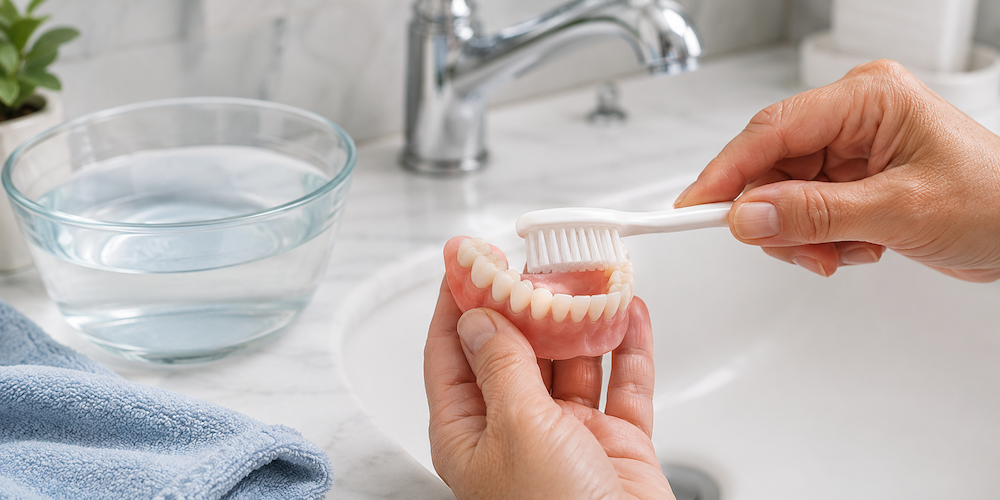
How to remove plaque from dentures is one of the most important questions for anyone who wears full or partial dentures. Dentures may be “false teeth,” but the cleaning has to be very real. Food debris, plaque, stains, and bacteria can collect on the denture surface, around clasps, and in the areas that touch your gums. Over time, this buildup can cause odor, irritation, poor fit, and problems for your remaining natural teeth.
However, denture cleaning is different from brushing natural teeth. Dentures can scratch, warp, or break if they are handled roughly or cleaned with the wrong products. Therefore, the goal is not to scrub harder. Instead, the goal is to clean gently, clean daily, and use materials that are safe for denture acrylic, metal clasps, and your mouth.
Why Denture Plaque Matters
Plaque is a sticky film that contains bacteria and food debris. It forms on natural teeth, and it can also form on removable dentures. In addition, denture materials may have small surface irregularities where microorganisms can collect. If plaque stays on the denture, it can harden, stain, and become harder to remove at home.
This buildup does more than make dentures look dull. It can also cause bad breath and increase irritation under the denture base. For people with partial dentures, plaque can collect around clasps and near the teeth that support the appliance. As a result, the remaining natural teeth may face a higher risk of gum inflammation and decay if cleaning is poor.
Common signs of denture plaque include:
- A slippery or sticky film on the denture
- White, yellow, brown, or dark deposits
- Bad breath after wearing dentures
- Stains around grooves or clasps
- Redness or soreness under the denture
Can Dentures Get Cavities?
Dentures themselves do not get cavities. A cavity forms when bacteria and acids damage natural tooth structure, especially enamel and dentin. Since dentures are made from artificial materials, they do not decay in the same biological way. Therefore, a denture tooth cannot get a cavity like a natural tooth.
Still, that does not mean dentures are risk-free. If a partial denture does not fit well, or if plaque collects around the edge of a crown, bridge, clasp, or remaining tooth, bacteria can damage the natural teeth nearby. In addition, food trapped under a denture can irritate the gums. Because of this, cleaning both the denture and the mouth is essential.
Daily Denture Cleaning Steps
A consistent routine is the safest way to remove plaque from dentures. You do not need complicated tools, but you do need the right method. First, remove the denture and rinse it after meals when possible. Then brush it at least once a day, preferably over a towel or a sink filled with water so it will not break if dropped.
Use a soft denture brush or soft-bristled toothbrush with a denture cleanser, mild hand soap, or mild dish soap if your dentist says it is appropriate. Avoid regular toothpaste unless it is specifically denture-safe, because many toothpastes are abrasive. After brushing, rinse the denture thoroughly before putting it back in your mouth.
Basic cleaning routine:
- Remove and rinse dentures after eating
- Brush dentures daily outside the mouth
- Clean grooves, clasps, and gum-contact areas
- Rinse well before wearing again
- Store dentures moist when not wearing them
How to Remove Plaque From Dentures Safely
How to remove plaque from dentures depends on whether the buildup is soft or hardened. Soft plaque often comes off with daily brushing and a denture cleanser. However, hardened deposits may not come off easily at home. If you scrape them with sharp tools, you can scratch the denture and create more places for bacteria to hide.
For routine plaque, hold the denture carefully and brush every surface. Pay special attention to the underside that touches the gums and any metal clasps on partial dentures. If your denture has adhesive grooves, clean out any leftover adhesive every day. In addition, soak the denture as directed by your dentist or by the cleanser instructions. Soaking can help loosen debris, but it should not replace brushing.
Avoid these common mistakes:
- Do not use hot or boiling water
- Do not use hard brushes or rough powders
- Do not scrape with knives or metal tools
- Do not use bleach on dentures with metal parts
- Do not put denture cleanser directly in your mouth
Clean Your Mouth Too
Cleaning the denture is only half of the job. Your mouth also needs daily care, even if you wear full dentures. Gums, tongue, cheeks, and the roof of the mouth can hold bacteria. In addition, people with partial dentures must carefully clean their remaining natural teeth because these teeth help support the denture.
After removing your dentures, brush your gums, tongue, and palate gently with a soft brush or gauze. If you still have natural teeth, brush them twice a day with fluoride toothpaste and clean between them with floss or interdental brushes. Meanwhile, remove any denture adhesive from the gums. This keeps the mouth cleaner and helps the denture sit more comfortably.
What Poor Denture Care Can Cause
Poor denture care can affect more than appearance. If plaque and food debris stay on the denture, they can lead to bad breath and gum irritation. For partial denture wearers, bacteria around clasps may contribute to tooth decay on nearby natural teeth. Over time, gum inflammation may also make wearing dentures uncomfortable.
In addition, poor denture hygiene can increase the risk of denture stomatitis. This condition causes redness, swelling, soreness, or discoloration in the tissues under a denture. It is often linked with Candida, a type of yeast that can overgrow in the mouth. However, good hygiene, regular dental visits, and not wearing dentures continuously can lower the risk.
Possible effects of poor care include:
- Bad breath
- Gum redness or soreness
- Denture stains and odor
- Irritation under the denture base
- Higher risk around remaining teeth
- Shorter denture lifespan
Why Dentures Become Loose
Dentures can become loose over time. This does not always mean you cleaned them incorrectly. The mouth changes naturally after tooth loss. The bone and gum ridge that once supported teeth can shrink, and this may reduce the fit between the denture and the tissues. As a result, the denture may rock, slip, or rub.
Loose dentures can affect chewing, speech, and comfort. They may also create sore spots or ulcers where the base presses unevenly on the gums. In some cases, poor fit can change the bite and make jaw muscles work harder. Therefore, a loose denture should be checked by a dentist. It may need adjustment, relining, rebasing, or replacement.
When to See a Dentist
Some denture problems should not be handled at home. For example, you should not bend metal clasps, sand down sore spots, or glue broken parts yourself. These fixes can damage the appliance or make the fit worse. Instead, a dentist can evaluate the denture and your mouth together.
Schedule a dental visit if your denture feels loose, causes repeated sores, has visible cracks, or smells bad even after cleaning. You should also see a dentist if your gums bleed, your mouth burns, or you see red or white patches. In addition, regular checkups help your dentist clean hard deposits, check remaining teeth, and make sure the denture still fits well.
Food and Lifestyle Tips
Daily habits can also affect denture cleanliness. Sticky foods can cling to denture surfaces, while sugary foods can feed bacteria around remaining teeth. Dark drinks such as coffee, tea, and red wine may stain denture teeth. Smoking can also stain dentures and increase oral health risks.
However, you do not have to avoid every favorite food. Instead, rinse your mouth and dentures after meals when possible. Drink water often, especially after coffee or snacks. In addition, avoid biting very hard items that may crack denture teeth or damage natural teeth. A balanced diet with enough protein, calcium, and vitamins also supports gum and bone health.
Helpful habits include:
- Rinse after meals and snacks
- Limit sticky and sugary foods
- Drink water after dark beverages
- Avoid chewing ice or hard shells
- Stop smoking or reduce tobacco use
How Often Should Dentures Be Checked?
Dentures need professional attention over time. Even if they look fine, your gums and bone ridge can change. A dentist can check whether the denture still fits, whether your bite is stable, and whether the appliance has worn areas. For partial dentures, the dentist can also check the natural teeth and gums that support the denture.
Many patients benefit from dental checkups every six to twelve months, although some need more frequent visits. If you have diabetes, dry mouth, gum disease, or frequent sores, your dentist may recommend a closer schedule. Regular professional cleaning can remove deposits that daily brushing cannot fully remove. Because of this, checkups are part of denture care, not an extra step.
Frequently Asked Questions
Can I use toothpaste on dentures?
Regular toothpaste is often too abrasive for dentures. It can scratch the surface and make plaque easier to collect. Use a denture cleanser or a product your dentist recommends.
Should I sleep with my dentures in?
Many people should remove dentures at night to give the tissues a rest. However, follow your dentist’s specific advice. If you remove them, store them in water or a recommended soaking solution.
Can plaque on dentures make gums sore?
Yes. Plaque, food debris, and yeast buildup can irritate the tissues under dentures. Poor fit can make this worse. If soreness continues, see a dentist.
What if my dentures smell bad?
Bad odor often means plaque, food debris, or cleanser residue is trapped on the denture. Clean the denture daily and rinse it well. If odor remains, ask your dentist to check for buildup, cracks, or infection.
Can I whiten denture teeth?
Whitening toothpaste and bleach products usually do not work well on denture teeth and may damage the appliance. Professional cleaning is safer for stains. Ask your dentist before using any whitening product.
Summary
Dentures do not get cavities, but they can collect plaque, stains, food debris, and bacteria. This buildup can cause bad breath, gum irritation, denture stomatitis, and problems around remaining natural teeth. Therefore, denture hygiene should be part of your daily oral care routine, not something you do only when stains appear.
The safest routine is simple: rinse after meals, brush dentures daily outside the mouth, clean your gums and tongue, soak dentures as directed, and avoid harsh products. In addition, see your dentist regularly so loose dentures, hard deposits, sore spots, and bite changes can be corrected early.
If you are learning how to remove plaque from dentures, remember that gentle and consistent cleaning works better than aggressive scrubbing. A clean denture protects your comfort, your gums, and your remaining teeth. It also helps your dentist spot other issues, such as gum irritation, worn restorations, or a wedge-shaped defect on natural teeth, before they become harder to treat.