


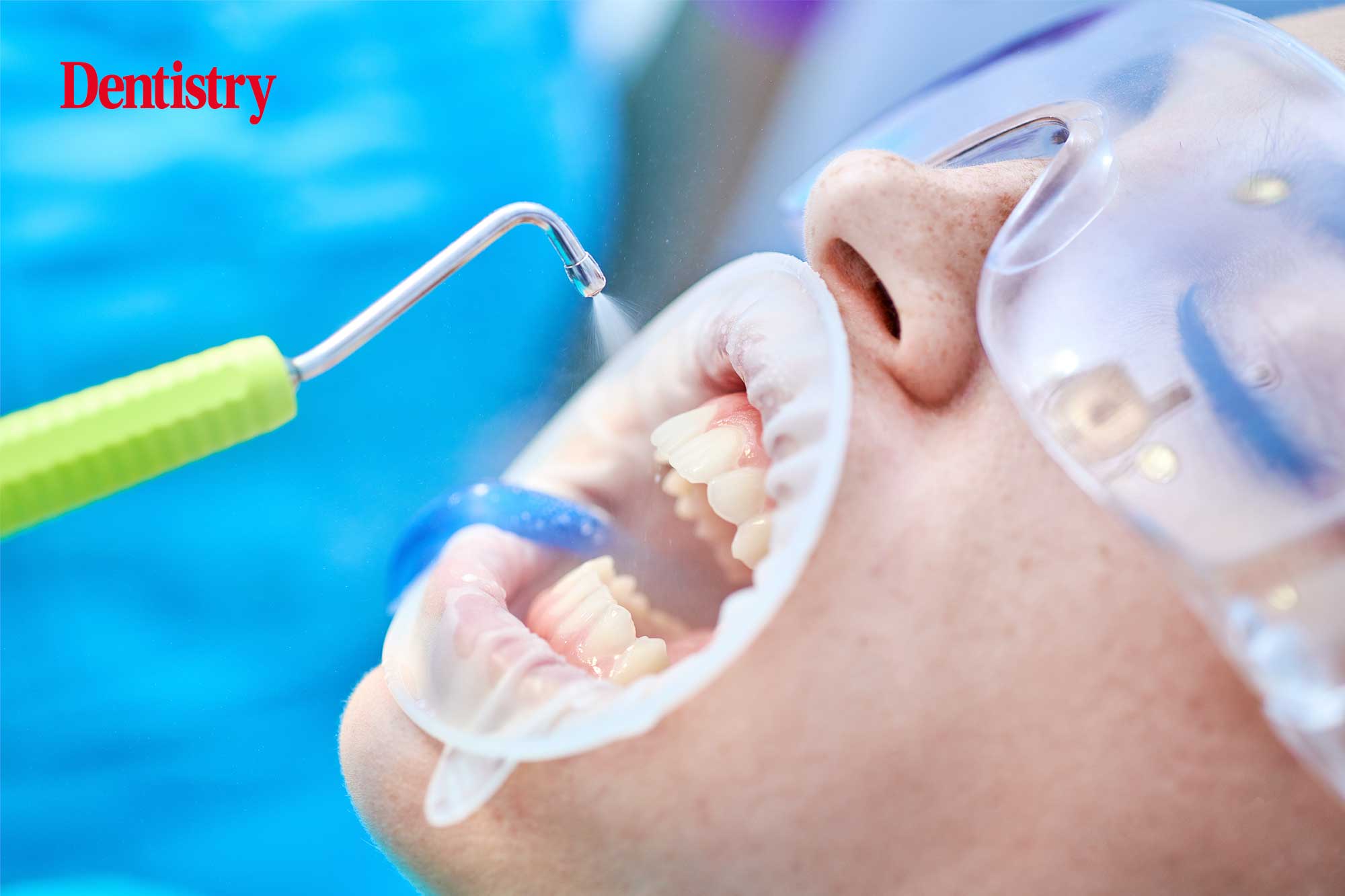
Syeda Amera Hussaini explains the benefits of air polishing in dentistry beyond purely aesthetic considerations, sharing case examples and her clinical top tips.
As modern dentistry moves toward minimally invasive and comfort-driven care, air polishing has emerged as a key tool that bridges patient satisfaction with clinical efficacy. Many patients see stain removal as purely cosmetic – they come in embarrassed, asking for a quick clean to brighten their smile. But as dental professionals, we know that polishing goes far beyond appearance.
Air polishing provides efficient biofilm management, improved comfort, and visible results that motivate patients to maintain better oral health. Air polishing is often described by patients as gentle and refreshing.
The reduced vibration and sensitivity compared with traditional polishing make it more comfortable, particularly for anxious or sensitive patients. This positive experience builds trust and encourages regular attendance for maintenance appointments.
The instant feeling of cleanliness also reinforces good home care habits. Patients leave with a cleaner smile and renewed motivation to maintain it.
From stain removal to biofilm control, research consistently shows that erythritol and sodium bicarbonate powders remove biofilm effectively with minimal abrasion to enamel and dentine. Delivering visible results within one session benefits both patient and clinician. The improvement is clear, but the real value lies in patient comfort and confidence.
Air polishing fits seamlessly into a minimally invasive, patient-centred model of care.
Air polishing case examples
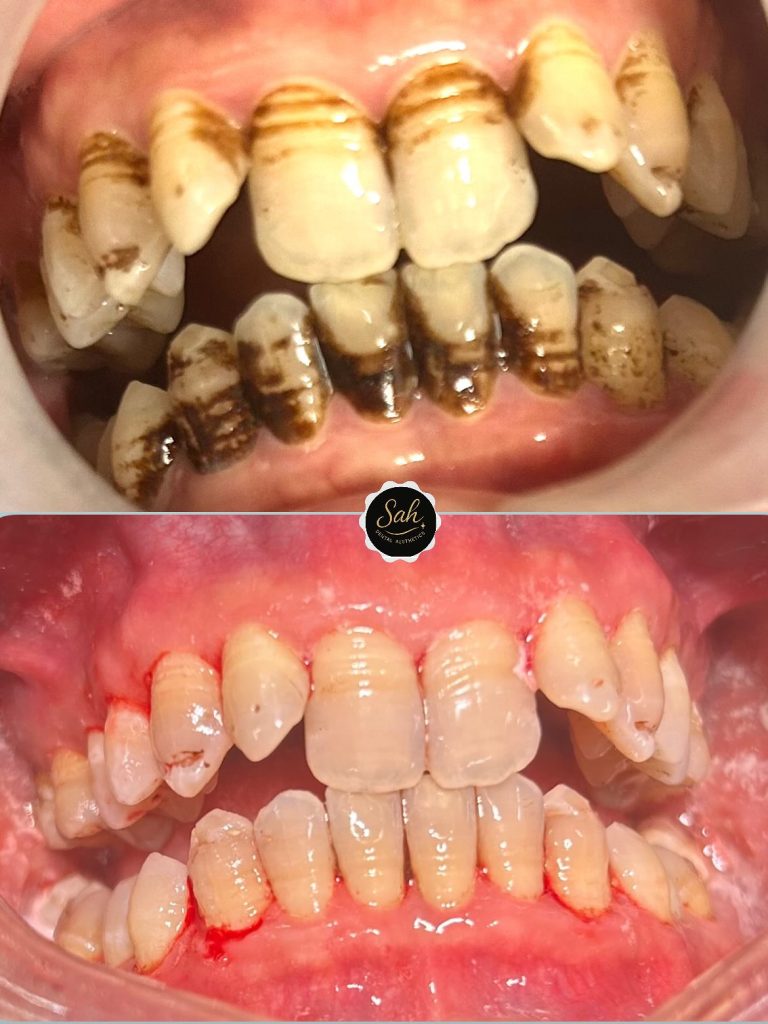
A male patient in his 40s attended under direct access, reporting that his wife was unhappy with the appearance of his stained teeth. He had never seen a hygienist before and reported consuming six to eight cups of Chinese herbal tea daily. After assessment and oral hygiene instruction, two one-hour PMPR and air polishing sessions were carried out.
We achieved a dramatic improvement through stain reduction, but the patient also presented with uneven tooth surfaces associated with mottled dental fluorosis. After discussing the outcome and long-term aesthetic options, I referred him to the dentist to explore composite bonding or veneer treatment.
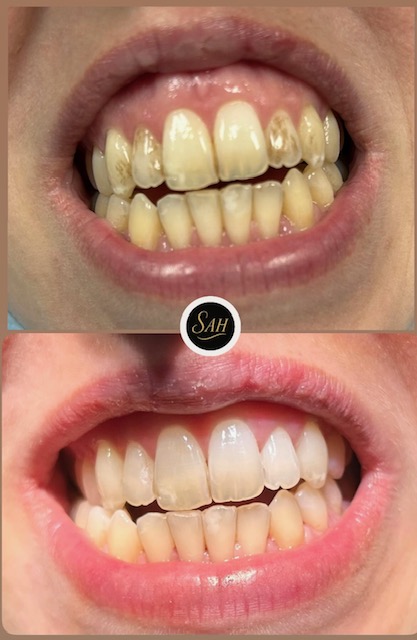
Another regular patient attending for maintenance visits reported mild staining that made her self-conscious between appointments. A single air polishing session using a fine, low-abrasive powder removed the stains comfortably and effectively. She described the experience as ‘the most comfortable clean I’ve ever had’. The combination of comfort and visible improvement reinforced her motivation to maintain daily care and attend regular hygiene appointments.
Clinical tips for air polishing
How to select the right polishing powder
- Choose a powder based on indication and solubility. Fine, highly soluble powders are ideal for maintenance and implant care, while coarser powders are suited to heavy staining
- Check for allergies or sensitivities: always review the medical history for potential allergens in polishing powders.
What is the correct technique and angulation for air polishing?
- Maintain correct angulation: hold the nozzle 30-60° to the tooth surface, keeping it in constant motion to prevent tissue trauma and direct powder toward the aspirator
- Protect soft tissues: use gauze to protect the tongue and floor of the mouth, and apply retraction aids when needed.
Water and suction management
- Ensure optimal water flow: keep water at full flow. Reduced flow increases powder use, lengthens treatment time, reduces efficiency, and can cause blockages or discomfort
- Use high-volume suction: ensure the suction can aspirate one litre in eight seconds. Service equipment regularly and clean filters daily. Use a wide-bore suction tip for efficiency.
Are there any environmental and safety considerations?
- Check ventilation and PPE: good ventilation is essential. Keep windows open or use an air purifier where possible. Start with higher-level respiratory protection and adjust as appropriate
- Assistant positioning: the aspirator tip should be positioned 9-15 mm from the working area at an angle. Retraining may be beneficial if technique requires improvement.
Communicating with patients and ensuring their comfort
- Explain the process: discussing the procedure in advance improves understanding, comfort, and perceived value
- Pre-rinse and isolate for subgingival application when indicated.
Air polishing is more than an aesthetic enhancement – it’s an efficient, minimally invasive procedure that supports patient comfort, motivation, and confidence. When performed correctly, it offers predictable results and a superior experience for both patient and clinician. As preventive and supportive periodontal care continues to evolve, air polishing deserves a permanent place in every dental chair.