


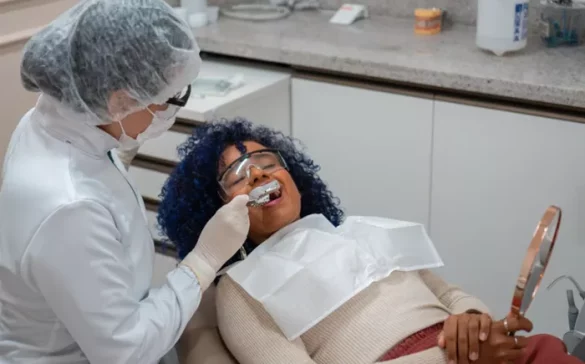
Dental care can be costly, and one patient’s recent experience highlights the financial challenges many Americans face when seeking treatment.
Meg, a woman from the United States, shared her reaction after receiving a surprisingly high estimate for dental work. Her visit revealed a series of extensive procedures that came with a price tag she described as “staggering.”
According to Meg, her dentist informed her that she needed three root canals, three tooth extractions, several fillings, and multiple crowns. Faced with the total cost, she asked if payment plans were available. She was disappointed to learn that no such plans existed at the clinic.
Visibly upset, Meg questioned the effectiveness of dental insurance, asking, “What is the point in having dental insurance if it literally covers nothing? It might as well be self-pay.” Her frustration resonated with many, as dental expenses can often exceed insurance coverage, leaving patients to manage substantial out-of-pocket costs.
Meg also reflected on her personal circumstances, explaining that her dental issues were the result of years of neglect linked to mental health challenges and addiction. In a social media caption, she wrote, “After years of neglect in depression and addiction (now four years in recovery trying to do better), I went to the dentist. I almost regret it.” Her statement underscores the complex interplay between personal health history, financial limitations, and access to care.
The lack of available payment options sparked a broader conversation about the accessibility of dental services. “So if you’re poor, you’re just supposed to suffer?” Meg asked, highlighting a concern shared by many Americans who struggle to afford essential dental treatment.
Viewers who followed Meg’s story were quick to respond. Some expressed empathy, sharing similar experiences with high dental bills and limited insurance coverage. Others raised questions about the structure of dental insurance in the United States, noting that coverage often fails to meet patients’ needs for major procedures.
Dental experts note that Meg’s experience is not uncommon. Root canals, extractions, fillings, and crowns are among the more expensive procedures in dentistry. While preventive care is often covered by insurance plans, major restorative work can quickly reach thousands of dollars, particularly if multiple teeth are involved.
Meg’s story has sparked a broader discussion about the affordability of dental care and the need for insurance plans that provide meaningful support for patients facing complex treatment needs. It also serves as a reminder of the emotional and financial stress that can accompany necessary medical care, particularly for individuals with a history of health challenges.
As public debate continues, Meg’s experience may resonate with countless patients who face difficult choices when seeking essential dental care. For now, her candid reflections offer a sobering look at the high cost of maintaining oral health in today’s healthcare system.