


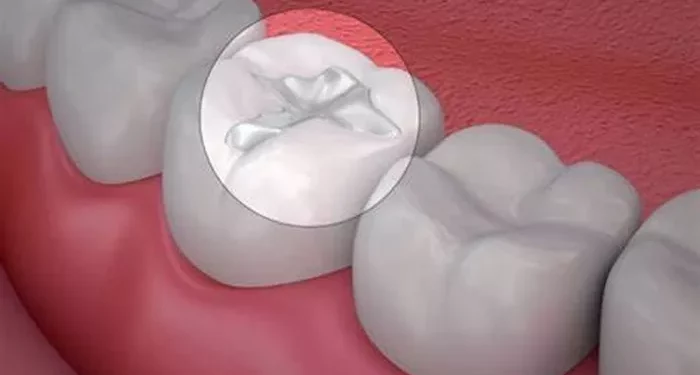
Early childhood caries (ECC) remains the most common chronic disease among children worldwide, and puzzlingly, it often affects specific teeth more than others.
Now, a study led by the Faculty of Dentistry of The University of Hong Kong, in collaboration with the Qingdao Institute of Bioenergy and Process Technology, Chinese Academy of Sciences, Qingdao Women and Children’s Hospital, and Qingdao Stomatological Hospital, has made a breakthrough that could revolutionize the treatment and prevention strategies for childhood caries.
The team has developed the world’s first artificial intelligence (AI) system that can predict the caries risk of individual teeth based on their microbial signatures.
The AI ??model, called Spatial-MiC, showed over 90% accuracy in predicting early caries and 98% accuracy in identifying existing caries.
The research findings were published in the prestigious journal Cell Host & Microbe.
The team was led by Dr. Huang Shi, Assistant Professor of Microbiology, Division of Applied Dental Sciences and Community Dental Care, The University of Hong Kong, and team members included PhD student Zhang Yufeng, Professor Xu Jian, Chinese Academy of Sciences, Dr. Teng Fei, Qingdao Stomatological Hospital, and Dr. Yang Fang, Qingdao Women and Children’s Hospital.
Using cutting-edge methods combining 16S rRNA sequencing and shotgun metagenomics, the researchers investigated the unique microbial ecosystem on the teeth of children aged 3-5 years.
Over nearly a year, they analyzed 2,504 dental plaque samples from 89 preschoolers.
The study revealed a unique microbial pattern that reliably predicted which teeth were more susceptible to caries.
A key finding was that there is a natural front-to-back gradient in the microbial composition of a healthy mouth. This gradient is determined by salivary flow and tooth anatomy, resulting in different bacterial communities in front teeth (incisors) and back teeth (molars).
As tooth decay develops, this microbial gradient is disrupted. Notably, early microbial changes—such as the migration of incisor-associated bacteria to molars—are detected even before visible signs of tooth decay appear.
Spatial-MiC uses this data to assess tooth decay risk at the level of individual teeth. Unlike traditional methods that assess the entire mouth and may miss early signs, the AI ??system incorporates microbial data from specific teeth and their neighbors to detect and even predict cavities months before clinical symptoms appear. The system was able to accurately predict cavities up to two months in advance with 93% accuracy.
The implications for children’s oral health are profound. In China alone, more than 70% of five-year-olds suffer from early childhood caries (ECC), and the disease remains the leading cause of dental disease in children worldwide.
Current prevention strategies often treat all teeth the same, ignoring individual susceptibility. This research lays the foundation for a precision dentistry model that aims to provide personalized preventive care for high-risk teeth before cavities start.
“These findings fundamentally change the way we think about cavities,” said Dr. Huang. “Cavities are no longer an inevitable part of childhood.
With insights at the microbiome level, we can now predict and prevent cavities in every tooth.”
Going forward, the team plans to scale the system and validate its effectiveness in different populations. The ultimate goal is to integrate this AI technology into clinical trials and roll it out to dental clinics around the world.
As first author Dr Fang Yang emphasises: “This is not just about better dental care, but about giving children a healthier start in life through smarter, more targeted early intervention to prevent pain, infection and developmental problems.”