
Face Sagging From Missing Teeth: Can Dental Implants Help?

On this page~5 min read
Featured Answer:Does missing teeth affect face shape?
Yes. Missing teeth can affect face shape, especially when several teeth or a full arch are lost. Teeth and jawbone help support the lips, cheeks, and lower facial height. After tooth loss, the jawbone may gradually shrink because it no longer receives normal chewing stimulation. This can make the cheeks look sunken, the lips appear thinner, the corners of the mouth droop, and the distance between the nose and chin become shorter. Dental implants may help restore support by replacing tooth roots and supporting crowns, bridges, or full-arch fixed teeth.
At Huangshan Dental, patients with long-term missing teeth, loose teeth, failing restorations, or full-arch tooth loss may receive a comprehensive examination before treatment planning. This usually includes an oral examination, imaging evaluation, bite analysis, periodontal assessment, and a discussion of implant, bridge, or removable denture options. For suitable patients, full-arch dental implants may help restore fixed teeth, improve chewing function, and support a more natural facial profile.
At Huangshan Dental, full-mouth implant restoration is planned not only to replace missing teeth, but also to rebuild oral support, chewing function, and facial harmony. In many before-and-after cases, patients show improved support around the mouth after treatment. The lips and cheeks appear less collapsed, the lower facial proportion becomes more natural, and the smile looks healthier and more youthful.
Case 1
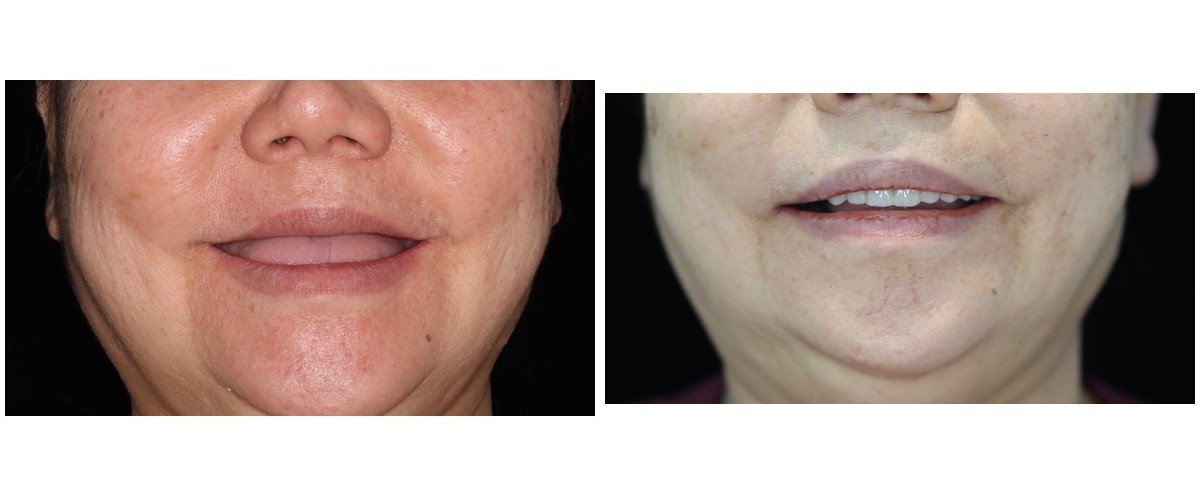
Case 2
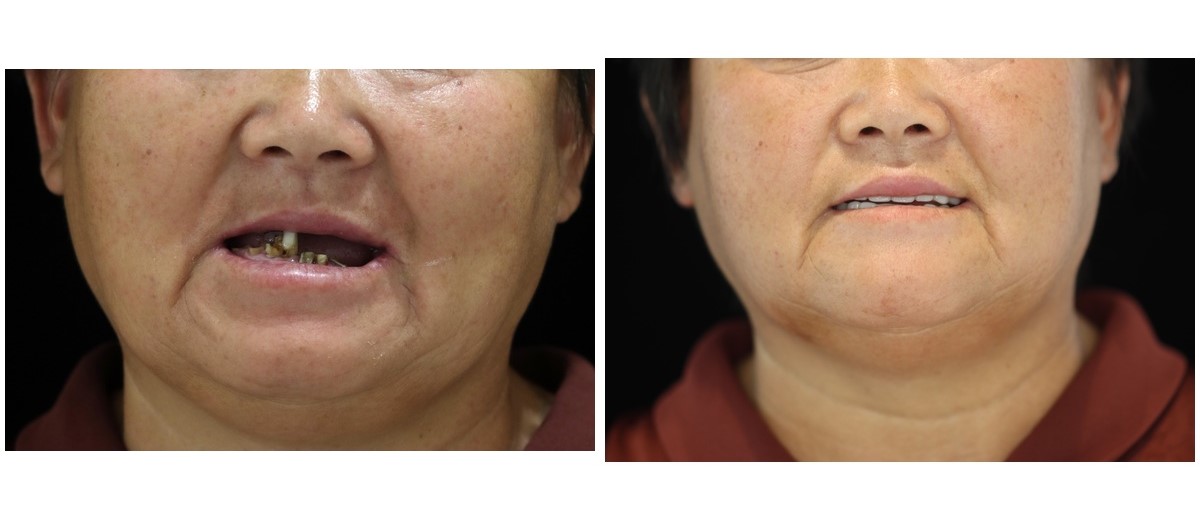
What are the long-term effects of missing teeth?
Missing teeth are not only a cosmetic problem. When a tooth is lost, the surrounding oral structure begins to change. The neighboring teeth may shift toward the empty space, the opposing tooth may over-erupt, and the bite may become unstable. Over time, this can make chewing less efficient and may place uneven pressure on the remaining teeth. For patients missing many teeth, the problem can become more serious because the whole bite relationship may collapse gradually.
One important long-term effect is jawbone resorption. The alveolar bone is the part of the jawbone that surrounds and supports tooth roots. When teeth are lost, that bone no longer receives normal force from biting and chewing. As a result, the bone can gradually shrink. Research on edentulous patients shows that residual ridge resorption is a key issue after tooth loss and can affect denture stability and prosthetic treatment outcomes. This bone loss can also affect facial appearance. Without enough tooth and bone support, the lips and cheeks may lose volume. The nasolabial folds may look deeper, the mouth corners may turn downward, and the lower third of the face may appear shorter. In full-mouth tooth loss, the lower jaw may rotate upward and forward when the patient closes the mouth, making the chin look more prominent and the side profile more aged.
Missing teeth can also influence general quality of life. The American College of Prosthodontists notes that consequences of missing teeth may include nutritional changes and associations with broader health concerns. Patients may avoid harder foods, chew mainly on one side, speak less confidently, or feel self-conscious in social situations.
How to fix sunken cheeks from tooth loss?
The right solution depends on how many teeth are missing, how much jawbone remains, gum health, general medical condition, and the patient’s expectations. For one missing tooth, a single dental implant or bridge may be considered. For multiple missing teeth, implant-supported bridges, removable dentures, or fixed full-arch implant restorations may be options. For full-mouth tooth loss, treatments such as All-on-4, All-on-6, or other full-arch implant-supported restorations may help rebuild chewing support and facial structure.
Dental implants are often considered when patients want a stable, fixed solution. Mayo Clinic explains that dental implant surgery replaces tooth roots with metal posts, and artificial teeth are placed on top to restore appearance and function. Suitable candidates need enough bone to support implants, or they may require bone grafting.
Compared with removable dentures, implant-supported restorations can provide stronger stability and chewing support. Compared with traditional bridges, implants usually do not require grinding down healthy neighboring teeth. A fixed dental bridge can replace missing teeth, but it commonly depends on natural teeth or implants for support.
For sunken cheeks caused by long-term tooth loss, implants may help by rebuilding oral support from inside the mouth. When a fixed implant bridge restores vertical bite height and lip support, the lower face may look more balanced. The cheeks and lips may appear less collapsed because the prosthetic teeth and gums provide structure. However, dental implants are not facial plastic surgery. They may improve support related to missing teeth, but they cannot remove all wrinkles or reverse skin aging.
FAQ:
Can missing teeth cause face sagging?
Yes. Missing teeth can reduce support for the lips and cheeks. Long-term jawbone loss may make the face look sunken or older.
Can dental implants fix face sagging?
Dental implants may improve facial support caused by missing teeth, especially in multiple-tooth or full-arch cases. They cannot fully reverse natural aging.
Are dentures or implants better for sunken cheeks?
Dentures can restore some facial volume, but implants usually provide stronger stability and better chewing support when the patient is suitable.
How soon should missing teeth be replaced?
It is better to consult a dentist as early as possible. Delayed treatment may allow more bone loss and bite changes.
Do I need bone grafting before implants?
Some patients do. If the jawbone is too thin or low, bone grafting may be recommended before or during implant treatment.
Conclusion
Face sagging from missing teeth happens because teeth, jawbone, and bite height all help support the lower face. When teeth are lost for a long time, the jawbone may shrink, the cheeks may sink inward, and the lips may lose support. Dental implants can help many suitable patients restore fixed teeth, improve chewing, and rebuild facial support. The best treatment should be based on a complete dental examination and personalized planning.
This article is for general oral health education only and should not replace diagnosis or treatment advice from a licensed dentist or physician.