
Veneer for Teeth Gap vs Braces: Which Is Better?
On this page~7 min read
Key Takeaway
- A teeth gap can come from tooth size, jaw size, gum disease, missing teeth, low frenum attachment, or long-term oral habits such as tongue thrusting.
- Braces or clear aligners move teeth and roots into better positions, so they are usually better for larger gaps, bite problems, crowding, or multiple spaces.
- Veneers can close selected front teeth gaps faster when tooth alignment is mostly acceptable and the main goal is cosmetic improvement in tooth shape, color, and symmetry.
- The best choice depends on gum health, bite, gap size, tooth shape, enamel condition, age, timeline, and the patient’s willingness to accept enamel preparation.
Why Teeth Gaps Happen
A teeth gap, also called a diastema when it appears between two teeth, can affect both appearance and oral function. Some patients notice that they avoid smiling in photos because the front gap draws attention. Others feel food gets trapped between teeth so often that picking food out becomes a daily habit. A visible gap is not always dangerous by itself, but a widening gap, food impaction, gum recession, or loose teeth should be checked by a dentist.
Common causes include natural tooth and jaw-size mismatch, where the jaw has more space than the teeth can fill. Small teeth, a large arch, or a low upper lip frenum can leave a space between the front teeth. Gum disease is another important cause. When periodontal bone support is lost, teeth may drift and form fan-shaped spaces, especially around the lower front teeth. Long-term habits such as tongue thrusting, lip biting, or repeated toothpick use may also contribute to spacing over time.
The Cleveland Clinic explains that diastema can be treated with orthodontics, dental bonding, porcelain veneers, frenectomy, bridges, or implants depending on the cause. This is why a teeth gap should not be judged only by appearance. At Huangshan Dental, the first step is to examine gum health, tooth size, bite relationship, X-rays or scans, and the patient’s smile goals before recommending veneers or braces.
Potential Problems Caused by Large Teeth Gaps
- Food impaction can increase plaque buildup and raise the risk of decay between teeth.
- Uneven bite forces may make some teeth move, loosen, or wear faster.
- Front teeth gaps may affect speech sounds and reduce smile confidence.
- If gaps are caused by gum disease, untreated inflammation can continue to damage supporting bone.
Braces for Teeth Gap: How They Work
Braces and clear aligners close a teeth gap by applying controlled force over time. Instead of hiding the space, orthodontic treatment gradually moves the teeth through bone and can also improve root position, bite balance, midline, crowding, and spacing across the full arch. This is why braces are often preferred when the gap is part of a larger alignment or bite problem.
The orthodontic process usually starts with consultation, oral health screening, photos, X-rays, intraoral scanning, and bite analysis. After the dentist identifies the cause of the gap, a treatment plan is designed around the patient’s age, dental condition, aesthetic expectations, and budget. During treatment, brackets or clear aligners guide tooth movement. After active treatment, retainers are needed to reduce relapse and keep the teeth stable.
Braces are especially suitable for teenagers, patients with generalized spacing, crooked teeth, bite disharmony, or a midline shift. The main limitation is time. Orthodontic treatment may take months to years depending on complexity, and it requires good oral hygiene, regular follow-up, and patient cooperation.
Veneers for Teeth Gap: How They Work
Porcelain veneers are thin ceramic shells bonded to the front surface of teeth. For selected front teeth gaps, veneers can make teeth look wider, more even, brighter, and more symmetrical without moving the roots. Veneers may be a good option when the teeth are healthy, the bite is stable, and the gap is mainly an aesthetic problem rather than a functional orthodontic problem.
The veneer process usually includes oral examination, smile design, digital scanning, shade selection, minimal enamel preparation when needed, custom veneer fabrication, trial fitting, bonding, and polishing. A veneer plan should not only close the gap; it should also consider tooth width, gum line, smile curve, facial proportions, and whether the final teeth will look natural.
Veneers can work faster than braces and may also improve color problems such as tetracycline staining or fluorosis. However, veneers do not correct the root cause of bite problems. They may require enamel preparation, and patients should avoid biting hard objects. If the gap is too large, simply making teeth wider can look unnatural, so orthodontics or combined treatment may be more appropriate.
Huangshan Dental Case: E-MAX Veneers for Gapped Teeth
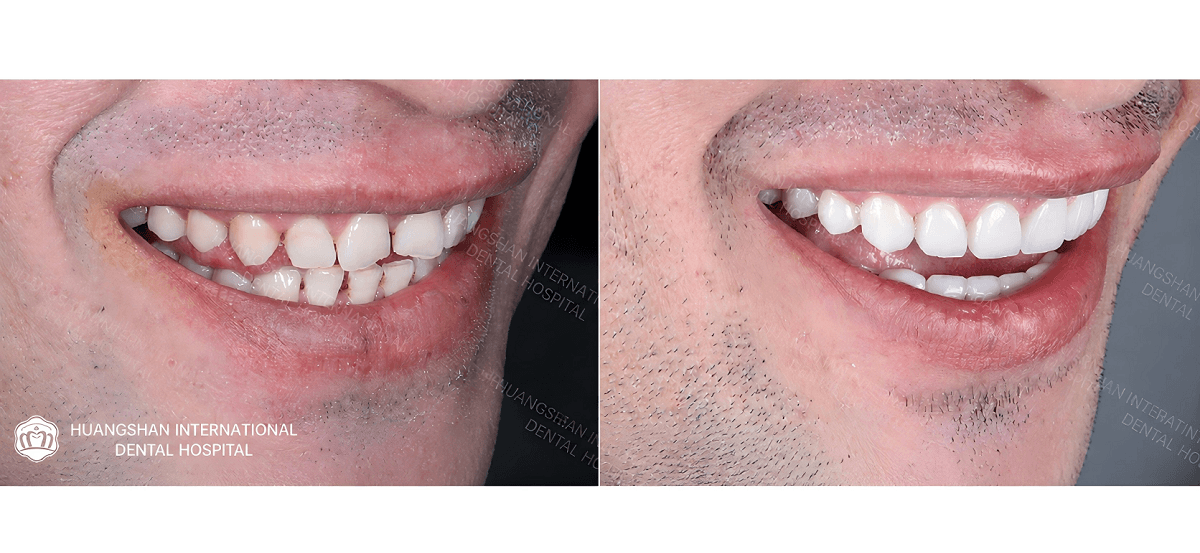
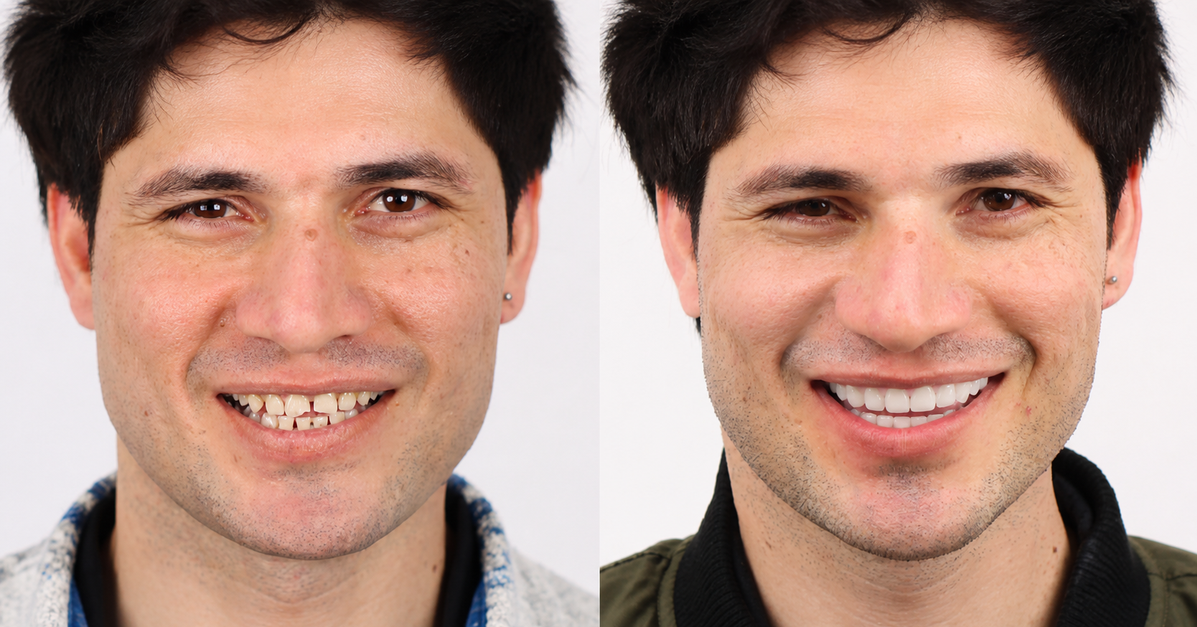
One Huangshan Dental veneer case involved Qaisar Hayat from Pakistan. His diagnosis included irregular tooth alignment, visibly twisted anterior teeth, large gaps, and overall yellowish tooth surfaces. The selected treatment was E-MAX veneers, designed to improve tooth shape, close visible spaces, brighten the smile, and create a more balanced front-tooth appearance.
This type of case shows why veneers may be chosen when the patient wants a faster cosmetic improvement and the clinical examination confirms that veneer restoration is suitable. The before-and-after images should be used as a visual case reference, not as a guaranteed result. Every teeth gap case needs individual evaluation because tooth position, enamel thickness, bite force, gum condition, and smile goals vary from patient to patient.
Case reference: E-MAX veneer treatment for teeth gaps and irregular anterior tooth shape at Huangshan Dental.
Veneers vs Braces: Core Differences
| Factor | Veneers | Braces / Clear Aligners |
|---|---|---|
| Main purpose | Cosmetic reshaping of visible front teeth | Moves teeth and improves alignment or bite |
| Best for | Small to moderate front gaps with acceptable bite | Large gaps, multiple spaces, crooked teeth, bite issues |
| Treatment speed | Often faster after design and fabrication | Usually slower because teeth move gradually |
| Tooth structure | May require minor enamel preparation | Usually no enamel removal for tooth movement |
| Color improvement | Can improve tooth color and shape at the same time | Does not whiten or reshape teeth directly |
| Long-term maintenance | Avoid hard biting; check bonding and margins | Wear retainers after treatment to prevent relapse |
Veneers and Braces Cost at Huangshan Dental
The following are selected public reference prices from Huangshan Dental, converted at about 1 RMB = 0.1488 USD. Final cost depends on oral condition, material choice, treatment complexity, and the dentist’s final plan.
| Treatment Type | Approx. USD |
|---|---|
| Veneers, per tooth | From USD 250 |
| Veneers, 16 teeth package | From USD 1,458 |
| Braces / orthodontic treatment | From USD 1,637 |
How to Choose Between Veneers and Braces
If the teeth gap is caused mainly by tooth shape and the bite is already healthy, veneers may be a practical and fast cosmetic option. This is common when one or two front gaps make teeth look small, uneven, or less harmonious in the smile. Veneers can close the visible space and improve color at the same time.
If the gap is related to tooth position, jaw development, multiple spaces, crowding, or bite imbalance, braces or clear aligners are often more conservative and more stable. Orthodontics does not simply cover the gap; it moves the teeth into a better position. For younger patients, patients with healthy gums, and patients who want root-position correction, orthodontics is often the stronger long-term choice.
Some patients need a combined plan. For example, orthodontics may first close larger spaces and correct tooth positions, while veneers may later refine tooth shape or color. There is no single best treatment for every teeth gap. The better choice is the one that matches the cause, oral health condition, timeline, budget, and aesthetic expectation.
FAQ
What's the cheapest way to fix gap teeth?
The cheapest option is often dental bonding for small cosmetic gaps, but it may stain or wear sooner than porcelain veneers. If the gap is caused by tooth position or bite problems, braces or aligners may be more appropriate even if the upfront cost is higher.
How long will veneer teeth last?
Porcelain veneers commonly last many years with good oral hygiene, regular dental checkups, and careful chewing habits. Longevity depends on material, bonding quality, bite force, grinding habits, and daily care.
Is veneer teeth painful?
Veneer treatment is usually not very painful. Some patients feel temporary sensitivity after enamel preparation or bonding. If minimal-prep veneers are suitable, discomfort may be even lower, but every case should be assessed individually.
Conclusion
For a teeth gap, veneers and braces solve different problems. Veneers can be excellent for selected cosmetic gaps when tooth shape, color, and smile symmetry are the main concerns. Braces or clear aligners are usually better when the gap reflects tooth-position, bite, or jaw relationship issues. At Huangshan Dental, the safest decision starts with a full examination, gum evaluation, bite analysis, smile design discussion, and a clear explanation of cost, timeline, benefits, and limitations.
Disclaimer
This Huangshan Dental article is for informational purposes only and does not constitute medical advice, diagnosis, or a guaranteed treatment result. Always consult a qualified dentist for a personalized evaluation and follow your dental team’s specific instructions before and after treatment.