


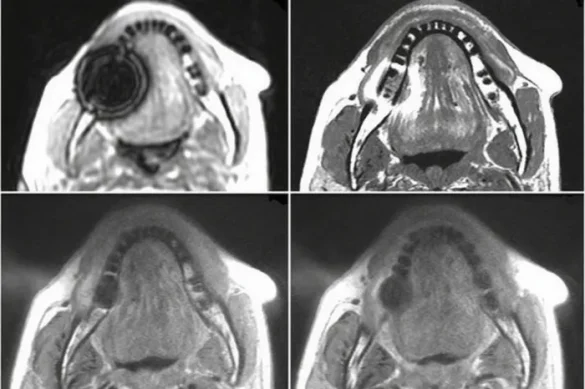
Magnetic Resonance Imaging (MRI) is a common diagnostic tool that uses strong magnetic fields and radio waves to create detailed images of the body. If you have dental implants and your doctor recommends an MRI, you might be worried about the safety and possible effects of the implants during the scan. Understanding how dental implants interact with MRI machines is important for both patients and healthcare providers.
Understanding MRI and How It Works
MRI stands for Magnetic Resonance Imaging. This technology produces high-quality images of organs and tissues inside the body. It is especially useful for examining the brain, spine, joints, and other soft tissues. Unlike X-rays or CT scans, MRIs do not use ionizing radiation. Instead, they rely on magnets and radiofrequency energy. Because MRIs use powerful magnets, any metal in or on the body may raise safety or image quality concerns.
What Are Dental Implants Made Of?
Dental implants are artificial replacements for tooth roots. They are surgically placed in the jawbone to support crowns, bridges, or dentures. Most dental implants are made from biocompatible materials like titanium or zirconia. Titanium is a metal known for its durability, strength, and ability to bond with bone through a process called osseointegration. Zirconia, a ceramic material, is metal-free and considered one of the newest options for dental implants. These materials are preferred because they work well within the body and rarely cause allergic reactions.
Titanium Implants and MRI Safety
Titanium is the most common material used for dental implants. It is strong, lightweight, and most importantly, non-ferromagnetic. Non-ferromagnetic means that titanium is not strongly attracted to magnets. Because of these properties, titanium implants are considered safe for MRI procedures. The presence of a titanium implant will not move, heat up, or be pulled by the MRI magnet, minimizing the risk for patients.
Zirconia Implants and MRI Compatibility
Zirconia implants offer an alternative to titanium. They do not contain metal and are completely non-magnetic. This means there is virtually no chance of interaction with the magnetic fields used in MRI. People with zirconia implants can safely undergo MRI scans without concern for their implant’s safety.
What If You Have Older Implants or Uncertain Materials?
While modern dental implants are made to be MRI-compatible, some older implants or ones made from unknown materials may pose risks. If you are unsure what kind of implant you have, ask your dentist for documentation. Having details such as the type of implant, manufacturer, and date of placement can help your medical team assess safety before your MRI.
The Importance of Communication with Your Healthcare Team
Before any MRI scan, it is essential to inform your doctor and the radiology staff about your dental implants. Provide them with information about:
- The type of implant material (titanium, zirconia, or other)
- The location of your implant (upper jaw, lower jaw, etc.)
- Any records or documents regarding your implant (manufacturer, product name, or model)
This information helps the medical team take any necessary precautions and ensure the scan is done safely.
Will Dental Implants Affect the Quality of My MRI?
In general, dental implants do not prevent you from having an MRI. However, it is possible for implants to create a small image distortion, known as an artifact, on the MRI. This is more likely if the scan focuses on the head, jaw, or neck regions near the implant. Artifacts appear as blurry or distorted spots on the images, and can occasionally make it harder for the radiologist to see fine details in that area.
- If your MRI is being performed far from the dental implant, for example, on your knee or lower back, the implant’s effect on the scan is usually negligible.
- If your MRI is focused on the jaw, sinuses, or brain, discuss with your radiologist what to expect. In rare cases, other imaging methods such as CT scans or X-rays might be advised for a clearer view of the area near your implant.
Safety Considerations During MRI with Dental Implants
For the large majority of people with dental implants, MRIs are safe and uneventful. Modern implants are designed with MRI compatibility in mind. However, there are a few important considerations:
- Always disclose your dental history to your medical team
- Bring any records showing the implant’s material and manufacturer
- If you experience discomfort or heat in your mouth during the scan, inform the technician immediately (though this is rare)
- Ask questions if you’re uncertain about your implant’s compatibility
Careful planning, clear communication, and proper documentation help ensure a smooth and safe imaging experience.
Practical Tips for Patients with Dental Implants
- Schedule a pre-MRI consultation if you have questions
- Keep records of all dental procedures and implant details
- Share your dental records with both your dentist and medical imaging team
- Do not delay necessary scans out of fear; address your concerns with healthcare professionals
Conclusion
Dental implants are generally safe for MRI procedures, especially when made from titanium or zirconia. Most modern dental implants pose no risk during MRI and cause only minor image artifacts, if any. The key to a successful and safe MRI experience is communication: always inform your doctor and radiology team about your implant and its material. By taking these precautions, you can feel confident in undergoing your MRI and receiving the imaging you need for your health. If you are unsure about your implant’s compatibility, speak to your dental provider and obtain the necessary documentation.
Frequently Asked Questions
Can a dental implant move during an MRI?
No. Modern implants made from titanium or zirconia are non-magnetic and will not move during an MRI.
Can dental implants cause pain during an MRI?
This is very rare, especially with approved materials like titanium or zirconia. If you ever feel discomfort during the scan, notify your technician right away.
Will my dental implant affect images of my brain or jaw?
Dental implants can sometimes cause minor image distortion, called artifacts, especially if the scan covers the area around the implant. For most MRI scans, this effect is minimal.
Should I tell my dentist if I need an MRI?
Yes. Your dentist can provide important details about your implant, including material type and placement, which help your healthcare team ensure a safe MRI experience.
Are all dental implants safe for MRI?
Most modern implants are MRI compatible, but always verify with your dentist if you have older or unknown types of implants.