


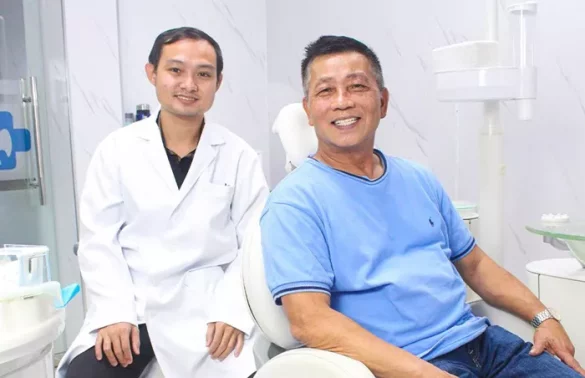
The Department of Health has announced a major expansion of the Community Dental Support Programme (CDSP), with new services and a broader group of beneficiaries to be included from January 1 next year. The move is aimed at improving access to essential dental care for underprivileged communities and addressing long-standing gaps in preventive and curative oral health services.
The department reminded the public on December 17 that the changes were first announced on August 15. Under the expanded programme, several new dental services will be added. These include dental scaling, root canal treatment, the removal of bridges and crowns, and the fitting of removable dentures. These additions mark a significant step forward, as they go beyond basic emergency care and allow eligible patients to receive more comprehensive treatment.
Another key change is the extension of coverage to homeless individuals. For the first time, people experiencing homelessness will be formally included as beneficiaries under the CDSP. This reflects a stronger focus on equity in healthcare and recognises that oral health problems are common among vulnerable populations who often face barriers to regular dental care.
At the same time, the CDSP will replace the Community Care Fund Elderly Dental Assistance Programme (EDAP). The EDAP will stop accepting new applications from January 1 next year. Existing support for eligible individuals will therefore be consolidated under a single programme. This integration is expected to streamline services and improve efficiency in the use of public resources.
To support homeless individuals in accessing dental services, social workers will play a central role. Through networks operated by non-governmental organisations, social workers will help identify eligible applicants. They will also assist with preparing application documents and arranging appointments with participating dental clinics. This coordinated approach is designed to reduce administrative barriers and ensure that services reach those who need them most.
To qualify, homeless individuals must meet several conditions. They must hold a Hong Kong identity card. They must also be enrolled in the Electronic Health System, known as eHealth. In addition, they must be service users of specific Social Welfare Department programmes for street sleepers. These include temporary shelters, urban hostels for single persons, integrated services teams for street sleepers, and care and support networking teams for street sleepers.
Under the current arrangements, each eligible service user may apply for subsidised dental services once every 180 days.
The programme covers both preventive and curative care. Services include oral health assessments, medication for dental pain relief when needed, X-ray examinations, and basic procedures such as dental fillings or extractions. All services are provided based on an assessment by a registered dentist.
From January 1 next year, the expanded scope will allow participants to receive additional treatments. Dental scaling services and root canal treatment for one tooth will be available once every 365 days. Participants will also be eligible for the removal of one bridge or up to two crowns every 180 days. These measures aim to address more complex dental conditions that can affect daily life and overall health.
The fitting of removable dentures will be offered under strict conditions to ensure effective use of limited resources. Each participant may receive this service up to two times, with a minimum interval of five years between fittings. The service will only be available to eligible individuals with fewer than 20 remaining teeth. A dentist must assess that the individual has difficulty eating or chewing and that removable dentures can effectively restore chewing ability.
Through these changes, the Department of Health aims to deliver more targeted and cost-effective dental care. The expanded programme seeks to improve oral health outcomes while ensuring that public resources are used wisely. Most importantly, it strengthens support for underprivileged groups and reinforces the role of dental care as an essential part of overall health.