


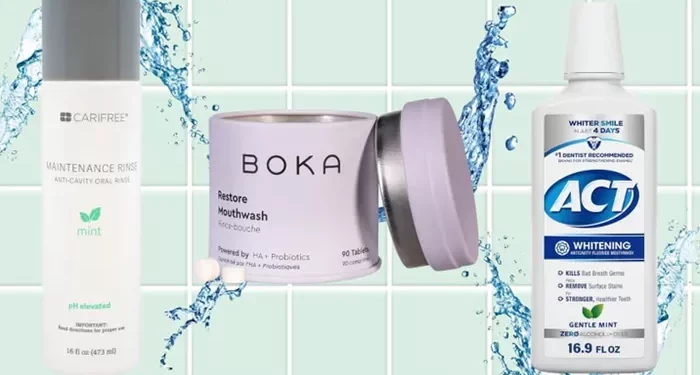
Most people should prioritise brushing and dental floss for oral health, New York City dentist Dr. Azadeh Akhavan says — mouthwash can help, but it’s not a replacement.
Akhavan told patients that mouthrinse is less effective than physical brushing at removing plaque. Still, it can be a useful add-on for people with specific needs.
She recommends fluoride-containing rinses for patients prone to cavities or with tooth sensitivity. Fluoride helps strengthen enamel and reduces the ability of cavity-causing bacteria to demineralise teeth.
Mouthwash can also benefit people with dry mouth — a common side effect of some medications and treatments. Dry mouths let bacteria bind more readily to teeth, increasing the risk of cavities and gum and bone problems.
Akhavan advises using mouthwash only at the end of an oral-care routine. “The fluoride and antimicrobial agents in mouthwash are only effective when they remain on oral surfaces for at least 30 minutes,” she said — a point she says is especially important for products aimed at dry mouth.
She also warned consumers to watch for potentially harmful ingredients. Some mouthwashes contain alcohols, abrasive charcoal particles, or cetylpyridinium chloride (CPC).
While CPC became popular during the COVID-19 pandemic for its antibacterial properties, Akhavan said it can cause brown staining that requires professional cleaning.
Despite these concerns, Akhavan said dentist-approved formulas are available and can be chosen to match a patient’s specific condition. For most people, however, a routine that makes brushing and dental floss the priority remains the most effective way to maintain oral health.