


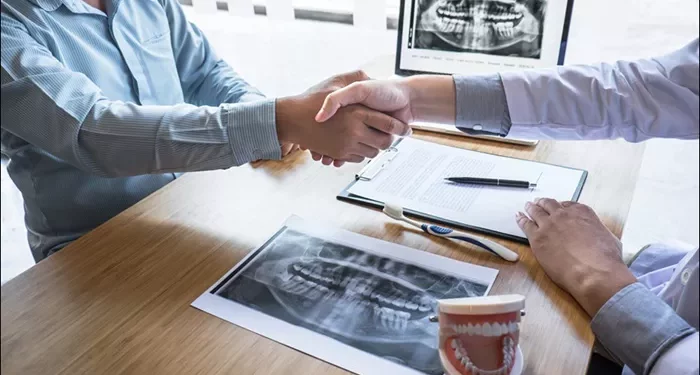
In Australia, dental care has long been treated as separate from general healthcare. But clinicians say closer collaboration between dental professionals and GPs could significantly improve patient outcomes, particularly for older and vulnerable populations.
Dental hygienist Brenda Fry and Canberra-based GP Dr Paresh Dawda offer a working model of what integrated care can look like. Fry runs Bright Smiles Mobile Dental, providing in-home dental services across Canberra and regional New South Wales. She also works one or two days a month at Dr Dawda’s clinic, Next Practice Deakin.
“We work together to make sure patients are treated as a whole, not in parts,” Fry says.
At Next Practice Deakin, patients are routinely screened for oral health as part of general health assessments. Those without a regular dentist are referred directly to Fry, in the same way they might be referred to a physiotherapist or dietitian. Dr Dawda says this approach makes dental care more accessible and normalised within primary care.
The collaboration is particularly important for elderly and housebound patients. Fry treats many of the clinic’s more than 1,000 residential aged care patients, while also supporting those unable to attend traditional dental practices.
“We share a lot of patients, so communication is constant,” Dr Dawda says. “If we’re worried about someone, we prioritise their dental care. If Brenda identifies a medical concern, she contacts us straight away.”
Both practitioners say the partnership works because oral health is treated as a core part of overall health. Fry believes this mindset is still uncommon. “Many GPs only refer patients when there’s pain or infection,” she says. “I’ve even heard that dental care isn’t necessary for aged-care residents because they eat soft food. But dental problems can stop people eating properly, leading to weight loss and rapid health decline.”
Research supports these concerns. A 2024 New Zealand study found that limited dental knowledge among GPs remains a key barrier to collaboration. Queensland research published in BMC Oral Health also identified poor communication and siloed practice as obstacles, especially in rural and remote areas.
Dr Angie Nilsson, vice president of the Australian Dental Association, says oral health must be better integrated into general health services nationwide.
“There’s a clear two-way relationship,” she says. “Good oral health supports good general health, and vice versa.”
Dr Nilsson points to joint initiatives such as the Rethink Sugary Drink campaign, which brings together more than 20 medical and dental organisations to address shared public health issues. She says collaboration must also happen at a practical level, starting with education.
“In Tasmania, doctors are trained to manage dental trauma immediately,” she says. “That should be standard across the country.”
Professor Tarun Sen Gupta, acting dean of medicine at James Cook University and a rural GP, agrees medical education lacks dental training. “There’s almost no formal teaching on dentistry in medical degrees,” he says. “GPs learn on the job because patients present with dental problems.”
Funding structures also reinforce the divide. Most dental care sits outside Medicare, making it unaffordable for many patients. Prof Gupta says this often drives people to see GPs instead of dentists, even when urgent dental care is needed.
“Cost is a major barrier,” he says. “People with abscesses or facial swelling need prompt dental treatment, but funding delays access.”
Despite this, Prof Gupta says GPs are keen to learn more. Dental training workshops for doctors are consistently popular, reflecting a strong appetite for better skills and collaboration.
Dr Nilsson says simpler referral pathways, digital tools and oral health guides for GPs could improve outcomes. “Doctors aren’t trained to identify many urgent oral conditions,” she says. “Better resources would help patients get faster care.”
For Fry, the solution is clear. “When dental and medical professionals work together, patients benefit,” she says. “Better collaboration leads to better health outcomes.”