A passionate dental practitioner with a special interest in endodontics and conservative aesthetic dentistry and a well-known speaker, Dr Enzo Attanasio has valuable insights to share with his audience. At this year’s International Dental Show in Cologne in Germany, he lectured on three topics at Kuraray Noritake Dental’s booth, including the flowable injection technique and BEST.FIT (Buccal Enamel Shape Through Flow Injection Technique), a hybrid technique for efficient and aesthetic restoration of anterior teeth. In this interview, he talks about the most important facts, tips and tricks he presented.
Dr Attanasio, would you please summarise the key messages of your presentations, starting with the flowable injection technique?
If there is a revolutionary technique that combines the benefits of prosthetic and restorative dentistry, it is certainly the flowable injection technique, also referred to as injection moulding. Nowadays, we have exceptional flowable composites at our disposal, which are absolutely on par with the packable ones in terms of mechanical and optical properties. Unfortunately, however, many dental practitioners are not yet aware of these products.
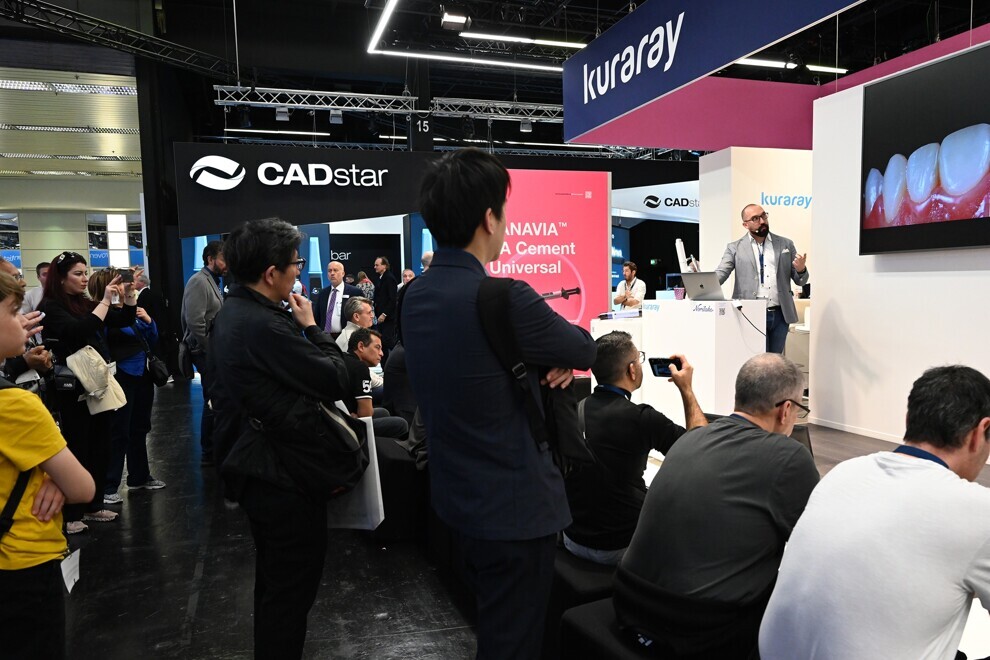
During the International Dental Show, the well-known speaker Dr Enzo Attanasio lectured on three topics, including the flowable injection technique and BEST.FIT, a hybrid technique for efficient and aesthetic restoration of anterior teeth.
In my lecture on the flowable injection technique, I wanted to highlight the potential of these materials and the technique. In addition, my aim was to provide a precise protocol that would enable the audience to reproduce it in their dental office. My presentation covered the whole workflow, including case selection, the production of the wax-up and silicone index, and the injection of the flowable composite.
What about BEST.FIT?
In my lecture, I explored the limits and strengths of this technique. BEST.FIT is an evolution of this technique that seeks to overcome the limits of both the flowable injection and standard anterior direct restoration techniques. At the same time, it leverages the strengths of those techniques, and it has the ultimate aim of putting the clinician in a position to perform an anterior restoration with less stress.
Let us focus on the flowable injection technique first. When and why do you opt for this technique?
The flowable injection technique has the same fields of application as other direct and indirect restoration techniques. It is very well suited for young patients desiring veneer treatment, for example. In the era of social media, images of influencers who have undergone aesthetic dental treatment are omnipresent, so children are growing up with high aesthetic expectations. When they present in our dental offices requesting smile makeovers, they are often too young to be treated with ceramic veneers. Those with a clear need for aesthetic treatment are ideal candidates for a smile makeover with the flowable injection technique. This technique is minimally invasive, produces restorations that are easily modified or repaired at anytime and allows for treatment with ceramics at a later date. Other target groups include individuals who cannot afford highly expensive treatments with ceramics but who also desire high-quality and aesthetic treatment and those with severely worn dentition. For the latter group, we can use the technique to produce medium- to long-term mock-ups that increase the vertical dimension of occlusion.
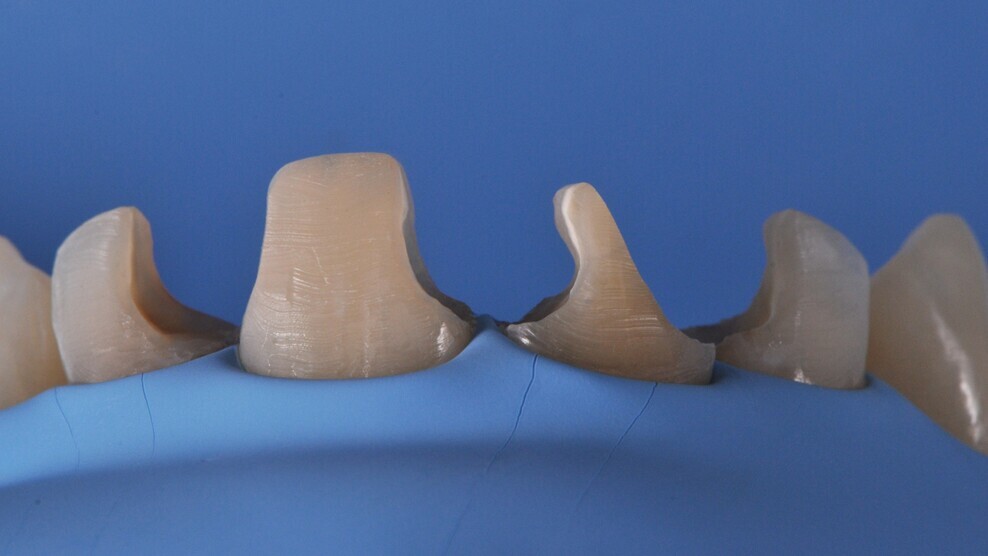
Prepared teeth and isolated working field prior to treatment using BEST.FIT.
Moreover, direct restorations produced using this technique may be combined with ceramic restorations in this target group to reduce the cost of therapy. Hence, the technique is versatile, and it is very important that a clinician is able to make use of it.
What is the difference between this technique and BEST.FIT, which you developed?
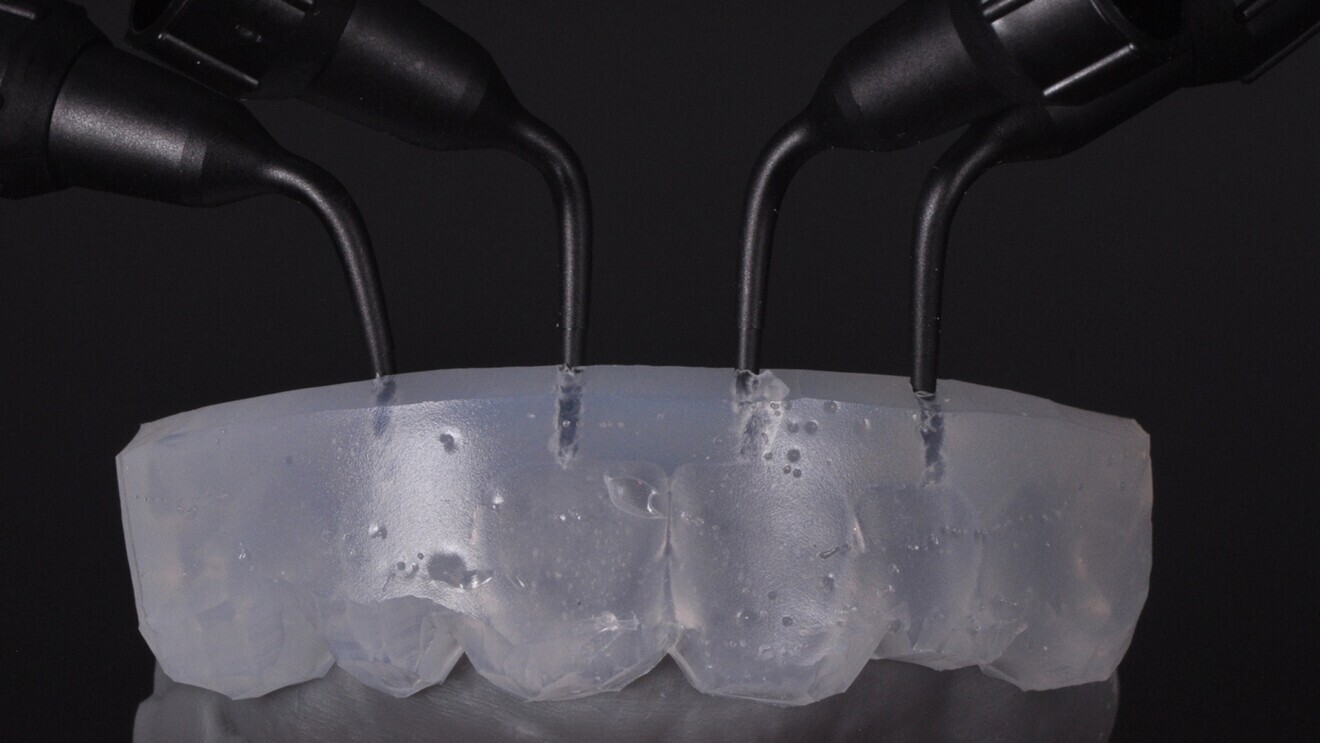
The flowable injection technique uses a digital or conventional wax-up to produce a transparent silicone index that serves as a shell for the injection of flowable composite. Once injected, the composite is cured through the index. In this way, the desired anatomical shape is obtained with minimal effort. However, the technique allows for single-shade restorations only. BEST.FIT is a hybrid technique that I developed to address this limitation and leverage the advantages of both the flowable injection and classical direct anterior restoration techniques. It involves the creation of the dentine core by hand, followed by the injection of the layer imitating the enamel through a transparent index. This is particularly beneficial for treating young people, for whom I feel the need to incorporate incisal translucencies into my anterior restorations. An article describing the technique was published in 2024.1
When do you prefer this technique over the flowable injection technique?
Every time I need to incorporate different levels of translucency into my restorations, BEST.FIT is my first choice. This is especially important when it is not planned to restore the social six but to treat single teeth in the maxillary anterior region. In this case, I have to replicate the adjacent natural teeth with their internal anatomy. Whenever those teeth have a complex internal colour structure, a single-shade technique would not lead to the desired result, and playing with different opacities is essential. This is what BEST.FIT allows me to do in an efficient way.
No matter whether you opt for the flowable injection technique or BEST.FIT, proper isolation of the working field is an important prerequisite for long-term success. What are your tips in this context?
As shown in one of my lectures, it is possible to use a dental dam in some cases. However, any dental practitioner opting for a dental dam should keep in mind that, when placing the dam, there will always be a band of tooth near the gingiva that will remain covered by the dam. This is fine as long as we do not have to cover discoloration in the cervical area. In this case, we can ask the dental technician to start waxing up a millimetre from the gingival margin. Staying supragingival means that the transparent silicone index may be trimmed in that area as well and the dental dam will stay in place during its placement. This significantly reduces the risk of contaminating the bonding surface with saliva. Another factor to be considered carefully is the positioning of the clamps. Ideally, the silicone index is shaped in a way that the clamp does not interfere with its insertion. For protection of the adjacent teeth, PTFE tape has proved its worth.
How important is bonding for both techniques, and what are the key success factors in this context?
Bonding is a fundamental part of every modern restorative treatment. To provide for optimal bonding conditions in the context of restoring teeth using the flowable injection technique or BEST.FIT, we should always try to use a dental dam. If this is not possible, we need to be very careful to keep the working field dry and clean until the injection is completed. This means that any contamination with blood and saliva must be avoided. Especially during the injection step, this is only feasible when the surrounding soft tissue is perfectly healthy.
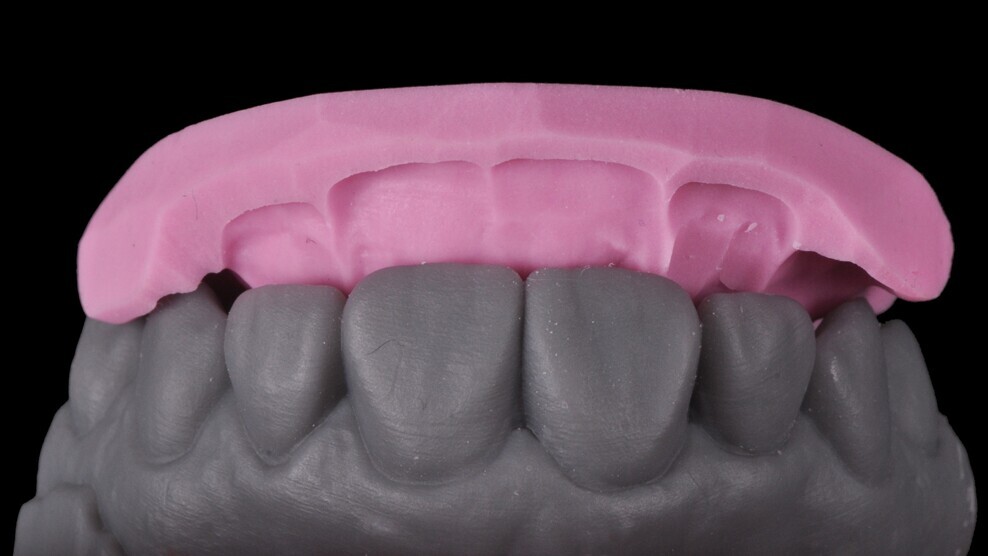
Palatal silicone index produced over the wax-up model with putty silicone material to allow for the build-up of the palatal wall and the layering of the dentine core by hand.
The selection of a high-quality bonding agent and adherence to the recommended protocols are also important factors for establishing a strong, long-lasting bond on the clean and dry surface. In my daily practice, I started using a universal adhesive in combination with selective etching of the enamel approximately ten years ago. Ever since the introduction of CLEARFIL Universal Bond Quick (Kuraray Noritake Dental), this product has been my universal adhesive of choice for direct and indirect restoration procedures. When I graduated 20 years ago, I started with classical three-step adhesive systems used in the etch-and-rinse technique. I will never go back, because CLEARFIL Universal Bond Quick provides reliable bonding with virtually no postoperative sensitivity.
What about the silicone index preparation for the flowable injection technique and BEST.FIT?
Usually, a silicone index used for mock-up creation in the patient’s mouth is made of a putty polyvinylsiloxane material that is modelled by hand. Transparent silicone materials used to produce a silicone index for the flowable injection technique and BEST.FIT have a lower viscosity. Hence, an impression tray is needed to record the details of the wax-up. In this regard, it is important to select a tray of the right size, fill it well with silicone material and place it carefully over the wax-up because we need high accuracy and dimensional trueness of the silicone index as well as sufficient wall thickness to give it the required rigidity and avoid distortions during injection moulding.
What composite materials do you combine when using BEST.FIT and the flowable injection technique?
When modelling the dentinal structures by hand, the dentist can use his or her favourite packable composite, because the procedure is the same as any classical anterior restoration procedure. All the materials I usually use for the classical steps of direct anterior restoration production are perfectly suitable for all steps prior to the build-up of the vestibular layer. When employing BEST.FIT, it is essential to leave 0.5 mm of space buccally for the subsequent injection step. When opting for the flowable injection technique, the injection will follow immediately after application of the adhesive. In both cases, it is possible to inject any kind of flowable composite. These materials are typically transparent enough to reveal all the details of the dentine core underneath—like the incisal effects created with BEST.FIT.