


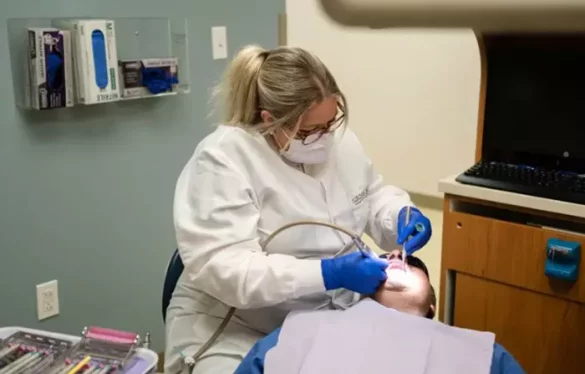
Across New Zealand, children visit the dentist every day at primary and intermediate schools. Sometimes they are seen in school dental clinics. Other times, a mobile dental van delivers care directly to schools. Lateisha Chant is one of the oral health therapists who works in one of these vans. She mainly serves kura kaupapa Māori in the Wellington region. “I love my job,” she says. “I’m so fortunate that I get to build good relationships with my community.”
Chant’s work involves more than checking teeth. She diagnoses problems with teeth and gums. She also teaches children how to care for their mouths. Learning these habits early is important. “Within the school dental services, we see the kids regularly,” she explains. “Having that regular care means we can spot problems before they get bigger.”
Parents often come with their children. Many ask if they can get treatment too. But funding only covers children under 18.
At recent holiday clinics, Chant says parents asked for help every day. “It’s heartbreaking,” she says. “You want to help them on a human-to-human level. I do everything I can to help the tamariki, but if they’re over 18, it’s like – I’ll give them toothpaste samples.”
Chant supports Dental for All, a campaign pushing to make dental care free for everyone in New Zealand. She sees the difference free care can make for children. Her experience shows how expensive dental care can fail adults and why reform is needed.
Once children enter high school, free dental care is delivered by private dentists under government contracts. Not all dentists are part of the scheme. The contract has not been updated in 20 years, says David Excell, president of the New Zealand Dental Association. “Many dentists only provide care on the contract out of goodwill,” he adds. A government review is underway and will be completed in 2026. Teenagers often need more complex treatments because problems were not addressed earlier.
Excell says the service is behind in reaching under-18s. Only about 70% receive the full care they are entitled to. Dental therapists like Chant are in demand, but the workforce is small. Training is only available at Otago University and Auckland University of Technology.
The dentist workforce faces similar challenges. New Zealand produces just 60 dentists a year, a number unchanged since 1985. The population has grown by two million since then. About a third of dentists were trained overseas, and that number is rising. “In a few years, just 50% of dentists could be trained in New Zealand,” Excell warns. The NZDA has called for 90 funded dental school seats at the University of Otago each year.
Access is another issue. Dental for All recently ran a roadshow with free dental days and a chance for people to share their experiences. In some regions, like the East Coast, mobile clinics had not visited schools for years. Hana Pilkinton-Ching from Dental for All says a fully integrated child, adolescent, and adult dental service would improve planning and accountability. It would also highlight that oral health is part of general health and needs urgent attention.
Chant previously worked in Te Tai Tokerau before moving to Wellington. “It’s really hard to staff,” she says. “It’s a large region with high needs.” Some new graduates join through a voluntary bonding scheme, where extra payments help offset student loans. She is optimistic about more Māori health professionals entering dentistry. “Many want to return to where they were born and give back to their communities,” she says.