


PORTLAND, Ore. — Dental hygienist Carly Clark does not work from a traditional clinic. Instead, she brings Oral Care directly to patients who cannot leave their homes.
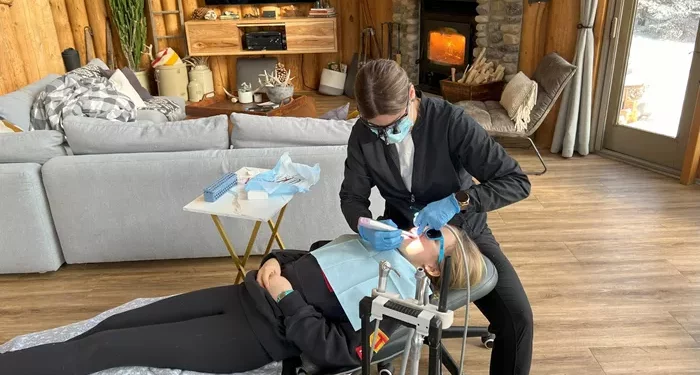
With a folding table, basic dental tools, and portable equipment, Clark visits hospices, nursing homes, and assisted living facilities across Portland. She cleans and polishes teeth at bedsides and in living rooms, then moves on to her next patient.
Clark runs Mobile Dental Hygiene PDX, one of several mobile dental services in the city. These practices are designed for people who face physical, medical, or logistical barriers to visiting a dentist. Some mobile providers focus on preventive care, such as cleanings and fluoride treatments. Others offer more advanced procedures, including X-rays, crowns, and root canals, all performed in patients’ homes.
The demand for these services is growing. In 2022, more than one-third of Americans over age 65 had not seen a dentist in the previous year. About 2 million seniors are homebound, and nearly 19 million people 65 and older lack dental insurance. Traditional Medicare does not cover routine dental care.
Access issues are especially severe in long-term care facilities. Of the 1.4 million Americans living in nursing homes, only 16 percent receive professional dental services. Although federal rules require facilities to provide access to oral health care, enforcement is limited. Staff shortages and budget pressures often push dental care behind other priorities.
Clark saw these gaps early in her career. After launching her business in 2012, she began working in nursing homes and was struck by the condition of many patients’ mouths. She said residents often received strong medical care, but daily oral hygiene was frequently overlooked.
In response, Clark expanded her work beyond cleanings. She now trains caregiving staff on basic oral care, including proper toothbrushing techniques. She believes education and confidence are key to improving routine care. Without training, she said, many caregivers feel uncomfortable brushing someone else’s teeth.
Clark’s path into dentistry began early. Her mother worked in a dental office, and Clark became a dental assistant in 1997. She later returned to school and became a dental hygienist in 2008. A continuing education course introduced her to mobile dentistry and the populations it serves.
She said working with seniors felt like a natural fit. Clark enjoys hearing their stories and believes mobile dental care can restore dignity, comfort, and health to people who might otherwise go without it.