


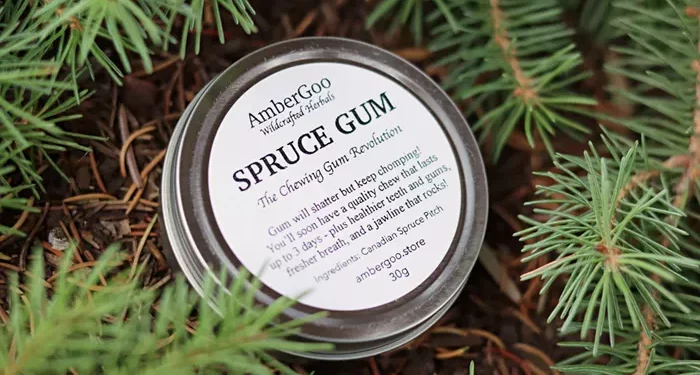
On a drizzly November day north of Juneau, Alaska, Nate Mal stands at a forest trailhead chewing gum, his boots sinking slightly into the mud. He is not hiking for leisure alone. Mal is searching for spruce resin, a sticky amber substance that seeps from tree bark and can sell for as much as $250 a pound.
The resin is the foundation of Underbrush, a fast-growing chewing gum brand Mal founded after years of experimentation. Made from natural ingredients such as spruce resin, chicle, tree sap, and mineral powders, the gum is marketed as a return to traditional oral health practices. In just three years, the brand has surged to roughly $30 million in annual sales, fueled by online demand and viral attention on TikTok.
Mal, a trained chef, never planned to reinvent chewing gum. Raised in Guam by a Chamorro mother and a U.S. Navy father, he spent much of his childhood exploring the outdoors and foraging in nature. After his family moved to California, he entered the restaurant industry and later worked as a chef in Alaska, where his interest in natural ingredients deepened.
The idea for Underbrush began with dissatisfaction. While chewing gum at an airport, Mal examined the ingredient list on a conventional brand and was struck by its synthetic components. At the time, he was leading a high-end vegan kitchen focused on natural food. The contrast bothered him.
A turning point came in 2022, when Mal suffered a severe toothache and began researching natural remedies while waiting for dental care. He discovered historical and Indigenous uses of tree resin for oral hygiene, including its antiseptic properties. That research led him to experiment with spruce resin, mastic, chicle, mint, and other natural substances.
Hundreds of trials followed. Early batches were too brittle, too sticky, or unbearably bitter. Over time, Mal refined a formula that delivered a smooth chew and balanced flavor. The result was Underbrush gum, sold in small cube-shaped pieces in flavors such as cinnamon, honey, berry, and mint. Each pack retails for about $12.
The gum is sugar-free and promoted as a natural alternative to mainstream products. Underbrush positions itself against what Mal calls “Big Gum,” criticizing the industry’s shift toward synthetic gum bases made with petrochemical-derived plastics.
While resin-based gum is not new, Underbrush draws inspiration from history. In the mid-19th century, John Bacon Curtis marketed spruce gum commercially in the United States, long after Indigenous communities had used tree sap for oral care. Mal sees his work as a modern continuation of that tradition.
Back in the forests of Douglas Island, Mal now leads a small team of foragers. Using chisels and metal pails, they carefully collect resin from Sitka spruce trees, taking care not to damage the bark. One pound of resin can produce about 1,000 pieces of gum.
What Mal once did alone has become a coordinated operation. Underbrush now works with foragers across North America and is exploring long-term land options, including potential pine forests in Michigan’s Upper Peninsula, to secure supply. The company currently leases two warehouses in Mal’s hometown to meet demand.
As the short Alaskan daylight fades and sleet begins to fall, the group hikes back toward the trailhead. Within days, Mal will return home to oversee production. Shipments of mastic from Greece and chicle from abroad are already waiting, while the freshly harvested spruce resin from Juneau will soon be melted, blended, and transformed into gum.
For Mal, the journey from forest to factory reflects a larger goal: reviving natural approaches to oral health in a modern marketplace, one piece of gum at a time.