


3D printing has emerged as a disruptive innovation in restorative dentistry, offering a high degree of precision, efficiency and customisation.1, 2 Recent advancements in printable resin composites, particularly those containing inorganic fillers, have broadened the clinical applicability of 3D-printed definitive restorations.3–5 These materials support the fabrication of various-sized fixed prostheses, including veneers, inlays, onlays, partial crowns and complete crowns, with mechanical and aesthetic properties suitable for long-term intra-oral use.6
Among the latest innovations in chairside 3D printing is tilting stereolithography (TSLA; Dfab, DWS Systems), which utilises a proprietary cartridge-based delivery mechanism. This system offers significant advantages over traditional vat polymerisation methods, particularly in terms of contamination control, user convenience and environmental safety, because it eliminates the need for open resin vats and reduces operator exposure to volatile monomers.7, 8 Additionally, the system allows for rapid fabrication of monolithic restorations with high precision and minimal post-processing.9 Recent in vitro and in vivo studies have demonstrated the dimensional accuracy, marginal adaptation and clinical feasibility of restorations produced with TSLA technology, especially for veneers and onlays.1, 6, 9
The integration of 3D printing into paediatric dentistry is an area of growing interest, particularly in the management of complex craniofacial conditions such as ectodermal dysplasia (ED). ED encompasses a heterogeneous group of inherited disorders characterised by abnormalities in tissue derived from the ectoderm, including teeth, hair, nails and sweat glands.10 In the orofacial region, dental tissue alterations are often the earliest and most prominent clinical indicators, and features such as hypodontia, anodontia, conical teeth and reduced alveolar growth are commonly observed.11, 12
This report presents the interdisciplinary management of a young child referred to a private dental practice in Lausanne in Switzerland in May 2023 with suspected ED. This case highlights the potential of 3D printing as a viable treatment modality in young paediatric patients with congenital dental anomalies.
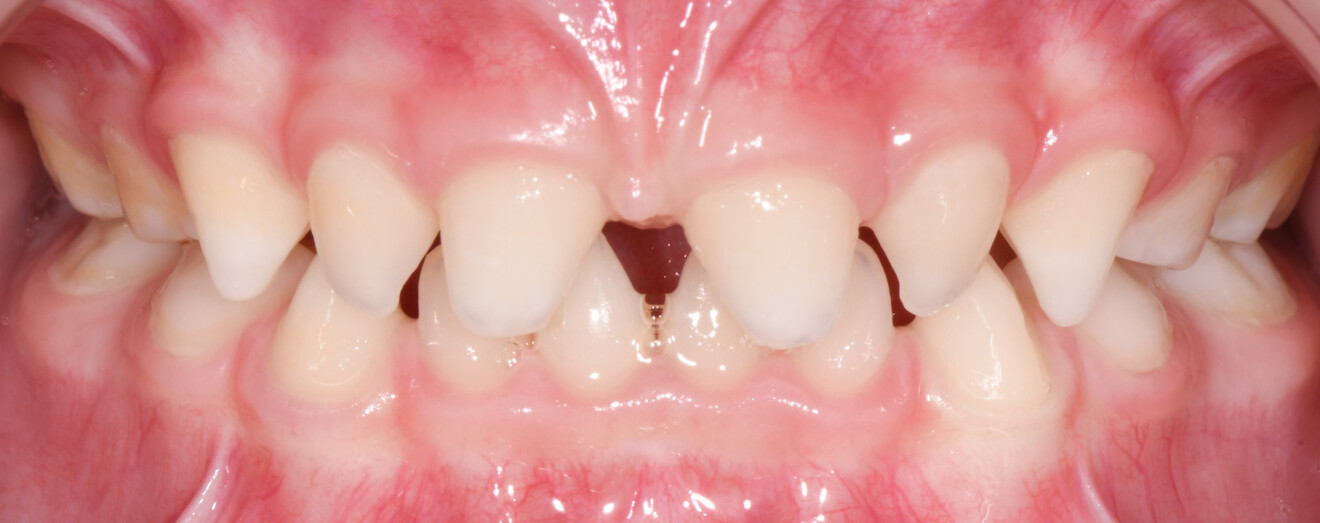
Figs. 1b–e: Initial intra-oral and extra-oral photographs presenting the main features of ectodermal dysplasia.
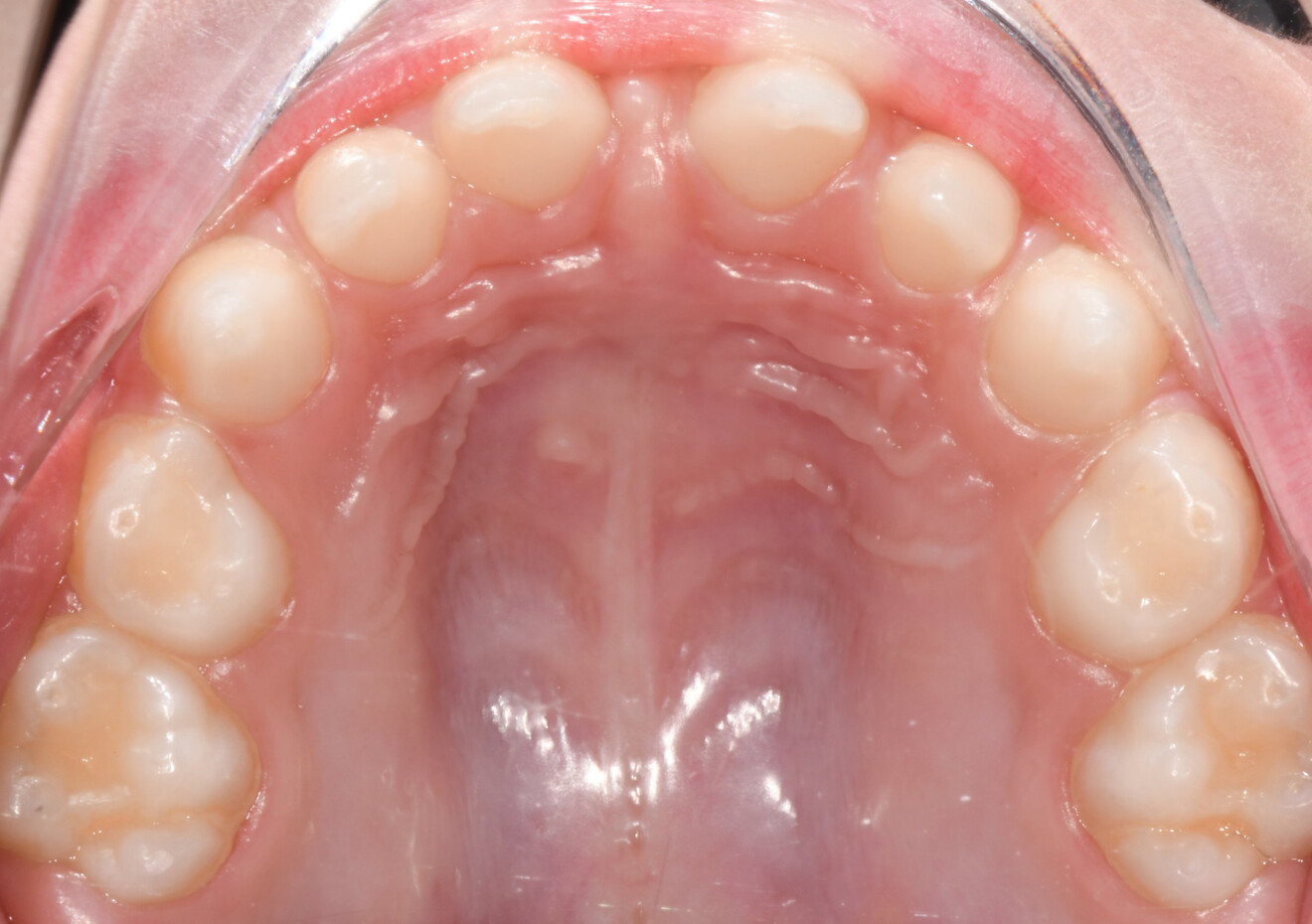
Fig. 1c
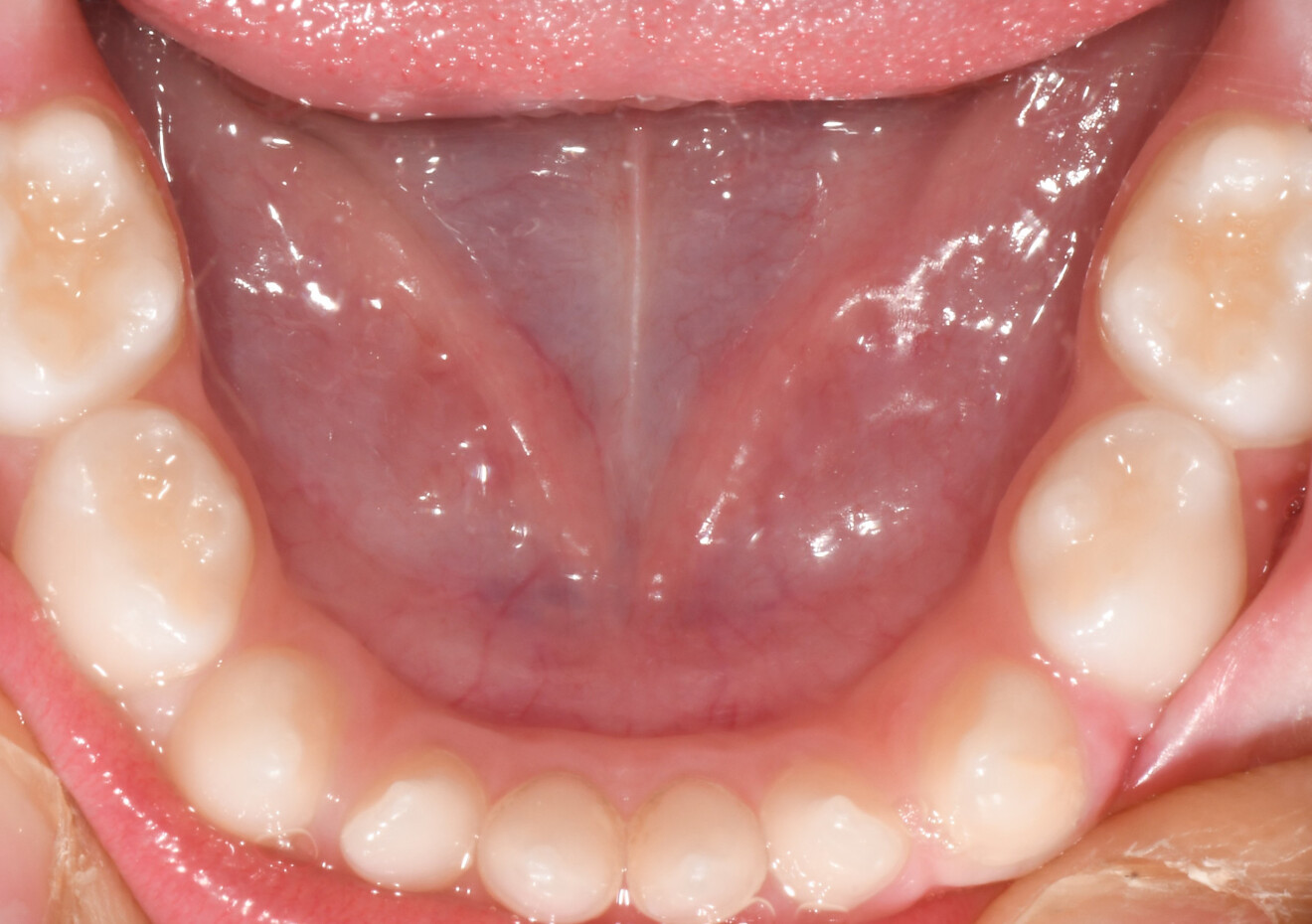
Fig. 1d
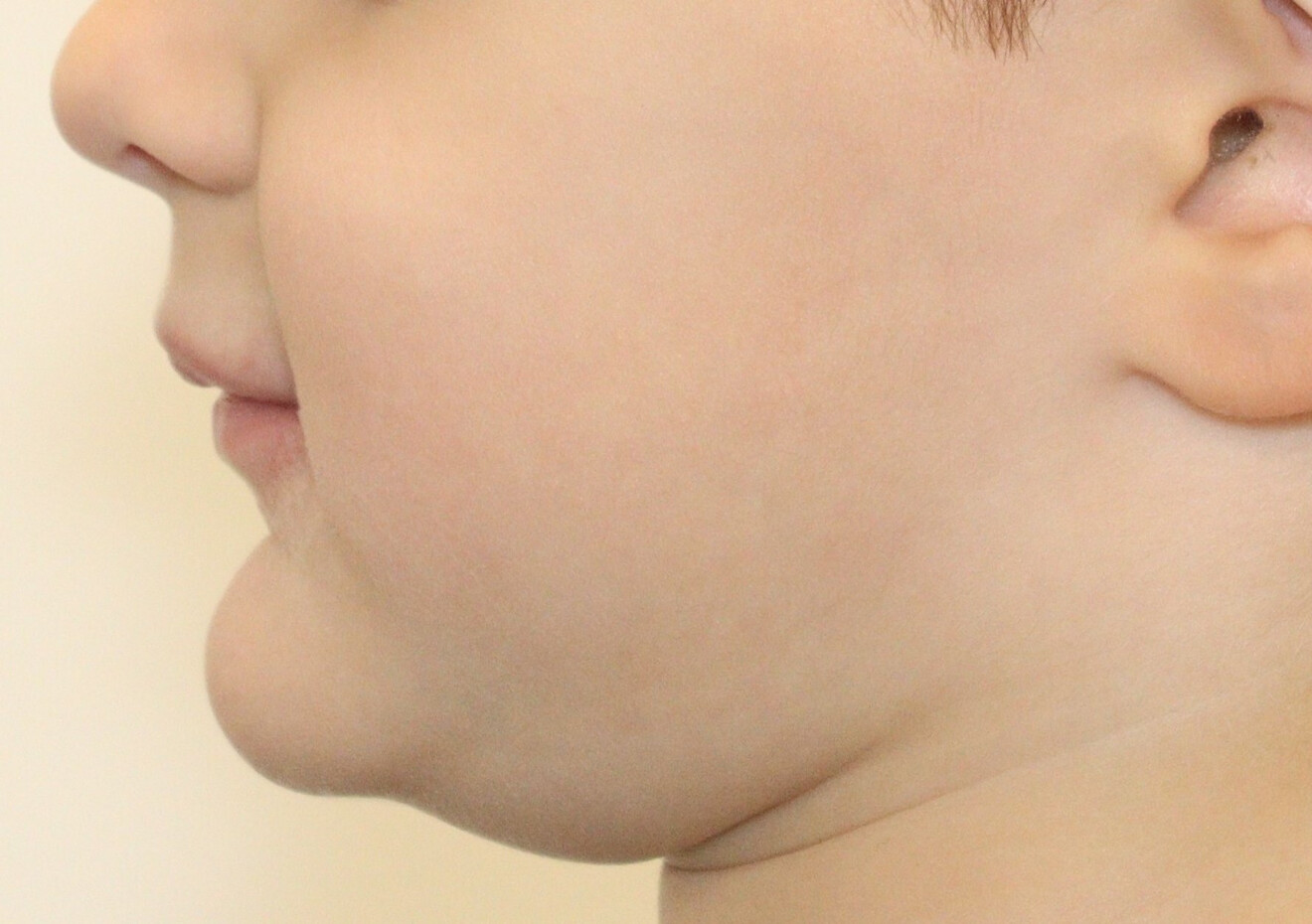
Fig. 1e
Case presentation and treatment
The 3.5-year-old male patient had complete eruption of the primary dentition (Figs. 1a–e), and a genetic evaluation owing to suspected ED was underway at the university hospital, prompted by his ch
