


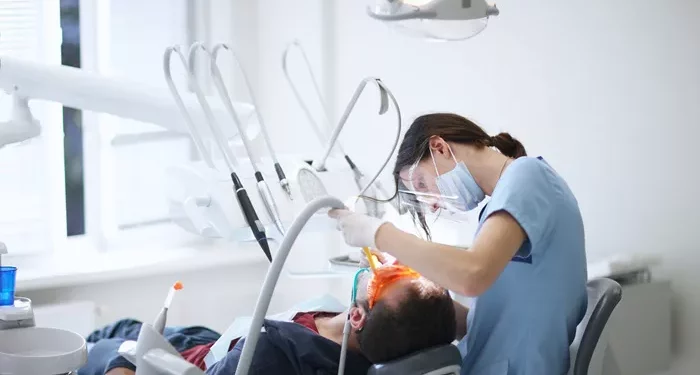
Recently, a wave of private dental clinics across China have been closing down and absconding with funds, affecting patients from first-tier cities to smaller towns.
Victims include those undergoing orthodontic treatment and implants, as well as those who purchased prepaid or annual membership cards. This has led to overcrowding in public hospitals and a growing number of advocates for rights.
Several typical cases demonstrate the prevalence and severity of the problem. A patient named “Xiao Li” in Shanghai’s Xuhui District topped up his account at a chain clinic for 12,000 yuan and paid an additional 8,000 yuan for custom-made invisible braces.
At the end of August, he continued to see patients at the clinic. In early September, he discovered that his prepaid card balance had been cleared and the clinic had vacated and closed. He had only worn the braces for two months, and if they weren’t adjusted promptly, they could develop gingivitis. When he went to a public hospital for a follow-up checkup, he was told that his medical records from the original clinic had disappeared and he needed to be re-examined.
A woman named Wang in Guangzhou reported that after her father had prepared for dental implants and had a bad tooth removed, the clinic suddenly closed, leaving behind a receipt for a 30,000 yuan deposit. Phone calls went unanswered.
A middle school student in Hangzhou purchased a 5,000 yuan annual membership card at a small clinic. After using it only twice, he discovered the clinic’s entrance covered with notices protesting their rights. The police station recommended reporting the case, but the interviewee reported difficulties in defending their rights and recovering their funds.
Interviewees and activist groups also exposed other irregularities within the industry: clinics selling so-called imported implants and invisible braces at inflated prices. For example, a “Korean implant” priced at 12,000 yuan might actually cost only a few hundred yuan at the factory.
Invisible braces that cost around 1,500 yuan were being sold for 15,000 yuan. Some dentists’ income is heavily dependent on commissions from prepaid card sales. Some clinics distribute flyers to elementary schools, pressuring parents to purchase products with the excuse that their children’s teeth will become deformed, even though many children are simply going through the normal tooth replacement process.
These issues also stem from a healthcare payment adjustment starting in 2024: after the government included fillings and cleanings in medical insurance, prices for these services at public hospitals dropped, leading to a sharp drop in customer traffic at some private clinics.
To maintain revenue, some clinics resorted to price-cutting and other aggressive practices. Other media outlets and patients reported that some clinics used inferior materials, passing them off as imported products, leading to complications that were only discovered after patients became aware of them.
The consequences of this incident were widespread: numerous patients sought help in rights protection groups, some losing years of savings. Outpatient workloads at public hospitals increased significantly, with patients queuing up in the early morning hours.
Many previously operating private clinics now have “Sublease” signs posted on their doors, leaving their exam rooms empty except for dental chairs, significantly damaging market trust.
Victims generally find it difficult to defend their rights. In some cases, the police have recommended reporting the cases, but the process of recovering funds and determining medical liability is complex.
Experts and consumer organizations have pointed to the need for strengthened regulation of private dental institutions, standardizing the sale of stored-value cards and prepaid fees, and rigorously scrutinizing the source and qualifications of medical materials to protect patient rights.
Currently, a growing number of affected patients are seeking compensation and oversight through legal channels and social media. This incident has sparked widespread public concern about the discipline of the private dental market and has heightened demands for accountability and rectification from regulatory authorities. The reporter will continue to pay attention to the follow-up investigation and regulatory progress.