


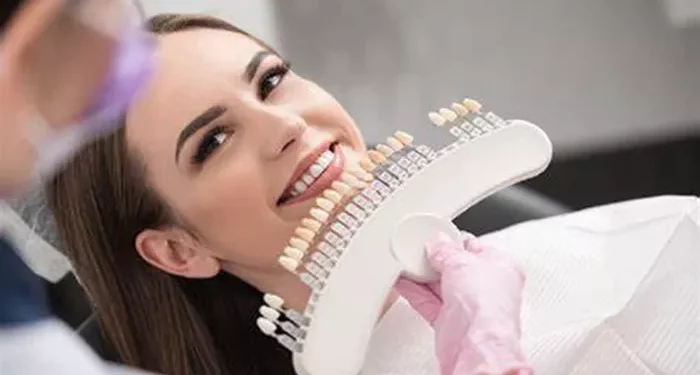
West Virginia University is at the forefront of technological innovation in orthodontics.
The university is one of three institutions testing clear aligners made from a new “shape memory” material that could replace metal braces, which have been used for more than a century.
“The ability to create an orthodontic material with memory properties is a breakthrough,” said Dr. Peter Ngan, chair and distinguished professor of orthodontics at the WVU School of Dentistry. “This technology allows us to delve into the future of braces that are not yet commercially available.”
Although clear braces have become increasingly popular over the past two decades, most dental professionals still consider them less effective than metal braces.
“There is still room for improvement in clear braces today,” Ngan stressed. “Our goal is to improve their effectiveness to match that of traditional metal braces while improving patient comfort and satisfaction.”
To advance this research, the School of Dentistry, with donations from alumni and partners, purchased advanced 3D printing equipment from Graphy Inc. of South Korea.
The technology uses a thermoplastic that changes shape and returns to its original shape under temperature changes, thus exerting precisely controlled forces on the teeth.
“This plastic is not as hard as metal, so when you put it in hot water, it softens and deforms, making it easier to put it back in,” Dr. Ngan explained. “Once it’s in the mouth, the body temperature will restore it to its original shape and move the teeth.”
Not only is this thermoplastic material soft and comfortable, it also works better with dental attachments (microstructures fixed to the teeth) and can control the precision of tooth movement by adjusting its thickness.
In addition, unlike metal braces, patients can remove the clear aligners at any time, making it convenient for daily oral cleaning.
This innovation also greatly improves the efficiency of aligner production. With the Graphy printer, dentists can print personalized aligners directly in the clinic without relying on external factories. “It’s almost like installing a copy machine in the clinic,” Ngan said.
To further study the mechanical properties of thermoplastic materials, Ngan’s team collaborated with experts from the Benjamin M. Statler School of Engineering and Mineral Resources at the university.
Sam Mukdadi, associate professor of mechanical, materials and aerospace engineering, led engineering students in a number of studies, including biomechanical models developed by graduate assistant Egon Mamboleo to simulate the forces on teeth, periodontal tissues and bone during correction.
He also studied the optimal shape and orientation of dental attachments to personalize treatment.
“Thermoplastics fit and grip teeth better than traditional braces, so they are more efficient in moving teeth,” Mukdadi said.
Ngan predicts that clear aligners could account for 50% of the orthodontic market in the next few years. He noted that more adults are taking oral health seriously but are reluctant to wear conspicuous metal braces.
“This invisible correction method is more suitable for patients of different ages, and the choice will be more in the hands of patients. Our residents and graduate students are also actively using this new technology in the clinic.”