



White Spots on Tongue
White spots or patches may appear on your tongue as a symptom of several conditions. They’re generally benign, but knowing the possible causes will help determine when to contact a doctor.
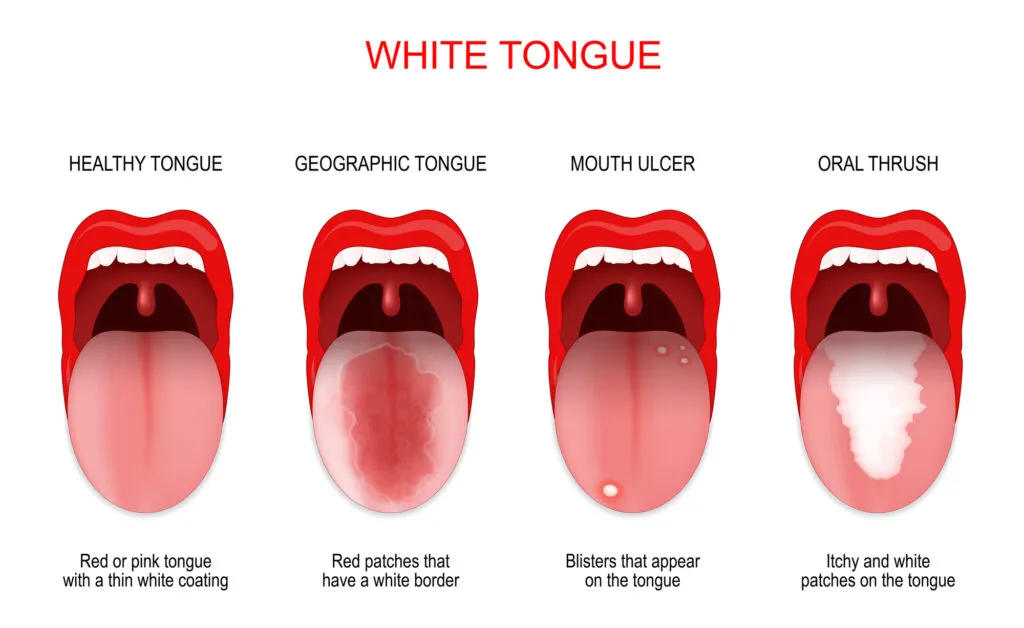
7 Causes of White Spots on Tongue
Here are the most common causes of white spots on the tongue:
1. Oral Thrush
Oral thrush is a fungal infection caused by Candida yeast. It often appears as white patches on the tongue, mouth, and throat and is typically harmless.
Risk Factors
Oral thrush is most common in babies. Healthy adults don’t often develop it, but factors that increase the risk include:
- Wearing dentures
- Having diabetes, cancer, or HIV/AIDS (or another condition that causes a weakened immune system)
- Taking certain antibiotics or corticosteroids, including inhalers for asthma
- Taking medications or other conditions that cause dry mouth
- Smoking
Other Symptoms
The white patches may be small and spotty or coat a significant portion of the tongue.
Other symptoms of oral thrush include:
- Redness or soreness in the mouth
- Cracking at the corners of the mouth
- A lack of taste or bad taste
- Pain while eating or drinking
- A feeling of “cotton” in the mouth
Babies with oral thrush may not want to feed and can develop a rash elsewhere on their bodies.
Treatment
Treatment usually involves an antifungal medication. The medicine is applied topically for a course of 1 to 2 weeks.
Fluconazole may be taken orally or by injection for more severe infections.
2. Leukoplakia
In leukoplakia, thick, white patches form on the gums, tongue, and inside of your mouth. These patches cannot be wiped off. Most instances are benign, but some can be precancerous.
The exact causes are unknown, but leukoplakia has been associated with tobacco use. Chronic irritation from sharp teeth or dentures may also play a role.
Risk Factors
Using tobacco in any form puts you at a much higher risk of developing leukoplakia. You may also increase your chances if you drink alcohol.
Between 1 and 9% of people with leukoplakia will develop mouth cancer or malignancy in the future, with an increased incidence in women. Signs that the lesion may be at risk of being precancerous or cancerous include:
- Having leukoplakia for an extended amount of time (> 2 weeks)
- Lesions on the tongue or bottom of the mouth
- Lesion size greater than 200 mm
- Changes in appearance over time
Other Symptoms
You might notice symptoms other than the lesions, including:
- Red patches in the mouth, which may indicate precancerous changes
- Pain when swallowing
- Difficulty opening your mouth
If you notice any of these symptoms, see a doctor immediately.
Treatment
Discontinuing unhealthy habits that irritate the mouth, such as using tobacco or drinking alcohol, can resolve the issue for most people.
In more severe cases, your doctor may remove the patches with a scalpel and biopsy the tissue, and you may need routine follow-ups.
3. Oral Lichen Planus
Oral lichen planus is a common inflammatory condition affecting the mouth’s mucous membranes. Lacy white patches occur on the tongue and other soft tissues in the oral cavity.
Possible causes include:
- Hepatitis C
- Medications
- Reactions to metal fillings
- An autoimmune reaction
The disease is not contagious. However, studies have shown that oral lichen planus can undergo malignant transformation, so routine follow-ups are needed to monitor for changes.
Risk Factors
Women are twice as likely as men to develop oral lichen planus. It’s most commonly found in middle-aged adults; it’s unlikely to affect children or older people.
Other Symptoms
Some people may develop redness and sores in their mouths. You may also notice lichen planus on other parts of your skin.
Treatment
There is no cure for oral lichen planus. However, some treatments, including corticosteroids or immune response medicines, may ease symptoms.
4. Syphilis
Bacteria enter the body through a cut in the mouth and create a chancre, or a sore, at the entry point. These chancres can be found on the tongue, lip, or inside of the mouth.
Chancres can resemble pimples or other conditions, which can delay diagnosis. One study showed that it took nearly 9 months for people with only oral symptoms to be diagnosed with syphilis.
Risk Factors
Engaging in unprotected oral sex makes you much more likely to develop oral syphilis. A condom or protective barrier can prevent oral sexually transmitted infections (STIs).
Poor oral hygiene can also make your mouth more vulnerable to bacteria.
Other Symptoms
Syphilis symptoms depend on the stage of the infection:
- Primary syphilis — Chancres in the mouth
- Secondary syphilis — Skin rashes, swollen lymph nodes, fever, sore throat, larger mouth sores, headaches, weight loss
- Late syphilis — Severe issues such as organ failure
These stages can happen in a different order for different people. Some people may only experience some of these symptoms.
Treatment
Oral syphilis is highly treatable if you catch it early. Antibiotics are the most common treatment, administered by injection.
The chancres may go away on their own, but that doesn’t mean the infection has. Seeking treatment is vital to avoid lasting consequences.
5. Mouth Ulcers
Mouth ulcers, also known as canker sores, are painful lesions that can occur for various reasons. They’re most common on the tissues surrounding the teeth but can also occur on the tongue.
Many things can cause a mouth ulcer to form, including:
- Injury to the inside of the mouth
- Bacterial, viral, or fungal infection
- Food sensitivities or allergies
- Hormonal changes
- Stress and lack of sleep
- Cancer
Ulcers are not contagious and typically heal on their own after 1 to 2 weeks. If you have an ulcer that is not healing after two weeks, seek care from a dentist or doctor as soon as possible.
Risk Factors
You may be more prone to developing canker sores if you have one or more of the following:
- Autoimmune disease
- Vitamin deficiencies
- Health conditions such as Celiac disease
- Braces or dentures that irritate your mouth
- Mouth cancer
Maintaining a balanced diet, practicing good oral hygiene, and using stress management skills can help prevent mouth ulcers from developing.
Other Symptoms
In addition to the sores themselves, you may also notice the following symptoms:
- Swollen skin around the sores
- Trouble chewing or brushing teeth
- Irritation from salty, spicy, or hot foods
- Appetite loss
Treatment
Most canker sores will resolve independently. Some may need treatment to prevent complications and relieve symptoms as they heal.
Treatment involves using an antiseptic gel, keeping your mouth clean, and avoiding certain foods. Some severe cases may require immunosuppressant medication.
6. Geographic Tongue
Geographic tongue is also known as benign migratory glossitis. It’s a condition where the top and sides of your tongue don’t have papillae.
Irregular red spots with white serpentine borders characterize the condition. In most cases, treatment isn’t necessary.
Risk Factors
Factors that may worsen the symptoms of geographic tongue include:
- Genetics
- Allergies
- Stress
- Psoriasis
Other Symptoms
Irregular red spots with white serpentine patches are a symptom of geographic tongue. These patches can frequently change their location and size. They may start in one area and then slowly move to another.
In addition, some people may experience mild discomfort or sensitivity to particular foods
Treatment
Geographic tongue typically does not require treatment. In cases where the condition causes significant discomfort, a dentist or healthcare professional may recommend:
- Topical steroids or anesthetic gels to alleviate discomfort
- Mouth rinses that help numb the area
- Zinc supplements
- Corticosteroids applied on the tongue
7. Oral Cancer
Oral cancer is a serious condition that can present as white or red patches. The patches may develop in areas like:
- The tongue
- The lining of the mouth and gums
- Underneath the tongue
- The base of the tongue
- The back of the mouth
Risk Factors
Here are some risk factors for oral cancer:
- Tobacco use (cigarettes, cigars, pipes, chewing tobacco)
- Excessive alcohol consumption
- Prolonged exposure to the sun (in the case of lip cancer)
- Infection with high-risk strains of the human papillomavirus (HPV)
- A family history of oral cancer
Other Symptoms
Oral cancer comes with more serious symptoms, and some may reoccur. Other symptoms associated with oral cancer include:
- Persistent mouth ulcers or sores
- Numbness around the mouth
- Unexplained bleeding in the mouth
- Difficulty or pain when swallowing
- Unexplained weight loss
Treatment
The treatment for oral cancer varies depending on the stage and extent of the disease. Common treatments for oral cancer include:
- Surgical removal of the cancerous tissue
- Radiation therapy
- Chemotherapy
- Palliative care
When to See a Dentist or Doctor
Contact a healthcare professional if you experience:
- Excessive white spots or patches that don’t resolve after a week or two
- Pain eating, swallowing, or opening your mouth
- Redness, soreness, or pus
- Fever
- Skin rashes
- Bleeding in the mouth
- Ear pain while swallowing
Your doctor can conduct a full examination and run tests if needed.
Diagnosis
The method of diagnosis will vary depending on the condition your doctor suspects. They may perform a biopsy, run blood tests, or examine your mouth.
Determining Treatment
Your diagnosis will determine your treatment. Habit change and practicing better oral hygiene can resolve some issues entirely.
Other conditions may have no cure, but their symptoms may be treatable using topical gels, oral medications, or injections.
Outlook
Most causes of white patches are benign. Generally, they will resolve on their own or can be treated by a healthcare professional.
Some underlying conditions may have the potential to become precancerous. Mouth cancer can occur at any age, with 20% of all cases appearing in adults under 55.6
Catching any issues early can improve your outlook.
Preventing White Patches on Tongue
The best way to prevent issues with your tongue is to practice excellent oral hygiene. Medical professionals suggest:
- Brushing and flossing daily
- Maintaining a healthy diet
- Reducing tobacco and alcohol use
- Visiting your dentist and doctor regularly
These tips can help prevent complications in the future.
Summary
White spots on your tongue are a common symptom of many conditions. They are usually benign, non-contagious, and treatable. However, they can sometimes indicate a more severe condition, so visiting your doctor early is important.