,Brasseler’s endodontics systems enable clinicians to follow sound principles and protocols in the endodontic triad of cleaning, shaping, and obturation, ,The most critical component of a successful clinical outcome is case treatment planning. In fact, Dr. Allen Ali Nasseh and Dr. Anne L.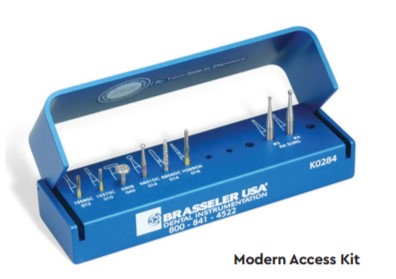 Koch said that the moment they plan treatment, they seal the success of their cases. Because the success of a case is so dependent on planning, proper diagnosis, treatment, and clinical success must come together seamlessly., ,In a recent Dental Learning course, Drs. Nasseh and Koch shared the modern techniques and protocols that emphasize safety and simplicity for each step of the endodontic treatment process. These techniques streamline the endo-restorative continuum to its core essentials and can save clinicians valuable time., ,It is paramount in endodontic therapy to prevent the cross-contamination of the root canal space throughout the entire procedure. While many isolation tools used in restorative dentistry are adequate for maintaining a dry field during restoration placement, a sealed environment is necessary for root canal instrumentation and obturation. EndoSequence Flowable Dam Material from Brasseler is a flexible, easy-to-apply and remove, light-curable isolation material ideal for endodontic procedures., ,Although diagnosis may be the most difficult aspect of endodontic therapy, the key to achieving successful clinical results is creating proper access. Since the introduction of modern restorative materials, it has become more difficult to create proper access because these newer materials are harder to cut through than traditional porcelains. To address this issue, diamond burs were designed to safely and efficiently cut the new materials. Real World Endo collaborated with Brasseler to create a set of eight burs in the Modern Access Kit, which can be successfully used in over 95% of clinical cases., ,The goal in creating this kit was to be minimalistic and create a diverse set of burs that can address the multiple needs of access preparation. The kit has burs to address outline form, as well as those needed for occlusal adjustment before or after outline preparation. In addition, two DuraCut burs have been designed to cut through the harder zirconia and similar materials. The bur selection is completed with the addition of a safeended bur to unroof the pulp chamber safely, and two latch-type, surgical-length round burs to remove decay and aid exploration and find canal orifices., , ,“It is paramount in endodontic therapy to prevent the cross-contamination of the root canal space throughout the entire procedure.”,– Allen Ali Nasseh, DDS, MMSc, and Anne L. Koch, DMD, , ,One of the main goals of root canal therapy is the eradication of the microbial assault inside the previously sterile root canal space. Irrigation, therefore, is the most important part of the endodontic triad—the other two being instrumentation and obturation. It aims to clean and disinfect the root canal space and facilitate the shaping process. Brasseler offers a variety of irrigation solutions, including those formulated with sodium hypochlorite., ,Irrigation and instrumentation work hand in hand and are crucial to successful outcomes. Instrumentation begins with orifice openers and macro debris removal using ultrasonics and water, and continues in a crown-down fashion until working length is reached., ,Next, the disinfection phase begins, and instrumentation cleans and achieves a master fi le preparation, which will then be paired
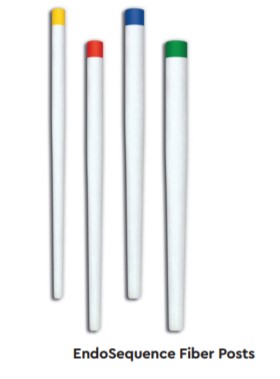 with a matching master cone for obturation. Drs. Nasseh and Koch call this precise matching between the preparation and the master gutta-percha cone “endodontic synchronicity.”, ,Brasseler’s EndoSequence system is particularly helpful for obturation. This endodontic solution is the only one currently available that’s fully synchronized from instrumentation through obturation and post placement., ,Many advances have occurred in endodontics over the past 2 decades, and obturation has seen a shift toward efficiency and simplicity. Historically, more complex obturation methods, such as warm vertical compaction, were developed to address deficiencies of traditional root canal sealers. However, with the introduction of bioceramic cements and their adoption as endodontic sealers, more intuitive root canal obturation techniques were developed to take advantage of these materials., ,Unlike conventional base/catalyst sealers, EndoSequence BC Sealer uses the moisture naturally present in the dentinal tubules to initiate its setting reaction. The material is minimally invasive and does not shrink., ,The best post design is one that matches the shape of the prepared root canal. With “endodontic synchronicity,” clinicians can match the canal preparation precisely with a similar post. In essence, the best post drill is the last rotary file used to working length in the canal., ,Brasseler’s EndoSequence Fiber Posts match the shape created by the EndoSequence files, similar to a cast post. According to Brasseler, the best technique is to burn out the necessary amount of gutta-percha or precut the cone to create the desired apical plug., ,Drs. Nasseh and Koch encourage clinicians to learn about and understand the features offered by each endodontic system so they can make choices based on their own philosophy and then employ a system that follows their principles and priorities for clinical care


