


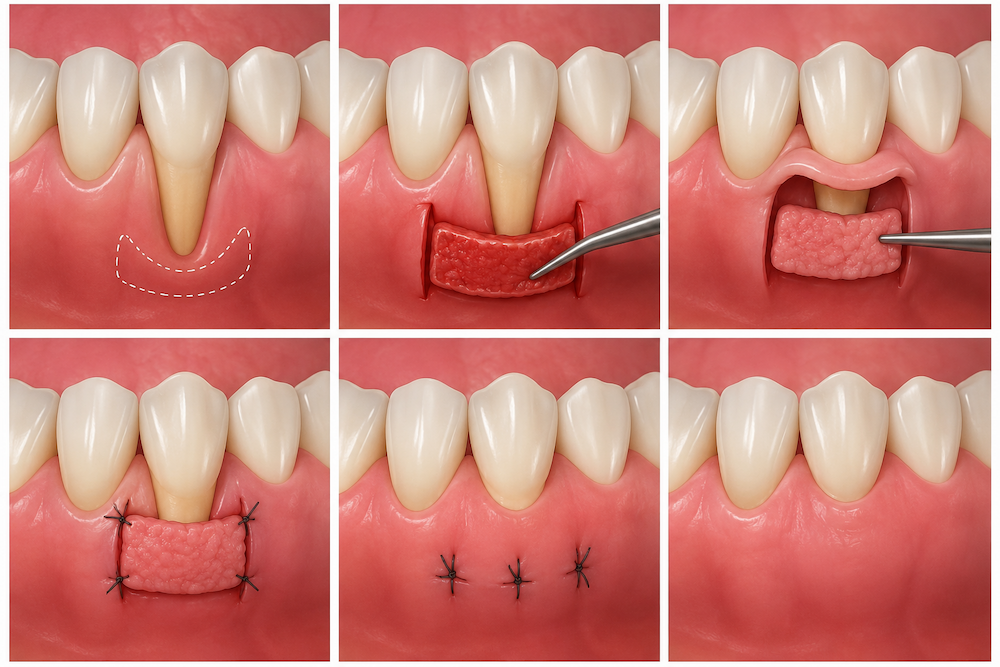
Mucogingival surgery for gum recession can help patients with exposed tooth roots, long-looking teeth, and tooth sensitivity.
Many people first notice the problem when they smile. The teeth seem longer. The tooth roots show. Also, the gum line looks uneven.
However, this is not simply aging. It is often gum recession. That means the gum margin moves toward the root.
As a result, the tooth loses part of its natural gum protection. Then, cold drinks, sour foods, and brushing may cause sharp pain.
In addition, exposed roots wear more easily than enamel. Therefore, the problem can become worse over time.
So, early diagnosis matters. With the right treatment plan, dentists can protect the root surface, reduce sensitivity, and improve the appearance.
What Is Gum Recession?
Gum recession means the gum edge moves away from its normal position. Then, the root surface becomes exposed.
Many patients call this “shrinking gums.” However, the gum does not always shrink because of age. Several habits and oral conditions may cause it.
Common signs include:
- Teeth looking longer.
- Exposed yellowish root surfaces.
- Cold sensitivity.
- Sour food sensitivity.
- Pain during brushing.
- Tooth neck grooves.
- Uneven gum line.
- Poor smile aesthetics.
At first, gum recession may look mild. However, it can progress slowly. Therefore, many patients ignore it until sensitivity appears.
Also, gums usually do not grow back naturally. So, patients should not wait too long.
A dentist should check the cause first. Then, the dentist can decide whether cleaning, restoration, or mucogingival surgery is suitable.
Gum Recession Affects More Than Appearance
Gum recession can change the smile. However, it can also harm tooth health.
When the gum moves down, the root loses protection. Unlike enamel, the root surface is softer. Therefore, it can wear faster.
Gum recession may cause:
- Tooth sensitivity.
- Root surface wear.
- Wedge-shaped defects.
- Root cavities.
- Gum inflammation.
- Food trapping.
- Repeated filling failure.
- Smile anxiety.
Moreover, pain can change daily habits. Some patients avoid cold water. Others brush less because brushing hurts.
However, poor brushing may create more plaque. Then, gum inflammation may become worse. As a result, recession can continue.
Therefore, gum recession is not only a cosmetic issue. It is also a functional and periodontal problem.
Why Exposed Tooth Roots Become Sensitive
Tooth sensitivity often appears after root exposure. The reason is simple. Roots do not have the same enamel shield as tooth crowns.
The exposed root contains dentin. Dentin has tiny tubules. These tubules can transmit cold, heat, sweet, or acid stimulation.
Patients may feel pain from:
- Cold water.
- Hot tea.
- Sour fruit.
- Sweet snacks.
- Toothbrushing.
- Air exposure.
- Dental cleaning.
Usually, the pain feels sharp and short. However, frequent sensitivity can affect eating and brushing.
Desensitizing toothpaste may help mild cases. However, it may not solve root exposure itself.
Therefore, the dentist must check the cause. If gum recession and tooth defects exist together, combined treatment may work better.
Wedge-Shaped Defects and Filling Problems
Many patients with gum recession also have wedge-shaped defects near the gum line.
These small grooves often appear at the tooth neck. At first, they may look harmless. However, they can deepen over time.
Common causes include:
- Aggressive horizontal brushing.
- Hard toothbrush use.
- Acid erosion.
- Bite stress.
- Tooth grinding.
- Root exposure.
- Thin gum tissue.
When the root surface stays exposed, wear may speed up. Then, the defect becomes deeper. Also, sensitivity may increase.
Fillings in this area may loosen more easily. This happens because the gum seal is poor. Moisture, plaque, and bite stress can affect the restoration.
Therefore, a filling alone may not solve the issue. In some cases, gum repair and tooth restoration should work together.
What Is Mucogingival Surgery?
Mucogingival surgery is a periodontal surgery for gum recession and soft-tissue defects.
It aims to improve gum coverage, gum thickness, and gum stability. Also, it can help protect exposed roots.
Dentists may use:
- The patient’s own soft tissue.
- Connective tissue graft.
- Free gingival graft.
- Adjacent gum tissue.
- Selected biomaterial in suitable cases.
The purpose is not only to “cover” the root. It also helps rebuild a stronger soft-tissue barrier.
This can improve:
- Root exposure.
- Tooth sensitivity.
- Thin gums.
- Narrow attached gum.
- Uneven gum line.
- Smile aesthetics.
- Tooth neck protection.
However, case selection matters. Some cases get strong root coverage. Others mainly gain thicker and healthier gum tissue.
So, a periodontal exam comes first.
How the Gum Is “Rebuilt”
During mucogingival surgery, the dentist repairs the soft tissue around the tooth.
The treatment goal may include:
- Increasing gum thickness.
- Covering exposed roots.
- Improving gum shape.
- Reducing sensitivity.
- Protecting tooth neck areas.
- Supporting future fillings.
- Improving smile balance.
In some cases, the dentist takes tissue from the palate. Then, the tissue is placed near the recession area.
In other cases, the dentist may use nearby gum tissue or biomaterials. The best choice depends on the patient’s condition.
Also, the tooth surface may need repair. If a wedge-shaped defect exists, the dentist may restore it after gum healing.
Therefore, soft tissue and hard tissue often need joint treatment. This creates a more stable result.
Who May Need Mucogingival Surgery?
Mucogingival surgery may help patients with local gum recession. The problem may involve one tooth or several teeth.
Suitable signs may include:
- Exposed tooth roots.
- Teeth that look too long.
- Long-term sensitivity.
- Thin gum tissue.
- Narrow attached gum.
- Front-tooth aesthetic concerns.
- Wedge-shaped defects.
- Repeated filling loss.
- Gum recession after orthodontics.
However, not every patient can receive surgery immediately.
The dentist must first check:
- Gum inflammation.
- Plaque control.
- Bone support.
- Tooth mobility.
- Bite force.
- Brushing habits.
- Smoking habits.
- Medical history.
If severe gum disease exists, periodontal treatment should come first. If teeth are loose, the plan may need adjustment.
Is Mucogingival Surgery Painful?
Many patients worry about pain. However, mucogingival surgery usually uses local anesthesia.
So, patients should not feel sharp pain during surgery. They may feel pressure or movement, but not strong pain.
After surgery, mild discomfort may appear. This is normal.
Common recovery feelings include:
- Slight swelling.
- Mild soreness.
- Gum tightness.
- Temporary bleeding.
- Chewing discomfort.
- Mild sensitivity.
Usually, the dentist gives aftercare instructions. Medication may also help control discomfort.
Patients should avoid touching the surgical area. They should also avoid pulling the lip to check the wound.
With good care, most patients recover smoothly.
Recovery: The First 1 to 2 Weeks
The first 1 to 2 weeks are important. During this period, soft tissue begins early healing.
Patients may notice mild swelling or discomfort. However, these symptoms usually improve gradually.
During this stage, patients should:
- Eat soft foods.
- Avoid hard foods.
- Avoid spicy foods.
- Avoid smoking.
- Brush other areas gently.
- Avoid brushing the surgical site directly.
- Use mouth rinse if prescribed.
- Return for follow-up visits.
Also, patients should not judge the final result too early. Gum tissue still needs time to shape.
Therefore, patience matters during early healing.
Recovery: The First 1 to 3 Months
From 1 to 3 months, the gum continues to mature. The tissue slowly becomes more stable.
During this stage:
- Gum shape improves.
- Root coverage becomes clearer.
- Sensitivity may reduce.
- Tissue attachment strengthens.
- Gum color becomes more natural.
However, patients should still brush gently. They should use a soft-bristled toothbrush and correct brushing technique.
Also, the dentist may check whether tooth neck defects need restoration.
If the gum becomes stable, fillings can seal the tooth more predictably. Therefore, staged treatment often gives better results.
Recovery: 3 to 6 Months
From 3 to 6 months, the gum tissue becomes more mature. The final shape becomes easier to judge.
At this stage, the dentist may evaluate:
- Gum thickness.
- Root coverage.
- Tooth sensitivity.
- Smile line.
- Tooth neck defects.
- Filling stability.
- Long-term maintenance needs.
If the tooth has a deep wedge-shaped defect, the dentist may restore it after tissue healing.
This timing helps avoid placing a filling too early. It also helps the dentist match the new gum contour.
Therefore, the full result takes time. Gum healing is a gradual process.
Functional Benefits
Mucogingival surgery can improve daily comfort. It may also help protect exposed roots.
Functional benefits may include:
- Less cold sensitivity.
- Better brushing comfort.
- Stronger gum barrier.
- Better root protection.
- Reduced root surface wear.
- Easier plaque control.
- More stable tooth neck repair.
However, results vary by case. A shallow recession with good bone support usually has a better outlook.
A deep recession with bone loss may not gain full coverage. Still, thicker gum tissue may improve stability.
Therefore, the goal should be realistic. The dentist should explain expected coverage before surgery.
Aesthetic Benefits
Gum recession can affect the smile, especially in the front teeth.
When roots show, teeth may look too long. Also, the gum line may look uneven.
Mucogingival surgery may improve:
- Gumline balance.
- Root exposure.
- Tooth length appearance.
- Smile harmony.
- Gum thickness.
- Confidence when smiling.
However, appearance depends on biology. The gum can only heal well if the bone and tissue conditions support it.
Therefore, dentists should not promise perfect coverage in every case.
Still, even moderate improvement can change the smile. A healthier gum frame often makes teeth look more natural.
Prevention: Stop Aggressive Horizontal Brushing
Hard horizontal brushing is a common cause of gum recession.
Many people think stronger brushing means cleaner teeth. However, this habit can injure the gum line.
Better brushing habits include:
- Use a soft toothbrush.
- Brush gently.
- Use the Bass brushing technique.
- Angle the brush near the gum line.
- Avoid sideways scrubbing.
- Choose gentle toothpaste.
- Replace worn toothbrushes.
Also, an electric toothbrush with a pressure sensor may help. It can warn patients when they press too hard.
Therefore, technique matters as much as brushing time.
Prevention: Build Better Chewing Habits
Chewing habits can also affect teeth and gums.
Long-term hard biting may stress teeth. It may also worsen tooth neck defects.
Patients should avoid:
- Chewing ice.
- Biting pens.
- Cracking shells with teeth.
- Chewing hard bones.
- Using one side only.
- Clenching during stress.
Also, night grinding can increase tooth wear. If grinding exists, a night guard may help protect the teeth.
Balanced chewing matters too. If one side works too much, that side may wear faster.
Therefore, dentists often check the bite when treating gum recession.
Prevention: Regular Periodontal Care
Regular periodontal care helps reduce gum inflammation. It also helps detect recession early.
Professional cleaning can:
- Remove tartar.
- Reduce plaque buildup.
- Improve gum health.
- Check recession depth.
- Monitor sensitivity.
- Find tooth neck defects.
- Guide brushing technique.
Many adults benefit from cleaning once or twice a year. However, patients with gum disease may need more frequent care.
Also, early detection saves effort. A small recession is easier to manage than an advanced one.
Therefore, regular checkups are part of prevention.
Prevention: Treat Early Symptoms
Do not ignore early symptoms. Mild sensitivity or a small gumline groove can progress.
See a dentist if you notice:
- Cold sensitivity.
- Sour food pain.
- Tooth neck grooves.
- Longer-looking teeth.
- Gum bleeding.
- Food trapping.
- Loose fillings.
- Root exposure.
Early treatment may be simple. It may involve brushing correction, desensitizing care, cleaning, or small fillings.
However, delayed care may require surgery or complex restoration.
Therefore, timely treatment is always better than waiting.
Common Misunderstandings
Many patients misunderstand gum recession. These ideas may delay treatment.
Common myths include:
- “My teeth are naturally long.”
- “Gum recession only happens with age.”
- “Sensitivity is normal.”
- “Hard brushing cleans better.”
- “A filling can fix everything.”
- “Gums will grow back alone.”
- “Surgery always covers the root completely.”
In reality, gum recession has many causes. Also, treatment results depend on the case.
A filling repairs tooth structure. However, it does not rebuild lost gum tissue.
Likewise, surgery can improve gum tissue. However, it cannot always replace lost bone.
So, diagnosis comes first.
Final Thoughts on Mucogingival Surgery for Gum Recession
Mucogingival surgery for gum recession can help selected patients cover exposed roots, reduce sensitivity, and improve gumline appearance.
However, surgery is not the only answer. Long-term success also depends on brushing habits, bite control, periodontal maintenance, and early care.
If your teeth look longer, your roots show, or brushing causes pain, do not ignore it. These signs may mean gum recession has started.
A dentist can check whether you need cleaning, desensitizing treatment, filling repair, gum graft surgery, or combined care.
With early treatment and better habits, you can protect your gums, reduce root sensitivity, and keep your smile healthier for the long term.