


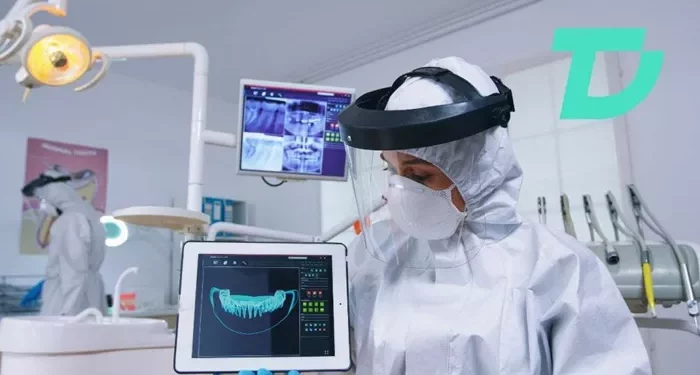
The global digital dentistry market is poised for significant growth, projected to rise from USD 9.61 billion in 2025 to USD 10.53 billion in 2026, with expectations to reach USD 16.67 billion by 2031, according to the latest Mordor Intelligence report. The market is forecast to grow at a compound annual growth rate (CAGR) of 9.62% between 2026 and 2031.
This growth is fueled by rapid technological advancements and widespread adoption of computer-aided design and manufacturing (CAD/CAM) systems, intraoral scanners, and 3D imaging solutions.
Dental professionals are increasingly moving away from traditional workflows toward fully integrated digital systems that improve diagnostic accuracy, streamline procedures, and enhance the overall patient experience.
Rising demand for cosmetic and restorative procedures, greater awareness of oral health, and the preference for minimally invasive treatments are further driving market expansion.
Dental clinics and laboratories are seeking faster turnaround times and more precise outcomes, making chairside CAD/CAM systems and digital impression tools essential in modern practice.
North America leads the digital dentistry market, supported by advanced healthcare infrastructure, high technology adoption, and the presence of major dental technology providers. Investments in digital imaging, 3D printing, and AI-enabled treatment planning are expected to sustain growth in the region.
Europe maintains a significant market share, driven by increased dental spending, rising demand for aesthetic dentistry, and broader integration of digital solutions into clinical workflows.
Asia-Pacific is emerging as a high-growth region due to improving healthcare systems, rising disposable incomes, and growing awareness of advanced dental technologies in developing economies.
CAD/CAM Adoption: Dental clinics and laboratories are increasingly utilizing CAD/CAM technology for crowns, bridges, implants, and orthodontic devices. This allows for streamlined workflows and same-day restorations.
3D Imaging and Intraoral Scanning: The adoption of cone beam computed tomography and digital scanners is enhancing diagnostic accuracy, reducing reliance on conventional impressions, and improving patient comfort and treatment outcomes.
As digital solutions continue to reshape dental care, laboratories and clinics worldwide are expected to increasingly integrate these technologies to improve efficiency, precision, and patient satisfaction.